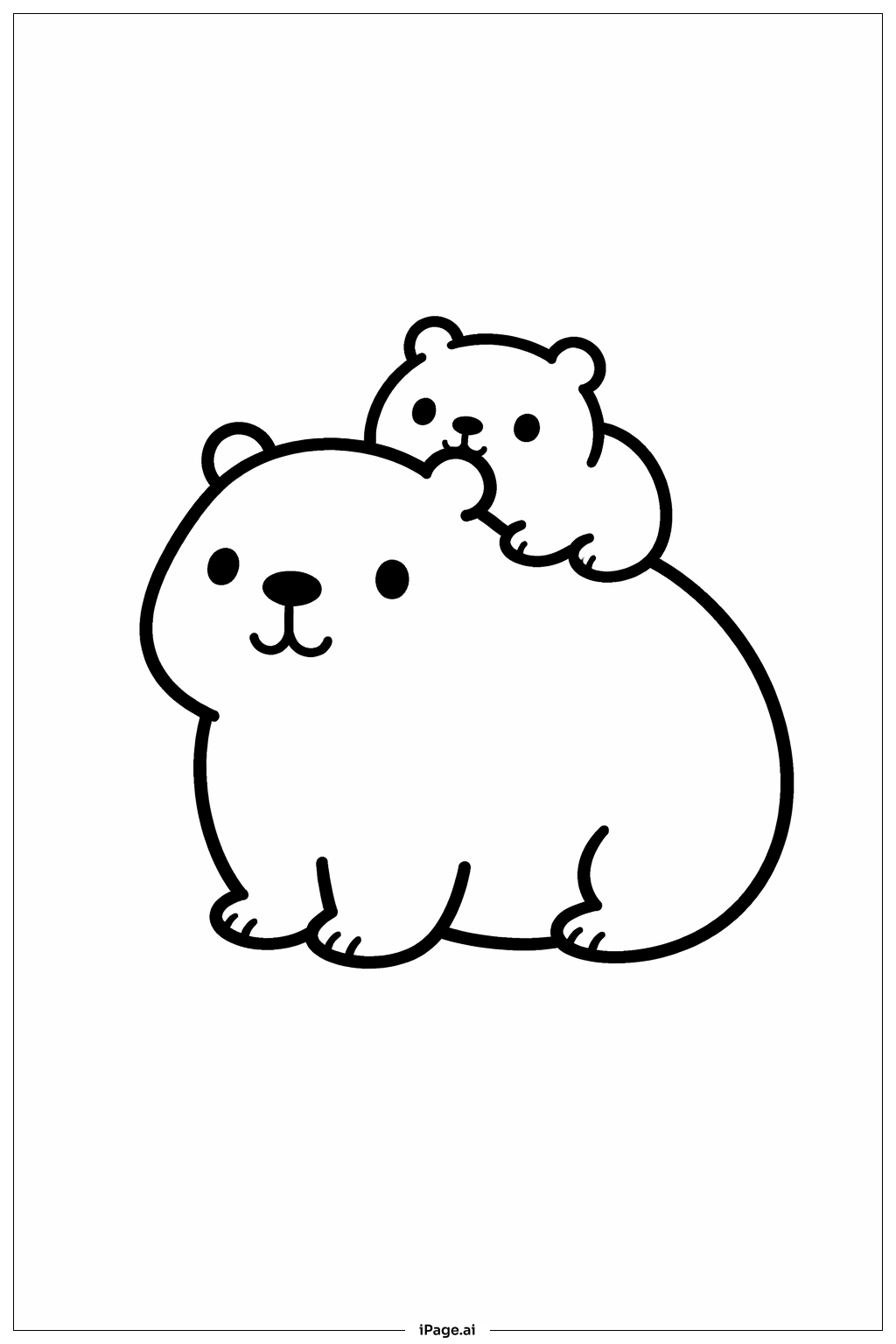
Coloring tips: How to color Capybara With Baby coloring page well?
Use soft and natural colors like light brown or tan for the capybaras' fur. The big capybara can be slightly darker, while the baby can be a lighter shade to show the difference. Add gentle shading with darker browns around the edges of their bodies to create depth. For the eyes and nose, use black or very dark brown to make them stand out. You can also add a background with colors of green for grass and blue for the sky to make the scene more lively. Keep the colors smooth and blended to match the calm mood of the picture.
Coloring challenges: Which parts are difficult to color and need attention for Capybara With Baby coloring page?
1. Small Details: The baby capybara has small features like tiny paws and ears that need careful coloring to stay inside the lines.
2. Rounded Shapes: The capybaras' bodies are round and simple, but shading to show volume might be tricky for beginners.
3. Contrast: Making sure the eyes and nose stand out without coloring outside the lines requires attention.
4. Color Blending: Using gentle gradients or blending colors softly to keep the calm look can be hard for young children.
5. Background Balance: If adding a background, deciding how much detail and color to add without overpowering the capybaras might be challenging.
Benefits of coloring books: Advantages of drawing Capybara With Baby coloring page
Coloring this page helps children improve fine motor skills as they color inside the lines, especially around small parts like the baby capybara's paws and face. It also encourages creativity by letting them choose natural or imaginative colors. The simple shapes make it a good practice for shading and blending colors to show light and shadow. Additionally, the peaceful scene promotes focus and calmness, making coloring a relaxing and enjoyable activity. This page is also great for learning about animals and appreciating nature.