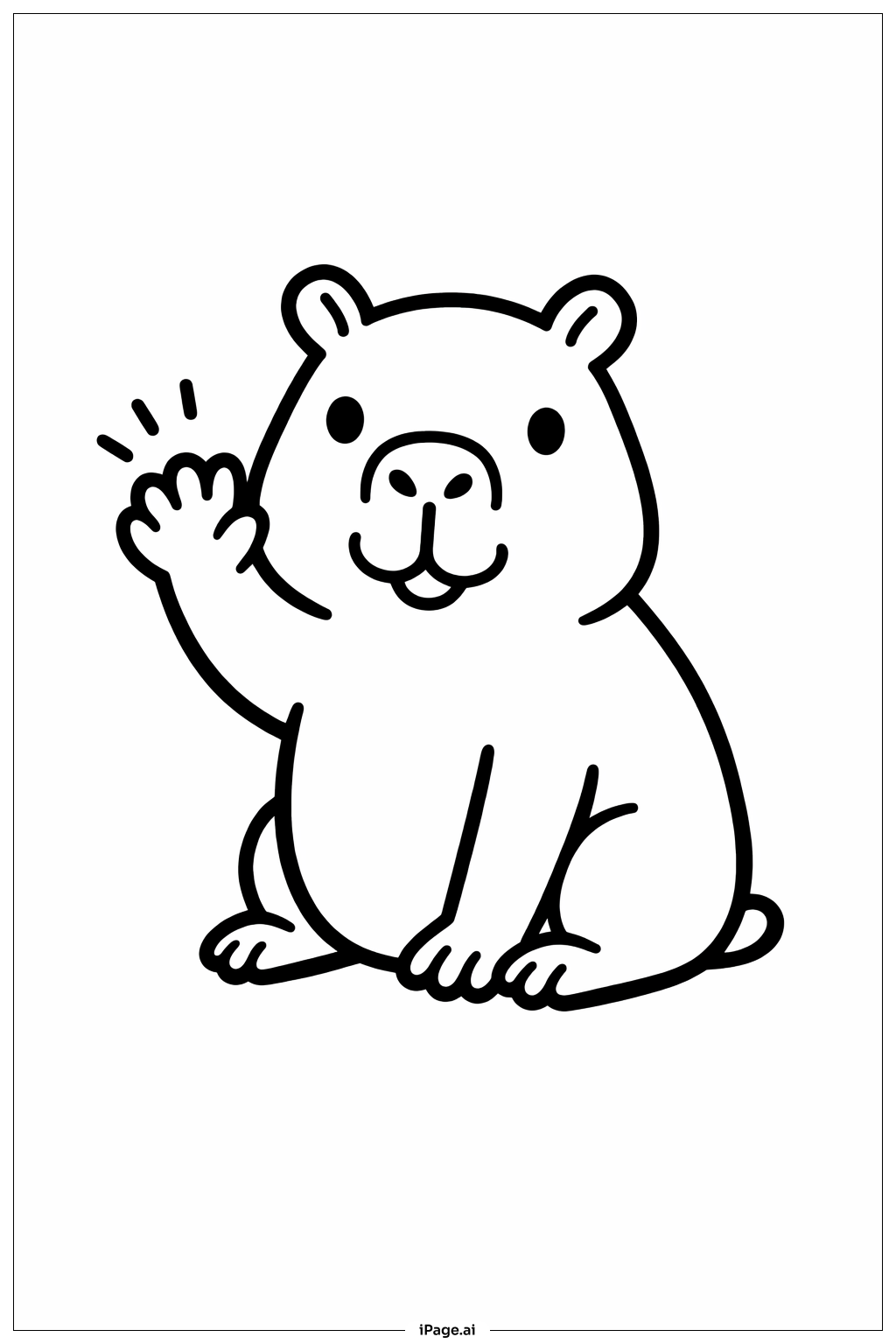
Coloring tips: How to color Capybara Waving Goodbye coloring page well?
Use light brown or tan colors for most of the capybara’s body to match its natural colors. You can add darker brown or orange shades for shading the ears, feet, and around the nose to give some depth. The eyes and nose can be colored black to stand out. Feel free to use bright colors for the background, like green for grass or blue for the sky, to make the picture livelier. You can also add other playful colors to make the image more fun and creative.
Coloring challenges: Which parts are difficult to color and need attention for Capybara Waving Goodbye coloring page?
1. The hand waving has several small fingers close together, which can be tricky to color neatly without going outside the lines. 2. The capybara’s round face and body have large areas that might be hard to shade evenly. 3. Small details like the nostrils, eyes, and mouth need careful coloring to keep their cute expressions clear. 4. Coloring the paws requires some attention since they have multiple small parts. 5. Keeping the colors inside the lines on the curved body parts can be a challenge for younger children.
Benefits of coloring books: Advantages of drawing Capybara Waving Goodbye coloring page
Coloring this capybara helps improve fine motor skills as children practice controlling their coloring tools within the lines. It encourages creativity by allowing choice of colors, especially for the background and shading. The waving gesture can inspire friendly feelings and social skills by imagining the capybara saying hello or goodbye. The simple yet cute design is great for building confidence in coloring, especially for younger kids starting to develop coordination.



