Coloring tips: How to color Capybara Reading coloring page well?
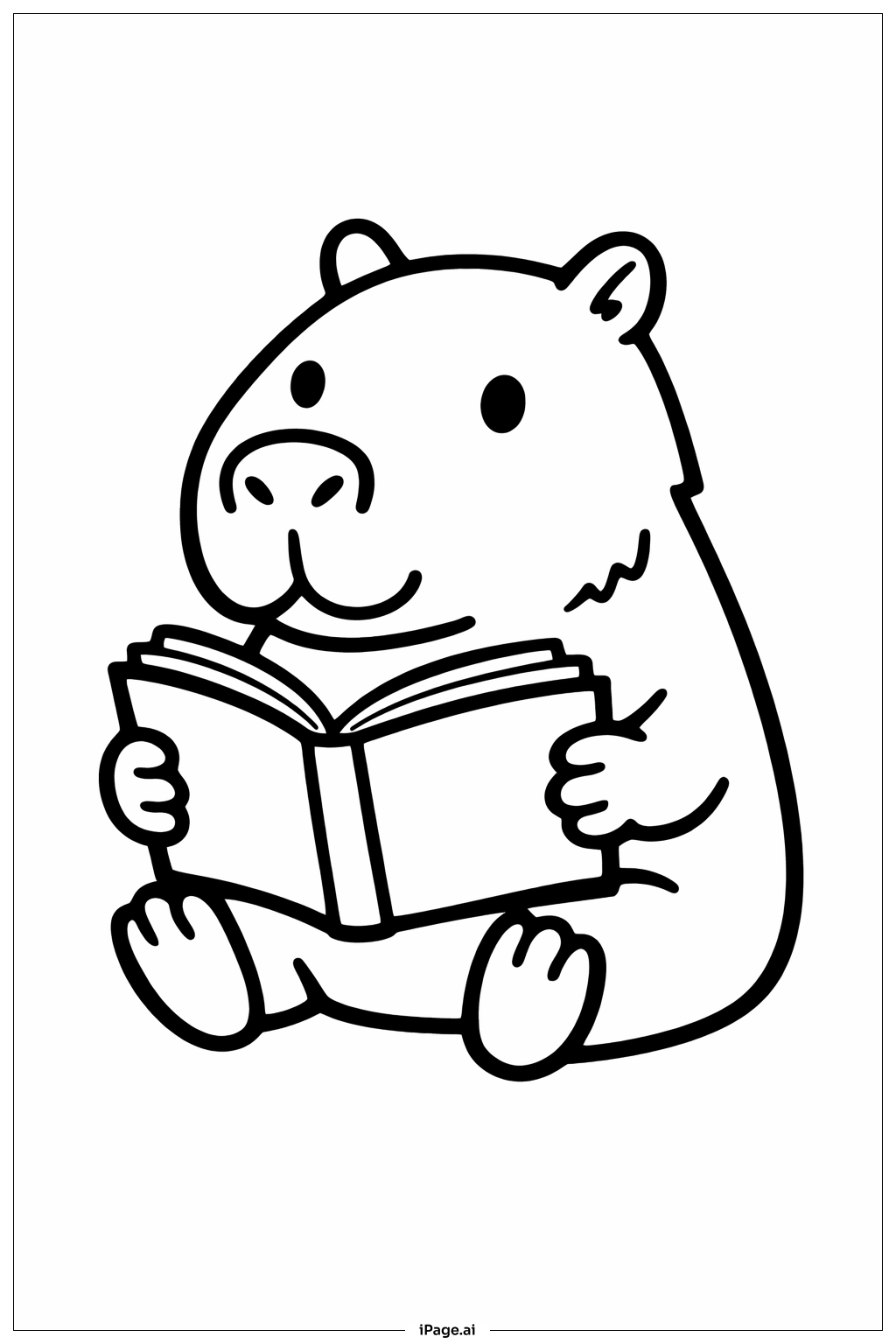
Start with the capybara's body using warm brown tones like tan, caramel, or chestnut. You can add lighter shades on the belly and around the snout for a natural look. Use dark brown or black for the eyes, and add a tiny white dot to make them look shiny and alive. Color the book cover with a bright, fun color like red, blue, or yellow to make it pop. The pages inside can be left white or colored a soft cream. If there's a cushion, try a cozy color like orange or purple. Add green for any plants in the background, and use warm yellow or gold for a lamp glow. Don't be afraid to mix colors and make the scene your own!
Coloring challenges: Which parts are difficult to color and need attention for Capybara Reading coloring page?
• **The Capybara's Fur Texture:** Capybaras have coarse, layered fur that can be tricky to recreate with color. To capture depth and realism, you'll need to layer at least two or three shades of brown, blending from darker tones along the back and sides to lighter tones on the belly. Using short, directional strokes that follow the fur's natural flow will make the texture look more convincing.
• **Small Facial Details:** The capybara's face features small, closely spaced eyes, a wide flat nose, and subtle mouth lines. These tiny details require a fine-tipped tool — such as a colored pencil or thin marker — to fill in neatly without accidentally coloring outside the lines. Getting the eyes right is especially important, as they give the character its warm, expressive personality.
• **The Open Book Pages:** The book's interior pages often contain fine lines suggesting text or illustrations. Coloring these small spaces evenly without smudging or bleeding into adjacent areas demands patience and a steady hand. Using a light cream or pale yellow for the pages, while carefully avoiding the printed lines, adds realism without overwhelming the detail.
• **Background Depth and Contrast:** If the scene includes background elements like plants, a lamp, or furniture, creating a sense of depth can be challenging. You'll need to choose colors that contrast well with the capybara's brown tones so the main character stands out clearly. Using lighter, softer colors in the background and bolder, richer colors on the capybara helps establish a natural visual hierarchy.
Benefits of coloring books: Advantages of drawing Capybara Reading coloring page
Coloring this Capybara Reading scene offers wonderful benefits for kids and adults alike. For younger children, it helps develop fine motor skills and hand-eye coordination as they carefully fill in the capybara's fur, the book, and the cozy background details. Choosing colors and deciding how to bring the scene to life also sparks creativity and imagination. For older kids and teens, the more detailed areas — like the fur texture and small facial features — encourage focus, patience, and attention to detail. The calm, quiet theme of a capybara enjoying a book makes this a naturally soothing activity that can help reduce stress and anxiety. It also creates a gentle, positive connection to reading and learning, making it a great coloring page to use in classrooms or at home. Completing the image gives a satisfying sense of accomplishment that builds confidence. Whether you color it quickly for fun or take your time crafting every shade, this page is a joyful and rewarding creative experience for all ages.