Coloring tips: How to color Capybara Portrait coloring page well?
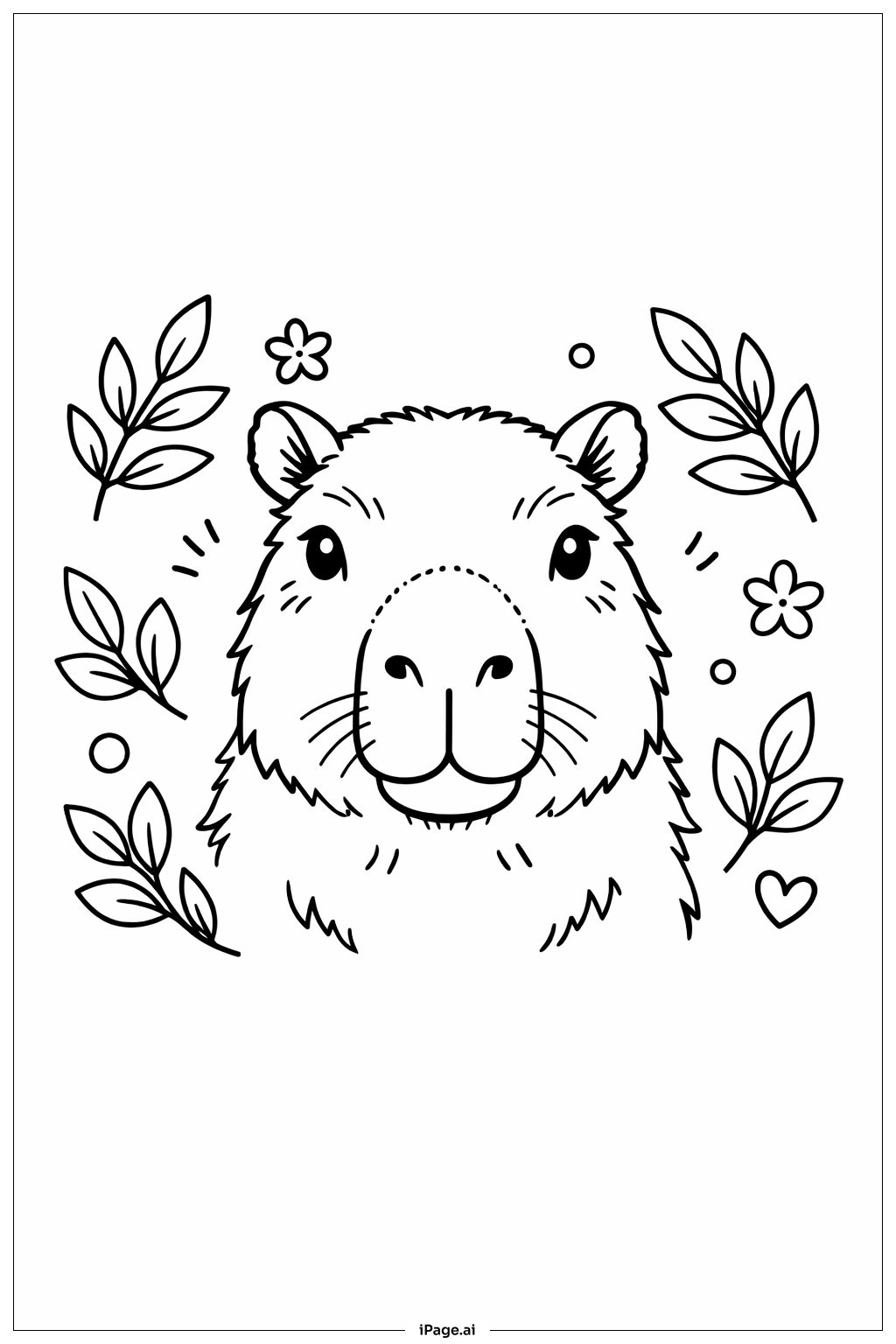
Use soft brown or light orange colors for the capybara's fur to give it a warm and natural look. You can use pink or peach shades for the inside of the ears to make them stand out. The eyes can be colored black with a small white spot left for shine to bring the face to life. Green colors should be used for the leaves to show their freshness. Flowers can be colored in bright colors like red, yellow, or purple to make the picture more cheerful. Use light colors for the small hearts and dots to keep the focus on the capybara. Try blending colors gently for the fur to make it look fluffy.
Coloring challenges: Which parts are difficult to color and need attention for Capybara Portrait coloring page?
1. The fur has many small details that require careful coloring to look soft and natural. 2. The eyes need precision to color the small shine spot without covering it. 3. Leaves and flowers are small and close together, which can be tricky to color neatly. 4. Keeping color balance between the capybara and the decorations requires attention so the picture looks good as a whole. 5. Coloring inside the thin lines without going out can be hard for younger children.
Benefits of coloring books: Advantages of drawing Capybara Portrait coloring page
Coloring this capybara picture helps improve fine motor skills because of its detailed fur and small shapes. It encourages attention to detail and patience while staying inside the lines. Using different colors for the flowers and leaves inspires creativity and color recognition. This activity also relaxes and calms the mind by focusing on a gentle, happy animal. It gives kids a chance to learn about nature and animals while having fun.