Coloring tips: How to color Capybara Paddling coloring page well?
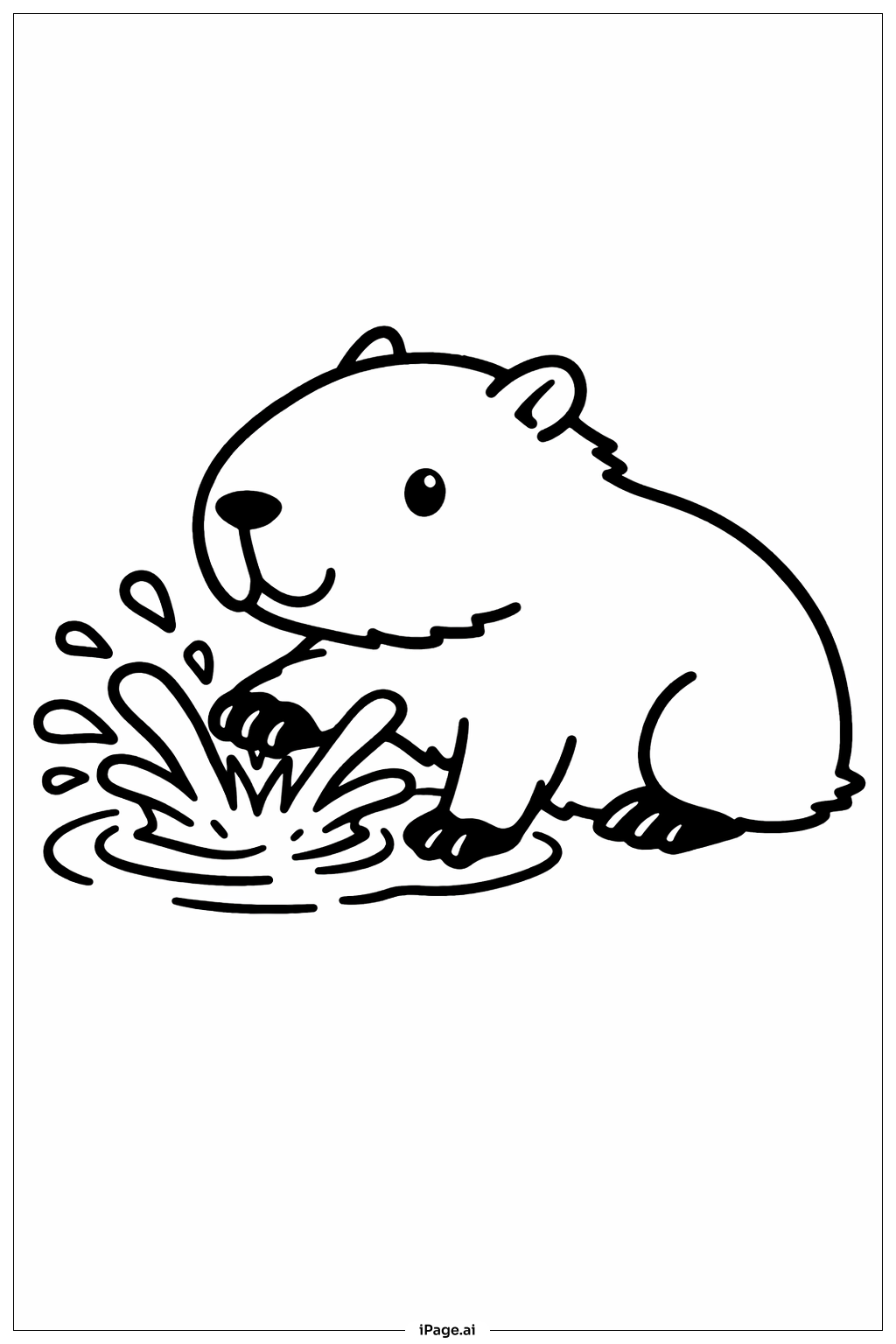
To color this image, you can use soft browns or tans for the capybara's body to show its natural fur. The paws and nose can be a darker brown or black. For the water, use different shades of blue to make it look fresh and lively. You can add lighter blue or white highlights on the splashes to make them stand out. Feel free to add some green or yellow around the water area to suggest grass or sunlight. Use gentle shading to show the capybara’s round shape and make it look more three-dimensional.
Coloring challenges: Which parts are difficult to color and need attention for Capybara Paddling coloring page?
1. Coloring the water splashes can be tricky because they have many small shapes and droplets. It’s important to stay inside the lines to keep the picture clean. 2. The capybara’s fur needs smooth and even coloring to look natural, which may be hard for beginners. 3. Adding shadows and light on the round body requires careful use of colors to show the form without making it too dark. 4. The small paws and the nose are small areas that need careful coloring to avoid mixing with other parts. 5. Balancing colors in the water and the animal to keep the picture lively but not too messy can be challenging.
Benefits of coloring books: Advantages of drawing Capybara Paddling coloring page
Coloring this picture helps improve focus and hand control for young artists. It encourages creativity by choosing different shades for the capybara and water. The activity also teaches children about animals and nature through fun interaction. Coloring small water splashes helps develop precision and attention to detail. Overall, it offers a relaxing and joyful experience while practicing fine motor skills and color recognition.