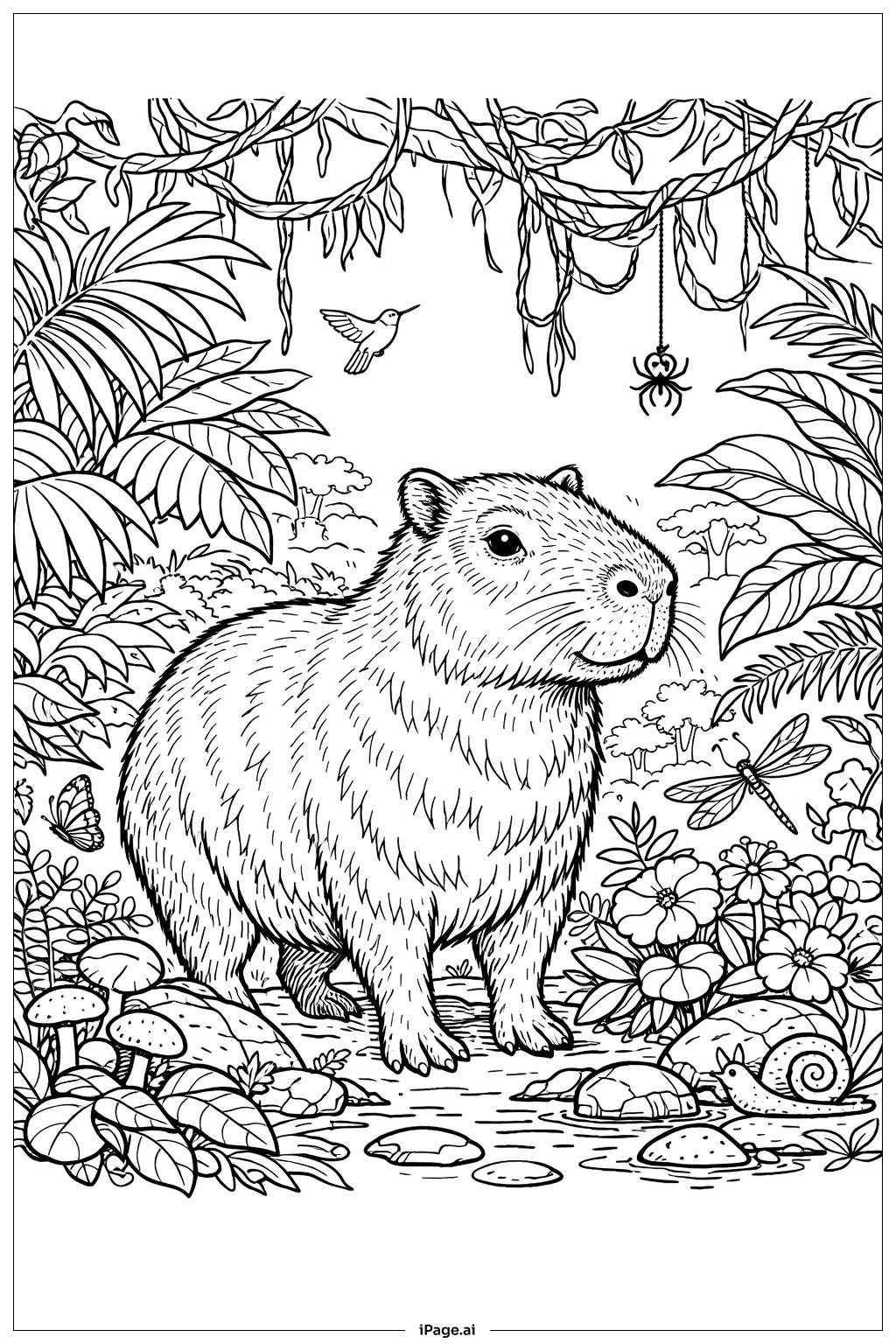
Coloring tips: How to color Capybara In Tropical Forest coloring page well?
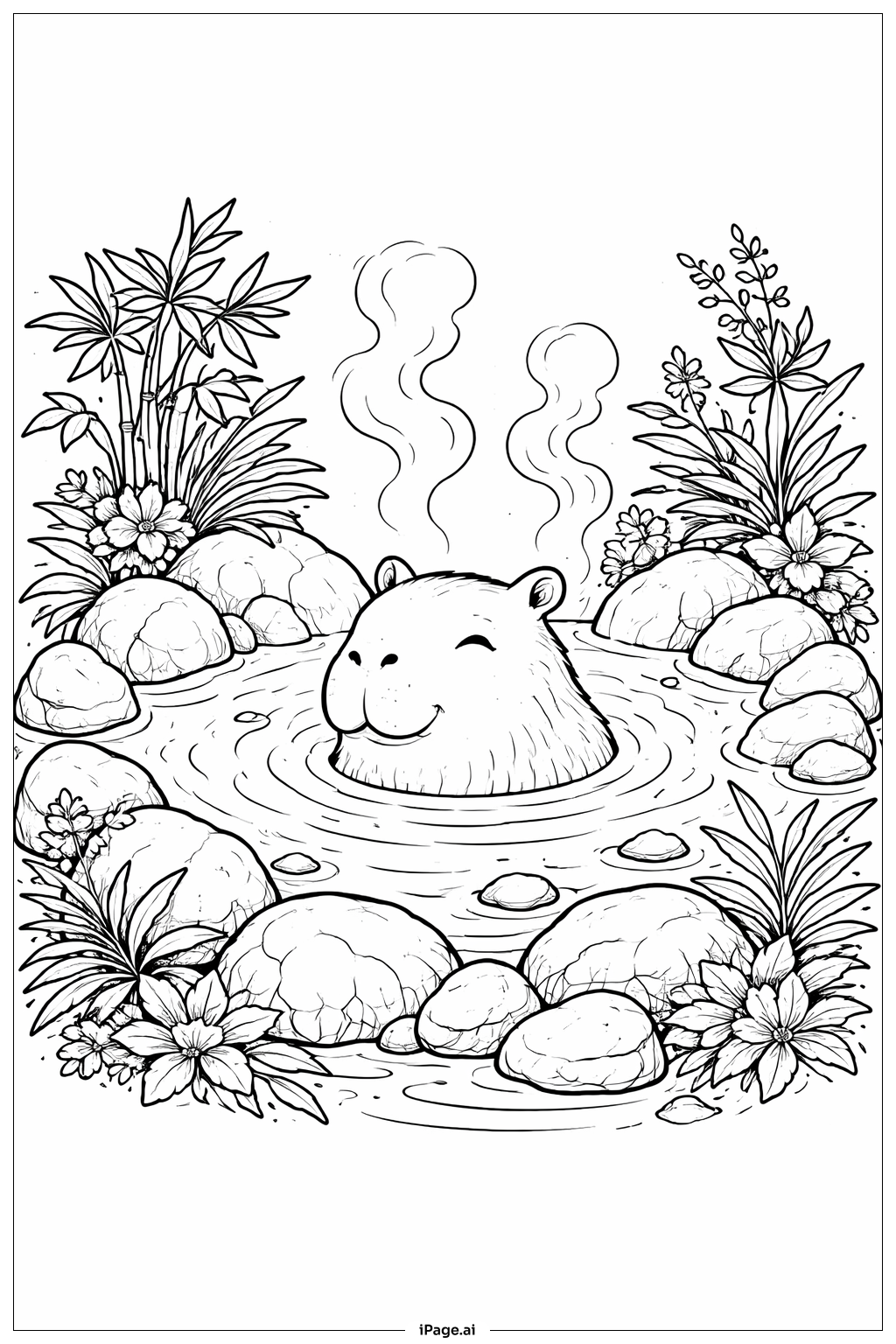
Use different shades of green for the tropical plants and leaves to make the forest feel lush and alive. The capybara can be colored in warm brown tones, like light and dark browns, to show its fur texture. Bright colors like yellow, red, and orange work well for the flowers to add contrast. For the insects, use vibrant colors like blue, purple, or red to make them stand out. The water can be shaded in soft blues and light grays, while rocks can be colored in neutral grays and browns. Try blending colors smoothly for a natural look.
Coloring challenges: Which parts are difficult to color and need attention for Capybara In Tropical Forest coloring page?
1. Detailed plants and leaves - The many thin lines and layers of leaves may be tricky to color without going outside the lines. 2. Small animals and insects - The tiny details of the spider, snail, hummingbird, butterfly, and dragonfly need careful coloring to keep their shapes clear. 3. Fur texture on capybara - Adding color while keeping the feeling of soft fur can be challenging, as it needs shading and strokes to look natural. 4. Overlapping elements - Some parts, like plants in front of the capybara or hanging vines, need careful coloring to keep each part distinguishable. 5. Water and reflections - Coloring the small stones and water around them requires a gentle touch to create a smooth, realistic effect.
Benefits of coloring books: Advantages of drawing Capybara In Tropical Forest coloring page
Coloring this tropical forest scene helps children learn about nature and different animals. It encourages attention to detail and patience because of the many small parts. Coloring large areas like the capybara and leaves helps improve motor skills and color blending. The variety of plants and animals makes it fun to experiment with different colors and combinations. It also supports creativity and relaxation as children bring the lively scene to life with their colors.