Coloring tips: How to color Capybara Garden Friends coloring page well?
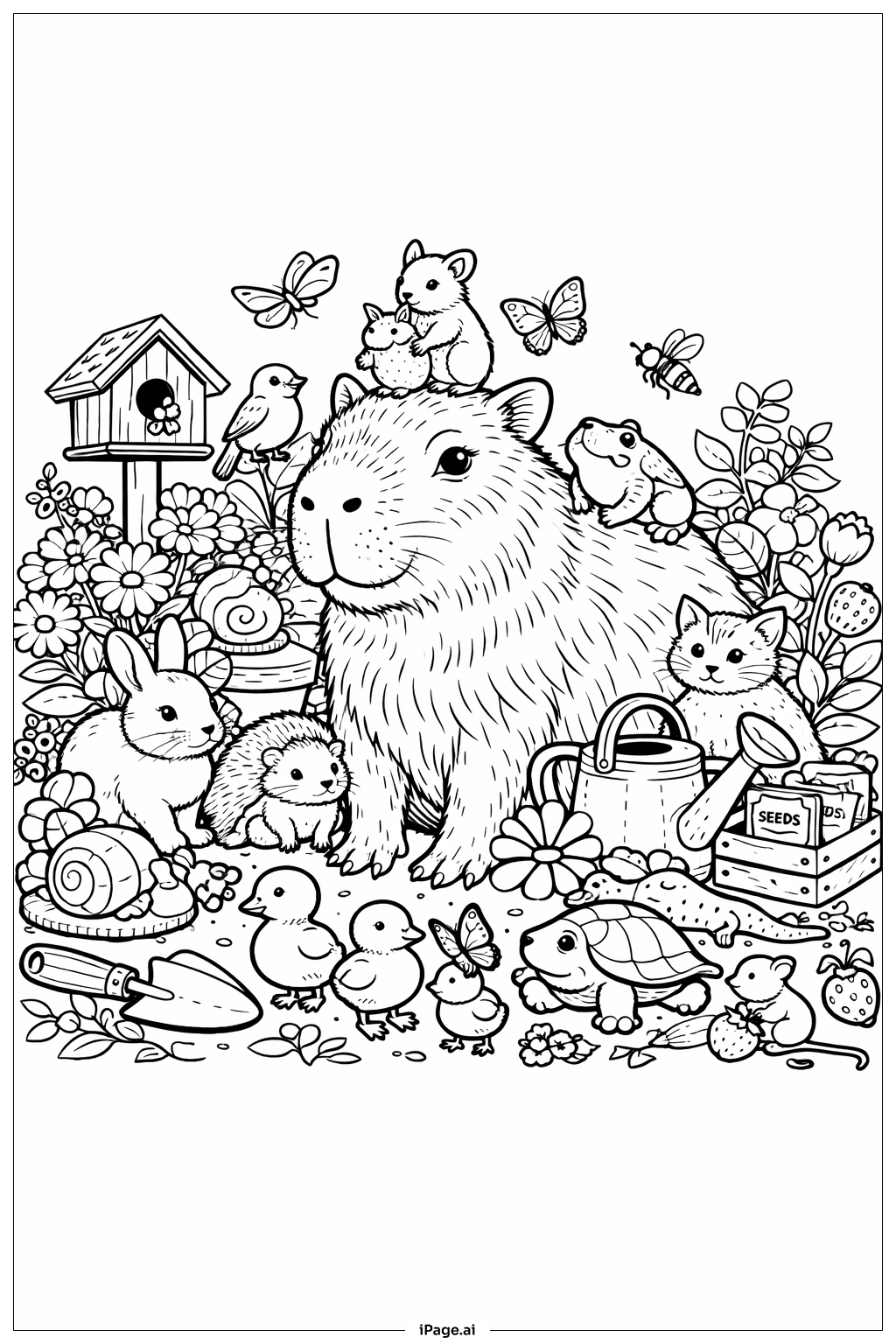
Use soft brown or light gray colors for the capybara’s fur to make it look warm and friendly. Choose bright colors for the flowers, like yellow, pink, and purple, to make the garden look lively. The small animals like birds and butterflies can be colored with different shades to show their unique patterns. Use green for leaves and plants, and don’t forget to color the strawberries red. The watering can and seeds box can be painted with simple colors like blue or yellow to keep them nicely visible. Try to use light colors for small details so they don’t get lost.
Coloring challenges: Which parts are difficult to color and need attention for Capybara Garden Friends coloring page?
1. Small Details: The picture has many tiny animals and flowers that need careful coloring to stay inside the lines. 2. Different Textures: The fur of the capybara, the leaves, and the feathers of birds all have different textures that need different coloring styles. 3. Overlapping Objects: Some animals are on top of others or plants, so it can be tricky to color each one clearly. 4. Color Balance: With many elements, it can be hard to balance colors to make the whole picture look nice and not too crowded. 5. Fine Lines: The thin outlines on small animals and plants need steady coloring to avoid coloring outside the lines.
Benefits of coloring books: Advantages of drawing Capybara Garden Friends coloring page
Coloring this picture helps improve fine motor skills because it requires careful hand control to color small and detailed animals and plants. It also encourages creativity by letting children choose different colors for flowers, animals, and garden objects. Coloring nature scenes can be relaxing and fun, helping to reduce stress. Kids learn about animals and plants by coloring and start to see how different parts of nature fit together in a peaceful garden. This activity also enhances focus and patience as children work through the many little details.