Coloring tips: How to color Capybara Fishing coloring page well?
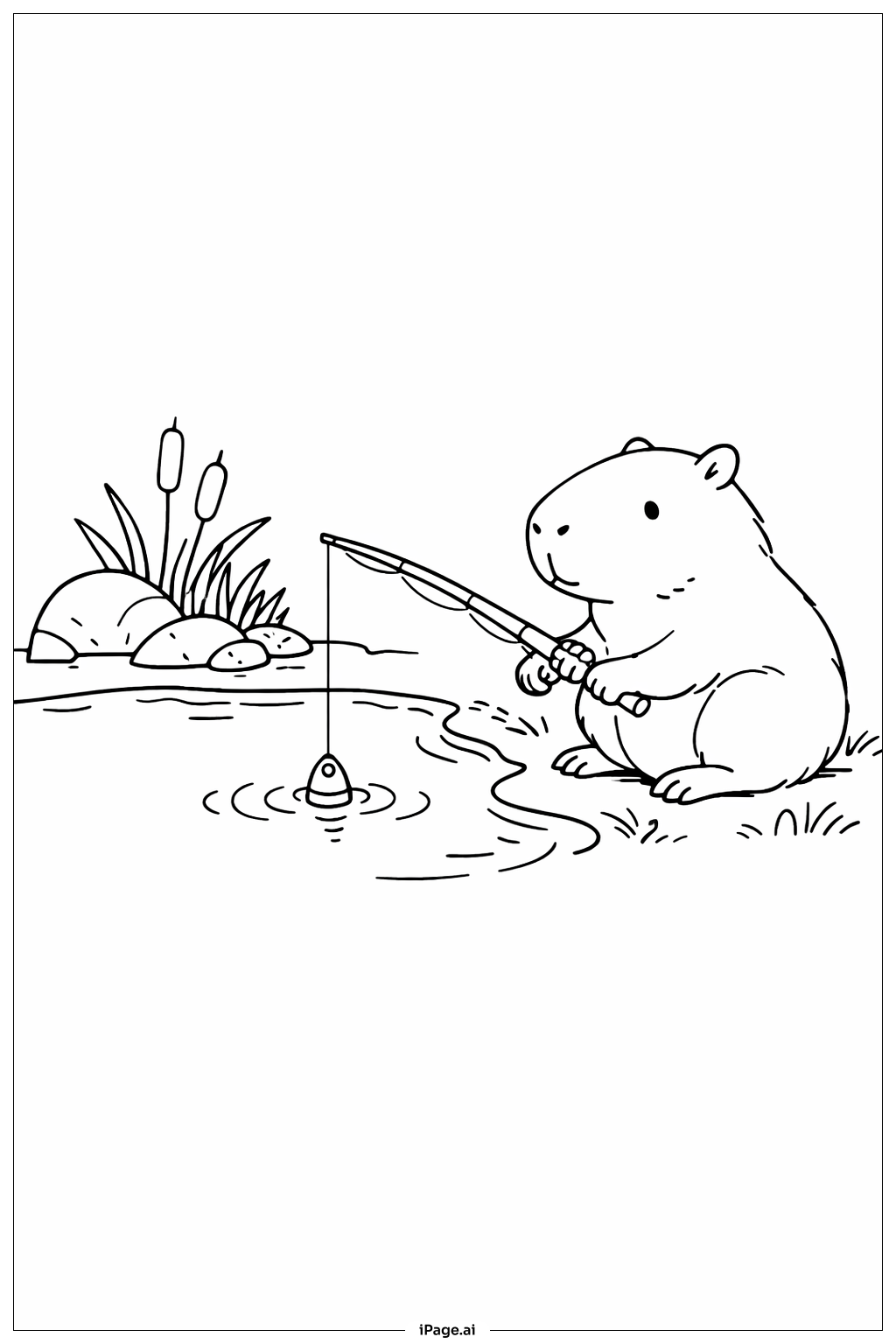
For this picture, you can use light brown or tan colors for the capybara's fur. The water can be colored in shades of blue and light green to look natural. Use different green tones for the plants and grass around the pond. The rocks can be colored with gray or soft earthy colors. The fishing rod can be brown, and the fish float can be bright colors like red or yellow to make it stand out. Try to blend colors smoothly to make the scene look lively and calm.
Coloring challenges: Which parts are difficult to color and need attention for Capybara Fishing coloring page?
1. Coloring the capybara’s fur evenly can be tricky because it requires shading to show its round body shape well.
2. Adding details to the water ripples needs careful coloring to keep them looking natural and not messy.
3. The tall plants by the pond have thin leaves that need careful coloring to avoid coloring outside the lines.
4. The fishing rod and the float are small parts, so coloring inside the lines here requires patience.
5. The rocks have uneven shapes that might be challenging to color smoothly with shading to show texture.
Benefits of coloring books: Advantages of drawing Capybara Fishing coloring page
Coloring this capybara fishing scene helps children improve their fine motor skills by coloring small and detailed parts. It also encourages creativity when choosing colors that look natural for an outdoor scene. The task of blending different shades for water and fur helps develop patience and attention to detail. This calm and peaceful image can also promote relaxation and focus as kids immerse themselves in coloring.