Coloring tips: How to color Capybara Family Picnic coloring page well?
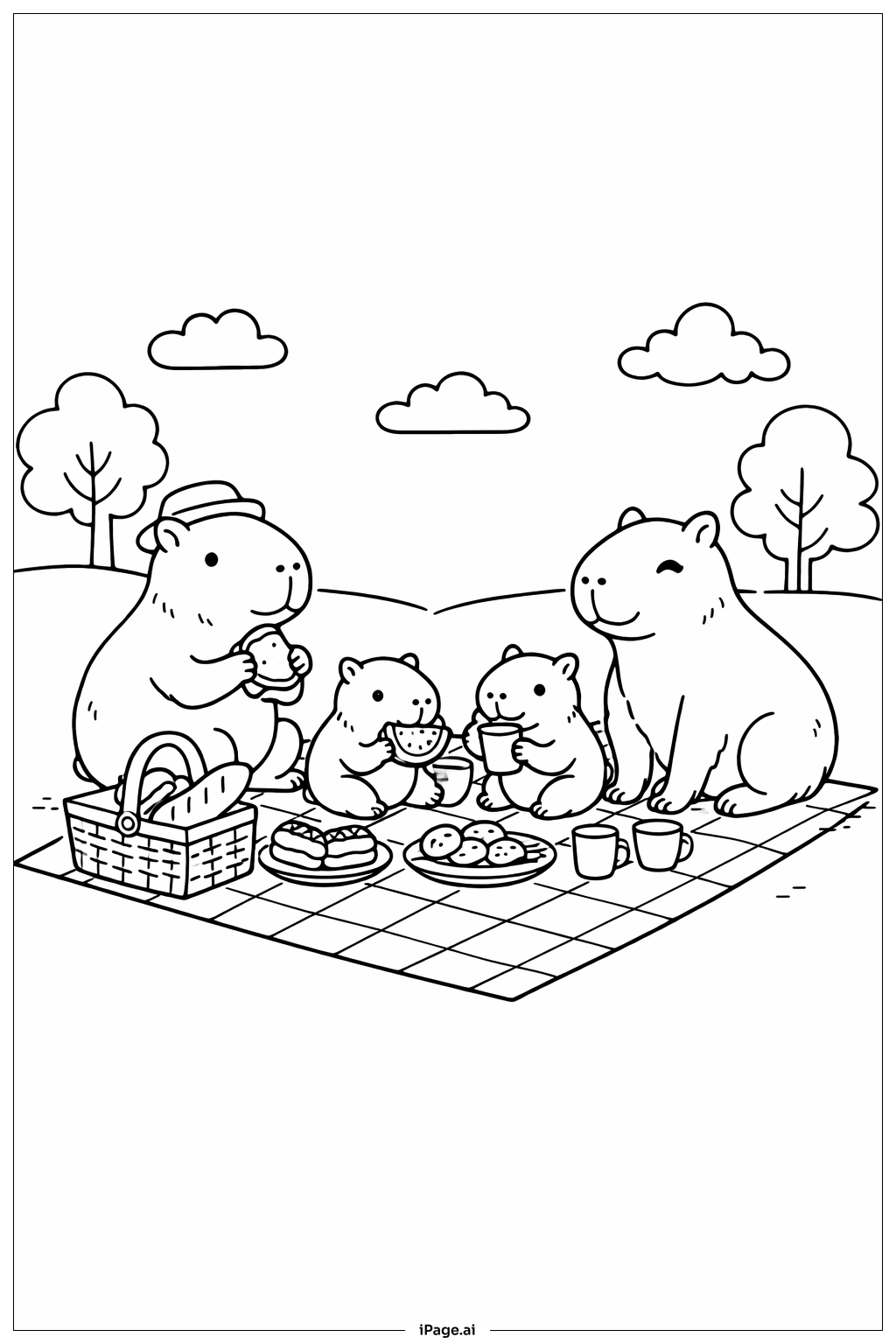
Start with the capybaras themselves using warm brown and tan shades for their fur, varying the tones slightly between family members to add depth. Their noses can be darker brown or black. For the picnic blanket, choose bright, cheerful colors like red and white checks, or any vibrant pattern you prefer. Color the picnic basket in natural wicker tones using light browns and yellows. Make the food items colorful with reds for apples or strawberries, yellows for bananas, and greens for vegetables. The grass can be various shades of green, from light lime to deeper forest green. Add pops of color with flowers in pinks, purples, yellows, and oranges. Use soft blue for any water bottles or sky elements, and consider adding golden yellow sunshine effects to create a warm, inviting atmosphere perfect for a family outing.
Coloring challenges: Which parts are difficult to color and need attention for Capybara Family Picnic coloring page?
• Fur Texture and Shading: The capybaras' fur requires careful attention to create a realistic appearance. Young colorists may find it challenging to show the texture and dimension of the coarse fur. Using multiple shades of brown and applying them in short, directional strokes can help achieve depth, but this requires patience and control. Blending lighter and darker tones smoothly without creating harsh lines takes practice.
• Multiple Characters and Proportions: With several capybaras of different sizes in the scene, maintaining consistent coloring across all family members while keeping them visually distinct presents a challenge. Children need to decide whether to use the same colors for all or vary them slightly, and must keep track of which shading technique they used on each character to maintain consistency throughout the image.
• Background Details and Layering: The picnic setting includes many overlapping elements like the blanket, basket, food items, grass, and flowers. Determining which objects are in front and which are behind requires spatial understanding. Colorists must decide on a coloring order to avoid accidentally coloring over finished sections, and should consider using lighter colors for background elements and bolder colors for foreground items.
• Small Detailed Elements: Tiny components such as individual flowers, food items in the basket, pattern details on the blanket, and small natural elements like butterflies require precision and fine motor control. Staying within the lines of these small areas can be frustrating for younger children and requires a steady hand and perhaps thinner coloring tools like colored pencils or fine-tip markers.
Benefits of coloring books: Advantages of drawing Capybara Family Picnic coloring page
Coloring this capybara family picnic scene offers wonderful developmental benefits for children. It helps improve fine motor skills and hand-eye coordination as they carefully color within the various shapes and sizes. The image encourages creativity as children choose color combinations for the characters, picnic items, and natural surroundings. It also teaches about family values and togetherness, as the scene depicts animals sharing a meal in harmony. Young colorists learn about nature and animals, specifically the gentle capybara, while developing patience and focus needed to complete the detailed illustration. The variety of elements in the scene, from large capybara bodies to tiny flowers, helps children practice different coloring techniques and pressure control. Additionally, the cheerful subject matter promotes positive emotions and can be a calming, meditative activity that reduces stress and anxiety while building confidence as they complete the artwork.