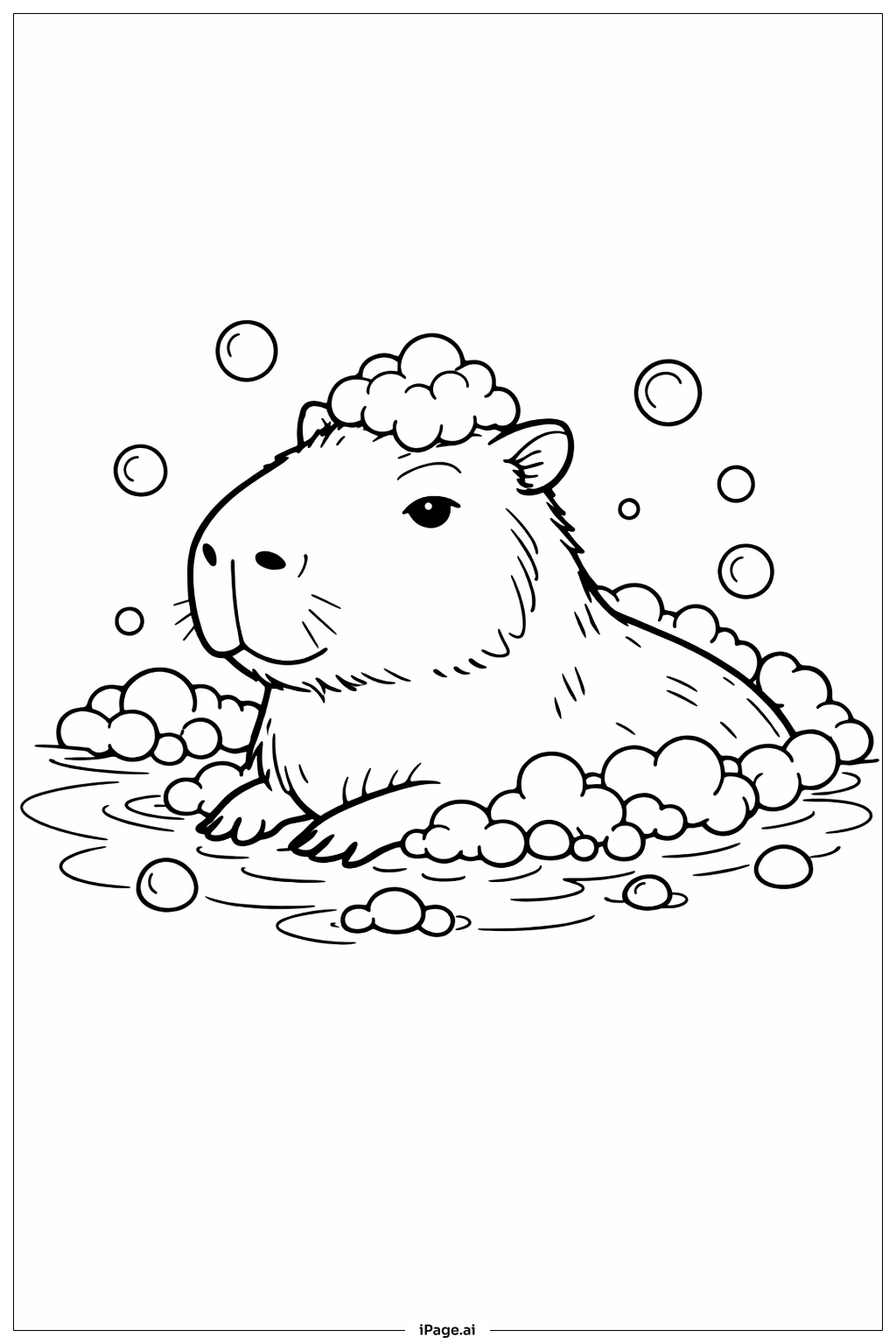
Coloring tips: How to color Capybara Bath Time coloring page well?
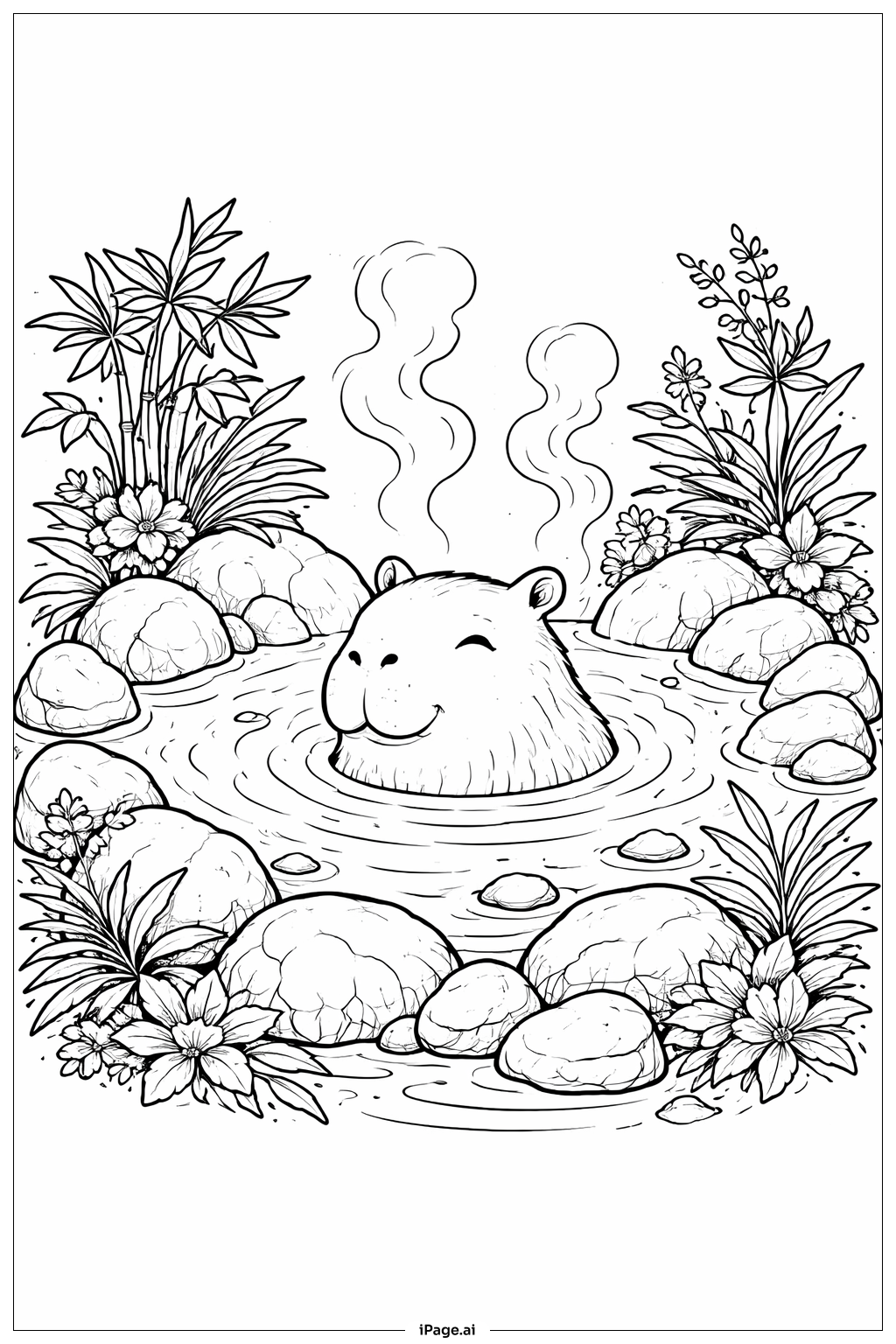
Use soft brown or light tan colors for the capybara’s fur to make it look natural. You can add some darker browns for shadows to create depth. Color the bubbles with light blue, white, or even faint pink to give a transparent and shiny effect. For the water, use light blue or turquoise shades and blend gently to show the flow. Try lighter colors around the bubbles and darker under the capybara to show water depth. You can also add some sparkles on the bubbles to make them look shiny and fun.
Coloring challenges: Which parts are difficult to color and need attention for Capybara Bath Time coloring page?
1. Coloring the bubbles can be tricky because they are transparent. You need to mix light colors and leave some white spaces for highlights.
2. The capybara’s fur has small lines that show texture. Coloring these lines without losing details needs careful coloring.
3. The water has many ripples, so coloring them smoothly to show the movement of water is a challenge.
4. Balancing light and shadow on the capybara and water to make them look realistic may be hard for beginners.
5. Staying inside the small bubble shapes requires good control for younger children.
Benefits of coloring books: Advantages of drawing Capybara Bath Time coloring page
Coloring this picture helps improve fine motor skills because of the small details like bubbles and fur lines. It encourages focus and patience while filling different sections carefully. Choosing colors and shading teaches children about light and shadow. This picture also sparks creativity by letting children decide how to color water and bubbles. It can be calming and relaxing to color, promoting mindfulness. Overall, it’s a fun way to learn and enjoy art while connecting with nature through the capybara’s peaceful bath time.