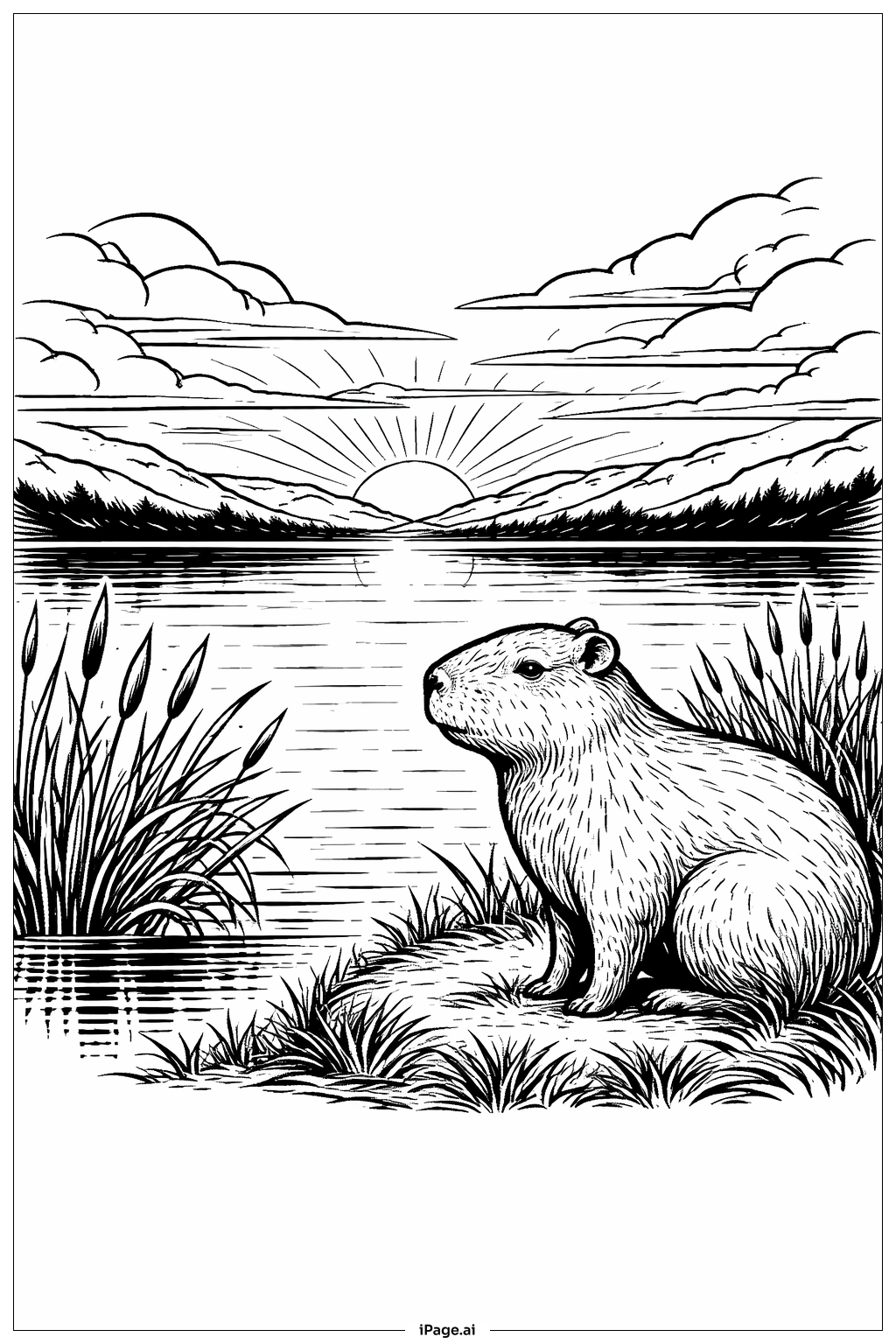
Coloring tips: How to color Capybara At Sunset coloring page well?
For the capybara, use warm brown or reddish-brown tones for its fur, keeping the coloring consistent across its body. The water can be colored with blues and teals, adding lighter shades where the sunset reflects on the surface. Use oranges, yellows, and pinks for the sunset sky, blending them together for a beautiful gradient effect. The sun itself can be bright yellow or orange. Color the palm trees with brown trunks and green fronds, perhaps adding darker greens for depth. The grasses and reeds can be various shades of green, yellow-green, or even golden brown. Consider leaving some white highlights on the water to show sparkles and reflections. You can add purple or pink tints to the sky near the horizon for extra sunset magic.
Coloring challenges: Which parts are difficult to color and need attention for Capybara At Sunset coloring page?
• Sunset Sky Blending: Creating a smooth gradient from the bright sun to the darker sky requires careful color blending. Young colorists may find it challenging to transition between yellows, oranges, pinks, and purples without harsh lines. Using light pressure and layering colors gradually helps achieve a natural sunset effect. The circular sun needs to remain bright while the surrounding sky darkens appropriately.
• Water Reflections and Ripples: The water surface presents complexity with its ripples, reflections, and varying depths. Children must decide which areas should be lighter to show reflections of the sunset and which should be darker to indicate depth. The ripple lines need subtle shading to look three-dimensional rather than flat. Balancing the water color with reflection colors requires planning and color theory understanding.
• Palm Frond Details: The palm trees contain many individual fronds with fine lines and overlapping sections. Staying within these detailed lines while maintaining consistent green tones challenges fine motor control. Each frond may need slight color variation to show depth and dimension. Younger children might struggle with the precision needed for these intricate botanical elements.
• Fur Texture on Capybara: While the capybara has a relatively simple outline, creating realistic fur texture through color variation adds difficulty. Using one flat brown makes it look plain, but adding highlights and shadows in appropriate places requires understanding of light sources and animal anatomy. The rounded body shape needs shading to appear three-dimensional rather than flat.
Benefits of coloring books: Advantages of drawing Capybara At Sunset coloring page
Coloring this peaceful sunset scene helps children develop patience and focus as they work on the detailed elements. The large circular sun provides an easy starting point for younger kids, building their confidence. Working on the gradient sky teaches color blending and introduces basic color theory concepts about warm colors. The water ripples and reflections enhance fine motor skills and hand-eye coordination through careful line work. This image also provides educational value by familiarizing children with capybaras, interesting animals they might not encounter often. The tranquil nature scene promotes relaxation and mindfulness, offering a calming activity after busy school days. Kids learn about different ecosystems and habitats while expressing creativity through their color choices. The combination of simple shapes and detailed areas makes it suitable for various age groups and skill levels.