Coloring tips: How to color Capybara And Frog coloring page well?
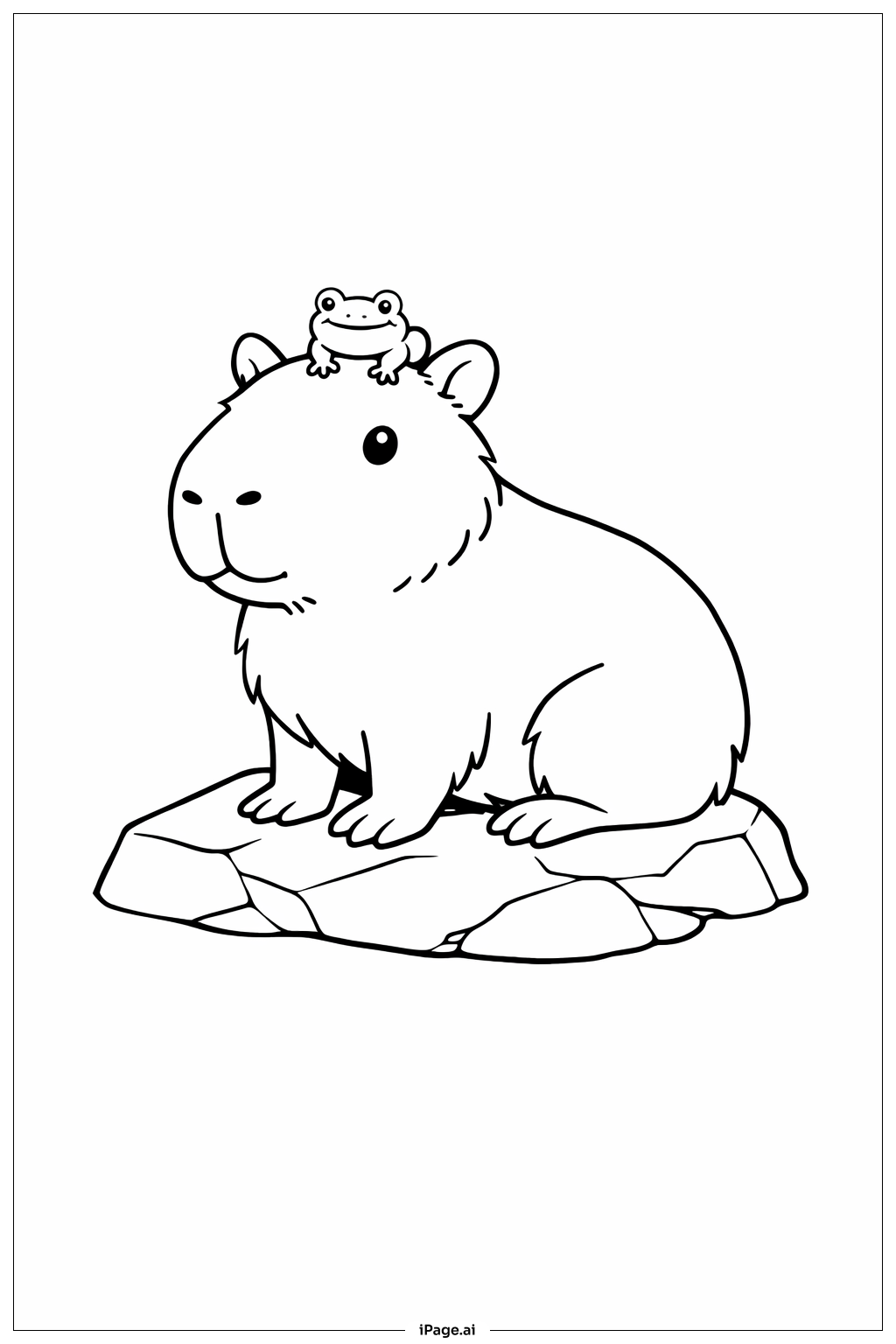
You can use soft brown or tan shades for the capybara's fur to make it look warm and natural. For the frog, bright green with some yellow or light green details can make it stand out nicely on the capybara's head. The rock can be colored with different grays or light browns to add texture but keep it simple. Use lighter colors for the capybara's belly and inner ears to show softness. Try blending colors to create shadows under the frog and on the rock to add depth. Have fun using your favorite colors to make the animals look cute and lively!
Coloring challenges: Which parts are difficult to color and need attention for Capybara And Frog coloring page?
1. Coloring the capybara’s fur can be tricky because you need to keep the soft look while staying inside the lines of the face and body. 2. The small frog on the head has tiny legs and fingers, which require careful coloring to show the details. 3. Shading the rock with cracks might be hard since you need to show textures and different levels without making it too dark. 4. Coloring the eyes to look shiny and round needs extra attention. 5. Choosing colors that make the frog stand out on the capybara, yet look natural, can be challenging.
Benefits of coloring books: Advantages of drawing Capybara And Frog coloring page
Coloring this picture helps children improve their focus and hand-eye coordination. It encourages creativity by choosing colors and blending techniques, especially in animals with different textures and features. Kids also learn about the capybara and frog, which boosts their interest in nature and animals. This activity supports fine motor skills as they carefully color small spaces like the frog's legs and the capybara’s fur details. It’s a fun way to relax while practicing art and learning about animal friendship.