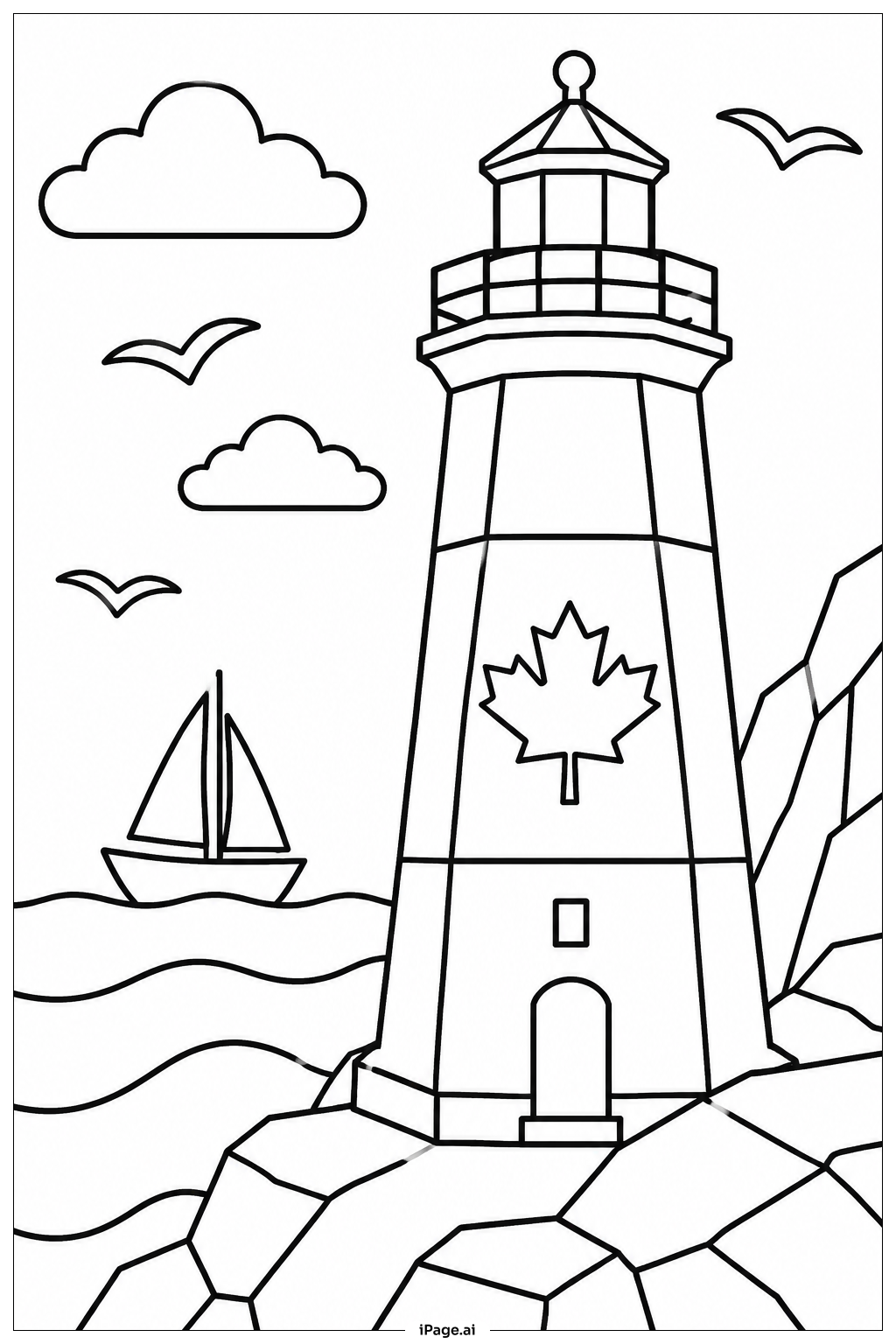
Coloring tips: How to color Canada Flag Lighthouse Coast coloring page well?
Start with the Canadian flag — color the two outer sections red and leave the center white with a bold red maple leaf. For the lighthouse, try alternating red and white horizontal stripes to give it a classic look. Use warm yellow or golden orange for the lantern room at the top. Color the ocean in shades of deep blue and teal, adding lighter blues near the wave crests for a sense of movement. The rocky shore looks great in gray, tan, and brown tones. Use green for any mossy patches on the rocks. Color the sky with soft blue and add white or light gray for the clouds. The seagulls can be white with light gray wing tips. Give the wooden dock a warm brown tone, and paint the rowboat in a bright color like red or yellow to make it pop. Kids can also add their own personal touch by experimenting with sunset colors like orange and pink in the sky to create a magical evening atmosphere. There are no strict rules — have fun and make it your own!
Coloring challenges: Which parts are difficult to color and need attention for Canada Flag Lighthouse Coast coloring page?
• Canadian Flag Accuracy: The maple leaf on the Canada Flag is one of the trickiest parts of this image. It has many small points and curves that require careful attention. Using a fine-tip marker or a sharp colored pencil will help you stay within the lines. Take your time and work slowly around each point of the leaf to keep it looking clean and recognizable.
• Lighthouse Stripe Alignment: The horizontal stripes on the lighthouse tower need to be colored evenly to look realistic. If the stripes are uneven or if the colors bleed into each other, the lighthouse can look messy. Using a ruler as a guide and coloring in one direction can help keep each stripe neat and well-defined.
• Ocean Wave Texture: The waves in this scene have layered, flowing lines that can be challenging to color smoothly. Blending two or three shades of blue to show depth and movement takes patience. Lighter tones near the surface and darker tones deeper in the water can create a convincing ocean effect, but achieving that gradual transition requires a steady hand.
• Rocky Shoreline Details: The jagged rocks along the coast have many small, irregular shapes packed close together. Coloring each rock individually with slightly different shades of gray, brown, and tan adds realism but takes time and focus. It is easy to accidentally color outside the lines in this dense area.
• Background Depth and Sky: Balancing the background hills, clouds, and sky so they do not overpower the main subjects requires careful color choices. Using lighter, softer tones in the background helps create a sense of distance and keeps the lighthouse and flag as the visual focal points of the scene.
Benefits of coloring books: Advantages of drawing Canada Flag Lighthouse Coast coloring page
Coloring this Canada Flag Lighthouse Coast page offers a wonderful mix of fun and learning for kids and adults alike. As you color the Canadian maple leaf flag, you naturally learn about Canada's national symbol and feel a sense of pride and connection to its culture and history. This makes the activity both creative and educational.
Working on the detailed lighthouse, rocky shore, and ocean waves helps build fine motor skills and hand-eye coordination. Staying within the lines of complex shapes like the maple leaf or the wave patterns trains patience and focus, which are valuable skills for children aged 4 to 16 in school and everyday life.
Choosing colors for the ocean, sky, and rocks encourages creative thinking and color awareness. Kids learn how different shades of blue, gray, and green can suggest depth, texture, and mood. This kind of visual thinking nurtures artistic confidence from an early age.
The peaceful coastal setting also has a calming effect. Spending quiet time coloring can reduce stress and anxiety, giving both children and adults a healthy way to relax and unwind. It is a screen-free activity that encourages mindfulness without even trying.
Sharing the finished page with family or friends can spark conversations about Canada, nature, and the ocean — turning a simple coloring session into a meaningful bonding experience. Overall, this page is a great way to learn, grow, and have fun all at once.