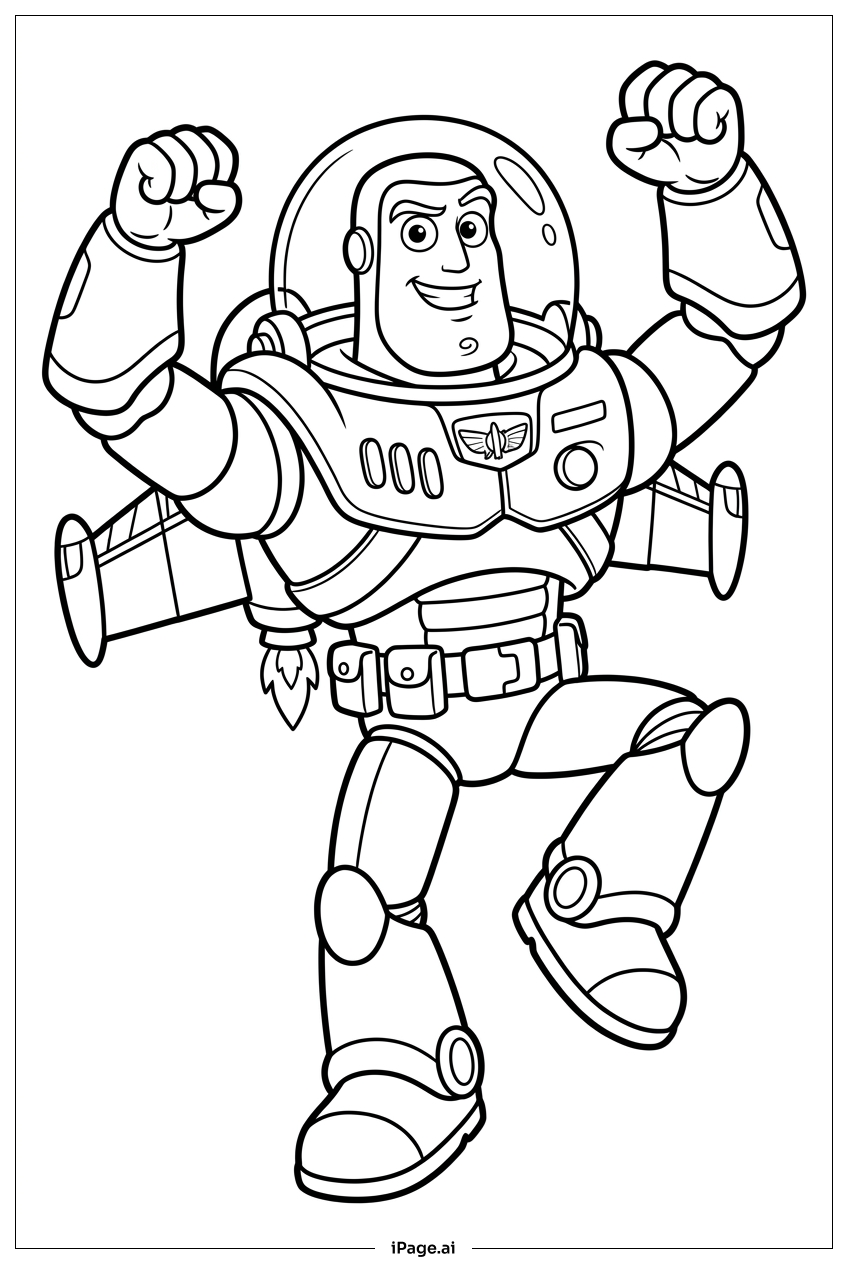
Coloring tips: How to color Buzz Lightyear Leaping with Boosters Ready coloring page well?
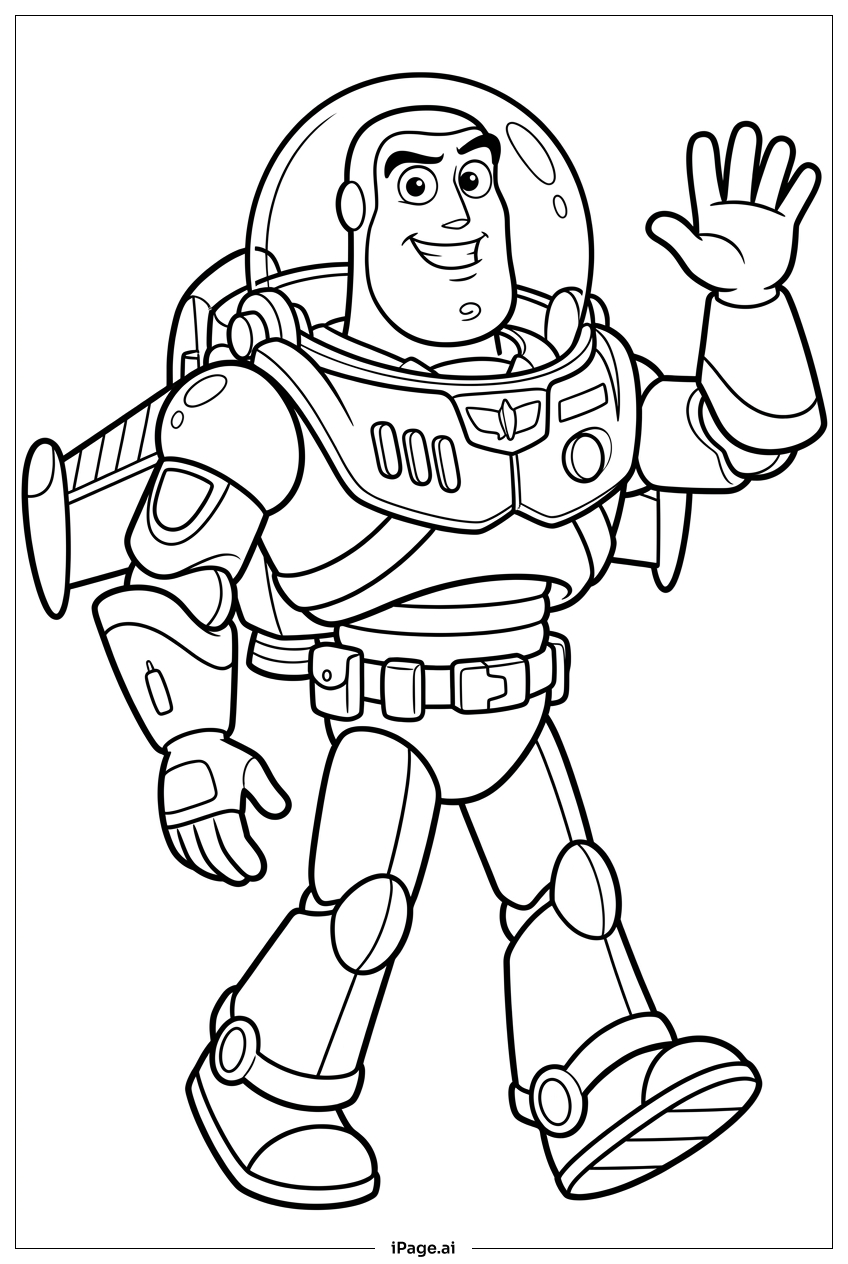
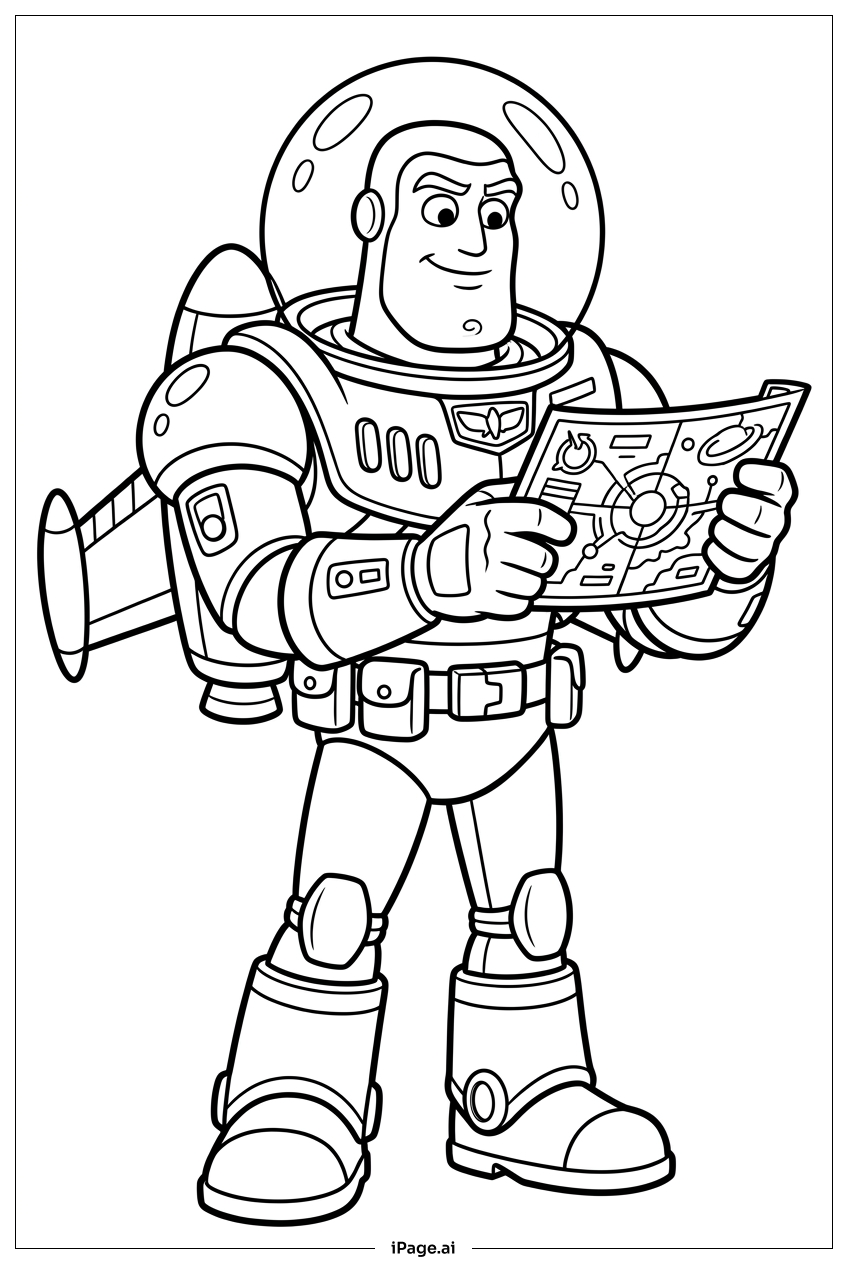
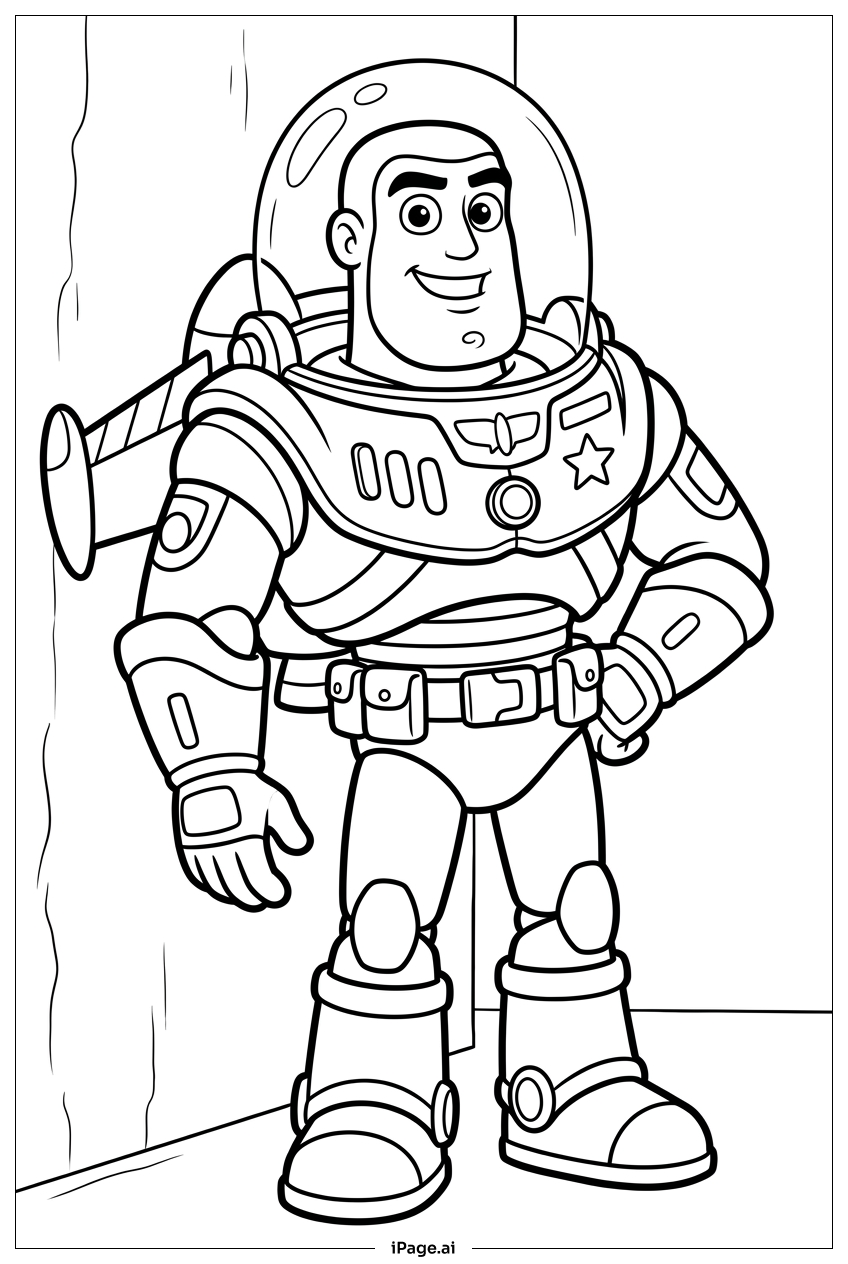
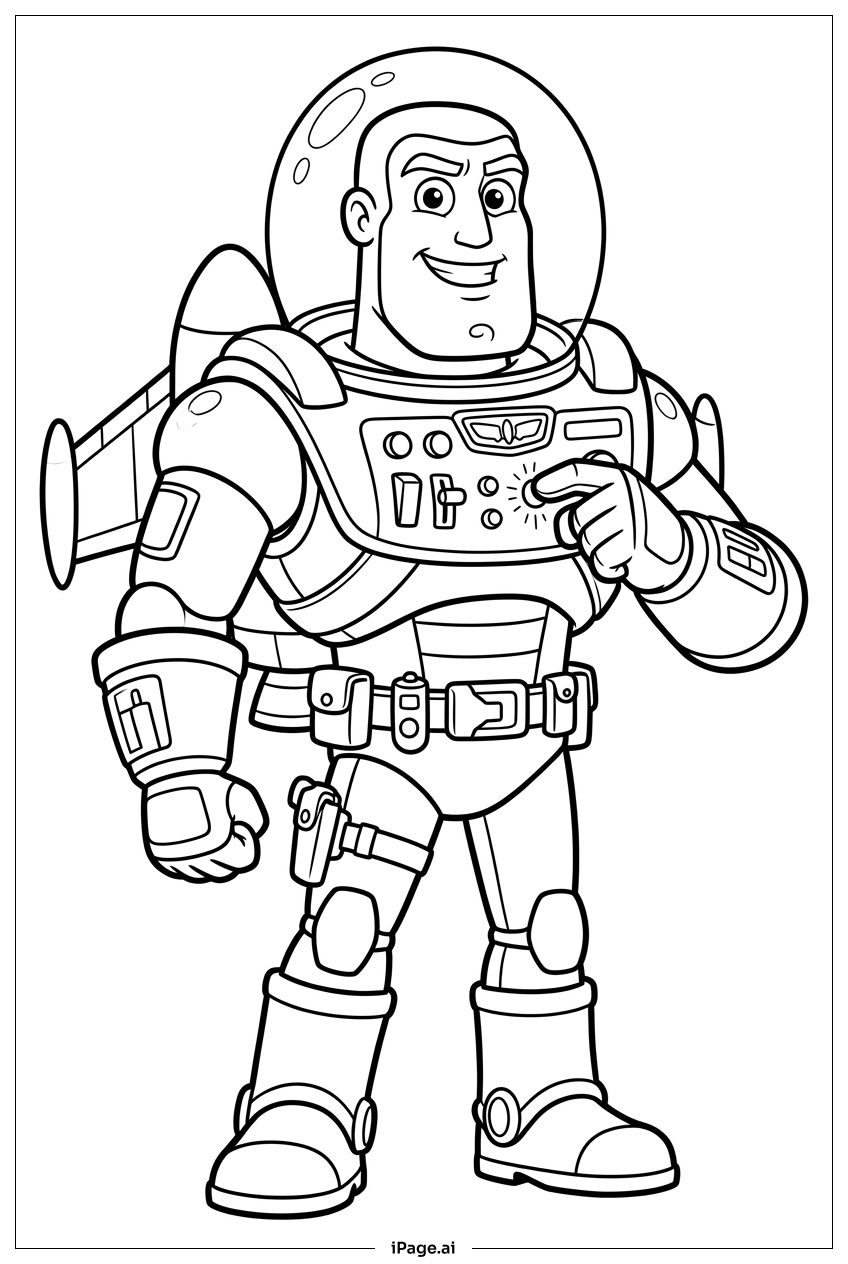
Start with Buzz's signature colors: white for the main suit, purple for the chest plate and helmet accents, and green for the visor and wrist communicator. Use a bright lime green for the booster flames to make them pop. The chest buttons look great in red, green, and yellow — keep them bold and distinct. For the wing pack, try a mix of white and light gray to show its mechanical shape. Add a light blue to the background to hint at sky or space. If you want more drama, use deep navy or black for the space backdrop and add small white dots for stars. Keep Buzz's face colors natural — light peach skin tones and bright, confident eyes. Use steady strokes inside the suit panels to keep the look clean and sharp. Have fun mixing shades to make his boosters look like they are really firing!
Coloring challenges: Which parts are difficult to color and need attention for Buzz Lightyear Leaping with Boosters Ready coloring page?
• Suit Panel Details: Buzz Lightyear's suit is packed with small sections, buttons, and panel lines. Each area needs to be colored separately and carefully. Younger children may find it tricky to stay inside all the narrow borders. Take your time with each panel and use a fine-tipped marker or colored pencil for the tiny parts.
• Booster Flame Effect: The boosters need to look like they are glowing and firing with energy. Creating a convincing flame effect means layering colors — starting with yellow at the center, blending into orange, and finishing with red or deep purple at the edges. Blending these gradients smoothly is a real challenge, especially for beginners.
• Helmet and Visor Shading: The rounded helmet and green visor are curved surfaces. To make them look three-dimensional, you need to add light and shadow. Leaving a small white highlight on the visor and shading the edges of the helmet darker helps a lot, but this takes patience and a steady hand.
• Wing Pack Mechanics: The retractable wings on Buzz's back have many small mechanical shapes and overlapping parts. Keeping each section a slightly different shade of gray or white helps separate the layers and gives the wings a realistic, mechanical feel. This level of detail can be overwhelming without careful planning.
• Dynamic Pose Proportions: Because Buzz is mid-leap, his body is shown at an angle. Arms, legs, and the suit all appear foreshortened. Coloring along these angled lines while keeping shading consistent across the whole figure requires focus and coordination, especially for children still developing fine motor skills.
Benefits of coloring books: Advantages of drawing Buzz Lightyear Leaping with Boosters Ready coloring page
Coloring this action-packed Buzz Lightyear page brings a whole galaxy of benefits for kids. First, it builds fine motor skills. Coloring inside the detailed lines of Buzz's suit, buttons, and boosters trains small hand muscles and improves pencil control — skills that directly help with writing. Second, it sparks creativity. Choosing colors for the booster flames, the space background, and the suit panels lets kids make their own artistic decisions and express their imagination freely. Third, it teaches focus and patience. A detailed image like this one encourages children to slow down, plan their colors, and work section by section — building concentration that carries over into school tasks. Fourth, it connects learning to play. Kids engage with shapes, spatial reasoning, and color theory without even realizing it. Understanding how colors blend and contrast is an early form of visual thinking. Fifth, it is a calming activity. The steady, rhythmic action of coloring helps reduce stress and anxiety, giving kids a healthy way to relax after a busy day. Finally, completing the page gives a real sense of accomplishment. Seeing a finished, colorful Buzz Lightyear ready to blast off is genuinely rewarding and builds confidence. To infinity and beyond!