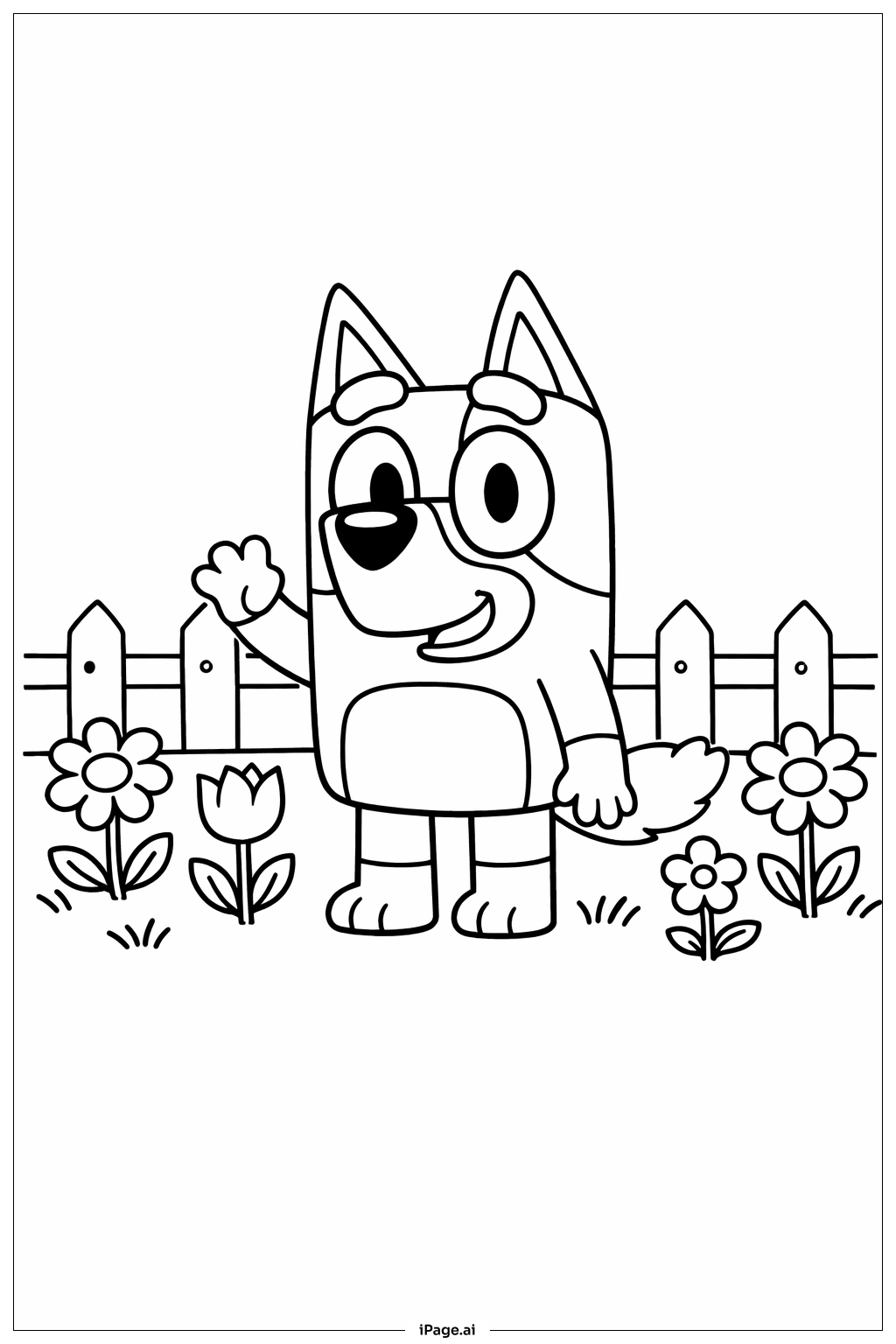
Coloring tips: How to color Bluey In Garden coloring page well?
Use light blue for Bluey's main body and darker blue for the patches on the face, ears, and tail. Color the nose black and the eyes white with black pupils. For the garden, use green shades for the grass and leaves to bring life to the scene. Bright reds, yellows, pinks, and purples will make the flowers stand out. The fence can be colored brown or gray to look like wood. Keep the colors cheerful and vibrant to match Bluey's playful mood.
Coloring challenges: Which parts are difficult to color and need attention for Bluey In Garden coloring page?
1. Bluey's face has small details like eyes, nose, and mouth, which need careful coloring to avoid going outside the lines.
2. The flowers have different shapes and sizes, which can be tricky to color neatly.
3. The fence has thin lines and small nails that require precise coloring.
4. Coloring the tail and paws requires attention to detail to distinguish the different patches of fur.
5. The grass patches are small and scattered, needing careful fill without overlapping other parts.
Benefits of coloring books: Advantages of drawing Bluey In Garden coloring page
Coloring this picture helps improve hand-eye coordination and fine motor skills as kids work carefully around small areas. It also encourages creativity by allowing children to choose bright colors for flowers and the garden. Coloring Bluey, a familiar and friendly character, makes the activity more engaging and fun. Additionally, it teaches patience and focus as kids try to color inside the lines and complete the picture nicely.