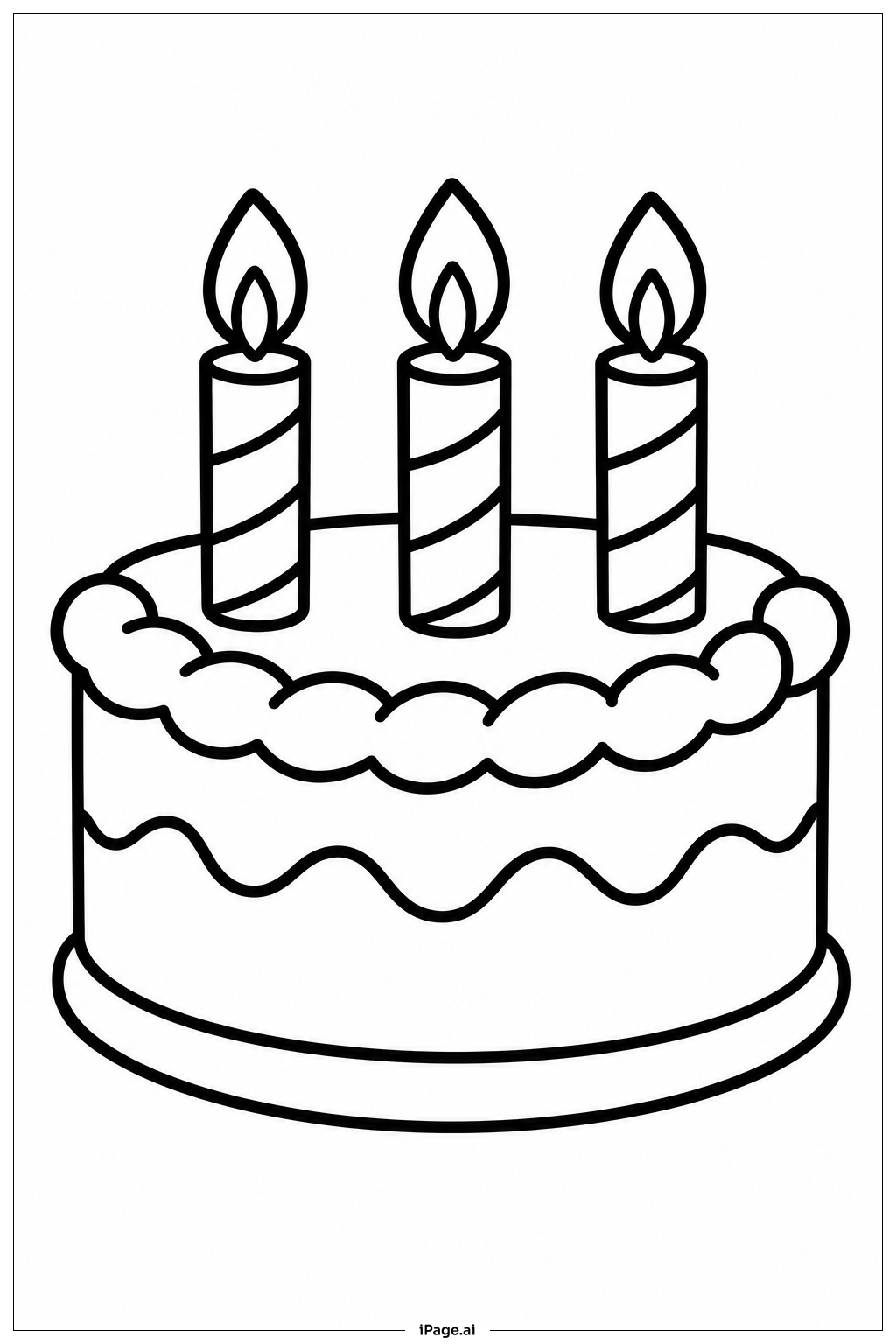
Coloring tips: How to color Single Layer Birthday Cake coloring page well?
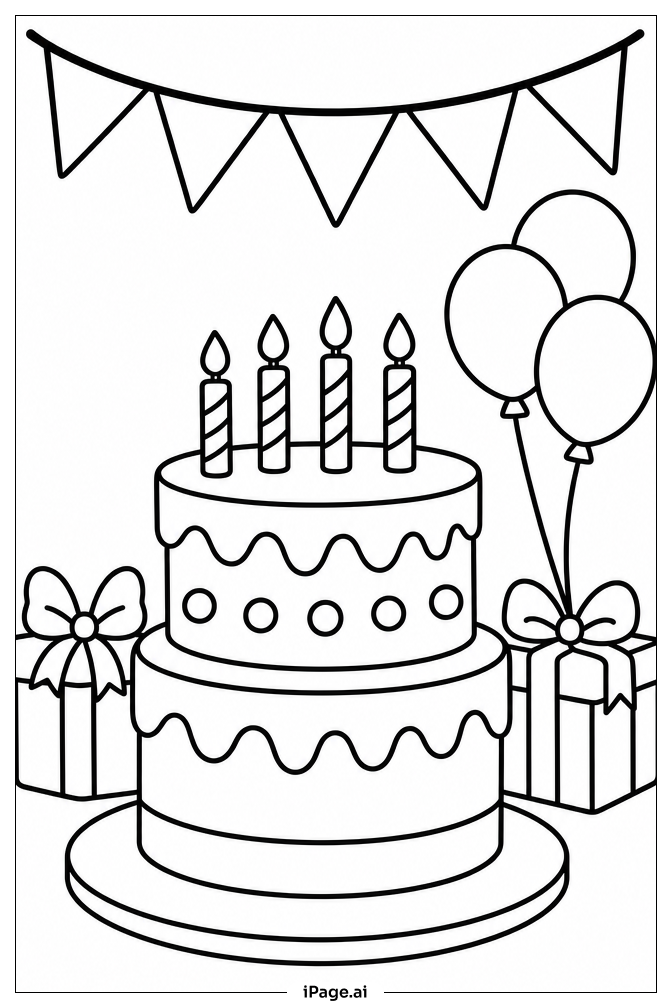
Start with the cake base and frosting. Use soft pastel colors like light pink, lavender, or sky blue for the main frosting areas. For the dripping frosting along the sides, try a slightly darker shade of your base color to add depth. Color the candles in bright, contrasting colors such as red, yellow, green, and orange to make them pop. Use a warm yellow or golden tone for the candle flames. The decorative swirls and flowers on the cake look great in white, gold, or a fun contrasting color like purple or teal. For the plate, use a clean white or soft cream color with a gold or silver edge to make it look elegant. Feel free to add your own patterns or extra decorations to personalize the cake and make it uniquely yours.
Coloring challenges: Which parts are difficult to color and need attention for Single Layer Birthday Cake coloring page?
• Frosting Drips: The dripping frosting along the sides of the cake has curved, uneven edges that require careful coloring. Staying inside these organic shapes without going over the lines can be tricky, especially where the drips taper into points at the bottom. Use a fine-tipped coloring tool for the edges and fill inward.
• Small Decorative Details: The tiny swirls, dots, and flower shapes on the cake surface are small and closely spaced. Coloring each one individually without smudging neighboring areas demands patience and a sharp pencil or thin marker. These details can make the cake look stunning if done carefully.
• Candle Shading and Flames: Each candle is a narrow vertical shape, and adding shading to give them a rounded, three-dimensional look is a challenge. The small flames at the top are also very tiny, requiring precise control. Using a light source direction (from one side) helps make the candles look realistic.
• Color Transitions on Frosting: The smooth, rounded surface of the cake frosting is an opportunity to practice blending colors. Achieving a soft gradient from a lighter top to a slightly darker side can be difficult for younger colorists. Layering colors gently and using circular strokes helps create a smooth look.
• Plate Border Details: The scalloped edge of the plate contains small repeating ornamental shapes. These require consistent coloring to look neat and balanced. Keeping the same color pressure and staying within each small section helps the plate look polished and well-finished.
Benefits of coloring books: Advantages of drawing Single Layer Birthday Cake coloring page
Coloring this Single Layer Birthday Cake page offers a wide range of fun and meaningful benefits for kids and young artists. First, it helps develop fine motor skills. Carefully coloring small details like swirls, candle flames, and frosting drips strengthens hand muscles and improves pencil control. Second, it encourages creativity. Choosing colors for the frosting, candles, and decorations allows children to express their personal style and imagination. There are no wrong choices, which builds confidence. Third, it teaches color theory in a playful way. Experimenting with complementary colors or creating gradients on the frosting helps young colorists understand how colors work together. Fourth, it supports focus and patience. Completing all the intricate details of the cake requires sustained attention, which is great practice for concentration skills. Fifth, it creates a joyful connection to celebrations. The birthday cake theme sparks happy feelings and fond memories, making the coloring experience emotionally engaging and positive. Overall, this page is a wonderful creative activity that combines learning with fun.