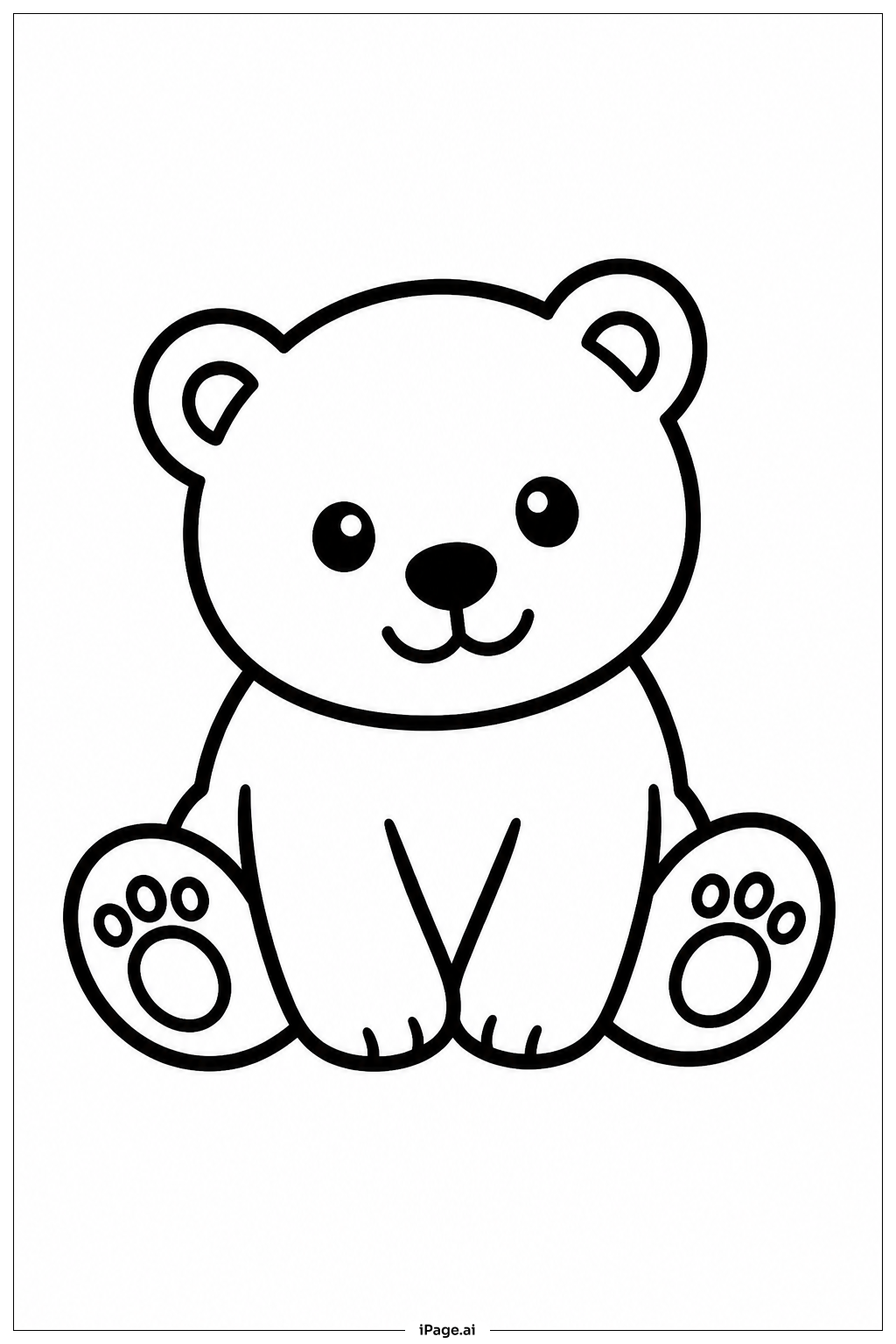
Coloring tips: How to color Polar Bear Cub coloring page well?
Start with the bear's fur using very light colors. White, cream, or pale yellow work great for a realistic look. You can add soft gray or light blue shadows in the deeper areas, like under the chin, around the belly, and between the legs. This helps the fur look thick and fluffy. For the nose, use a soft pink or light brown. The eyes can be colored dark brown or black, with a tiny white dot to make them look shiny and alive. If you want a fun and creative version, try coloring the cub in pastel tones like lavender or baby blue for a magical feel. Add a snowy background using light blue and white to set an Arctic scene. Take your time with the fur lines — short, gentle strokes in the direction the fur grows will make it look extra realistic and soft.
Coloring challenges: Which parts are difficult to color and need attention for Polar Bear Cub coloring page?
• Fur Texture and Layering: Polar bear fur looks white but is never just one flat color. Showing depth and fluffiness requires blending multiple shades like white, cream, and light gray. Keeping the layers smooth without making the fur look muddy or too dark takes patience and a light hand, especially for younger colorists.\n\n• Subtle Shadow Placement: The cub's round, soft body has gentle curves that need shading to look three-dimensional. Placing shadows in the right spots — under the ears, along the sides, and beneath the belly — can be tricky. Too much shadow makes the cub look dirty, while too little makes it look flat.\n\n• Small Facial Features: The cub's face has tiny details like the nose, eyes, and mouth packed close together in a small area. Coloring these neatly without going outside the lines requires a fine-tipped pencil or marker and a steady hand. Getting the eyes to look expressive and cute is one of the most rewarding but challenging parts.\n\n• Maintaining Consistent Fur Direction: The line work on the fur flows in different directions across the body. Following those lines with your coloring strokes helps the image look natural. Switching directions as you move from one area to another — like from the chest to the paws — takes careful observation and control.\n\n• Keeping White Areas Clean: Since polar bears are mostly white, it is important not to over-color and lose that bright, clean look. Knowing when to stop and leave areas uncolored or very lightly shaded is a skill that makes the final result look polished and true to life.
Benefits of coloring books: Advantages of drawing Polar Bear Cub coloring page
Coloring this sweet polar bear cub is a wonderful activity for kids and beginners alike. It helps build fine motor skills as children carefully stay within the lines and practice controlled pencil movements. Working on the soft fur details encourages patience and focus, which are important skills both in and out of the classroom. Choosing colors for the fur, nose, eyes, and background sparks creativity and helps children develop their own sense of color and style. Because polar bears are real Arctic animals, this page can also be a gentle introduction to wildlife and nature, inspiring curiosity about animals and their habitats. The cub's adorable and friendly design makes the experience feel fun and rewarding rather than stressful, boosting confidence when the finished page comes together beautifully. For older kids, the challenge of blending and shading the fur provides a satisfying artistic workout. Overall, this Coloring Pages activity offers a calm, screen-free way to relax, express creativity, and feel proud of a finished piece of art.