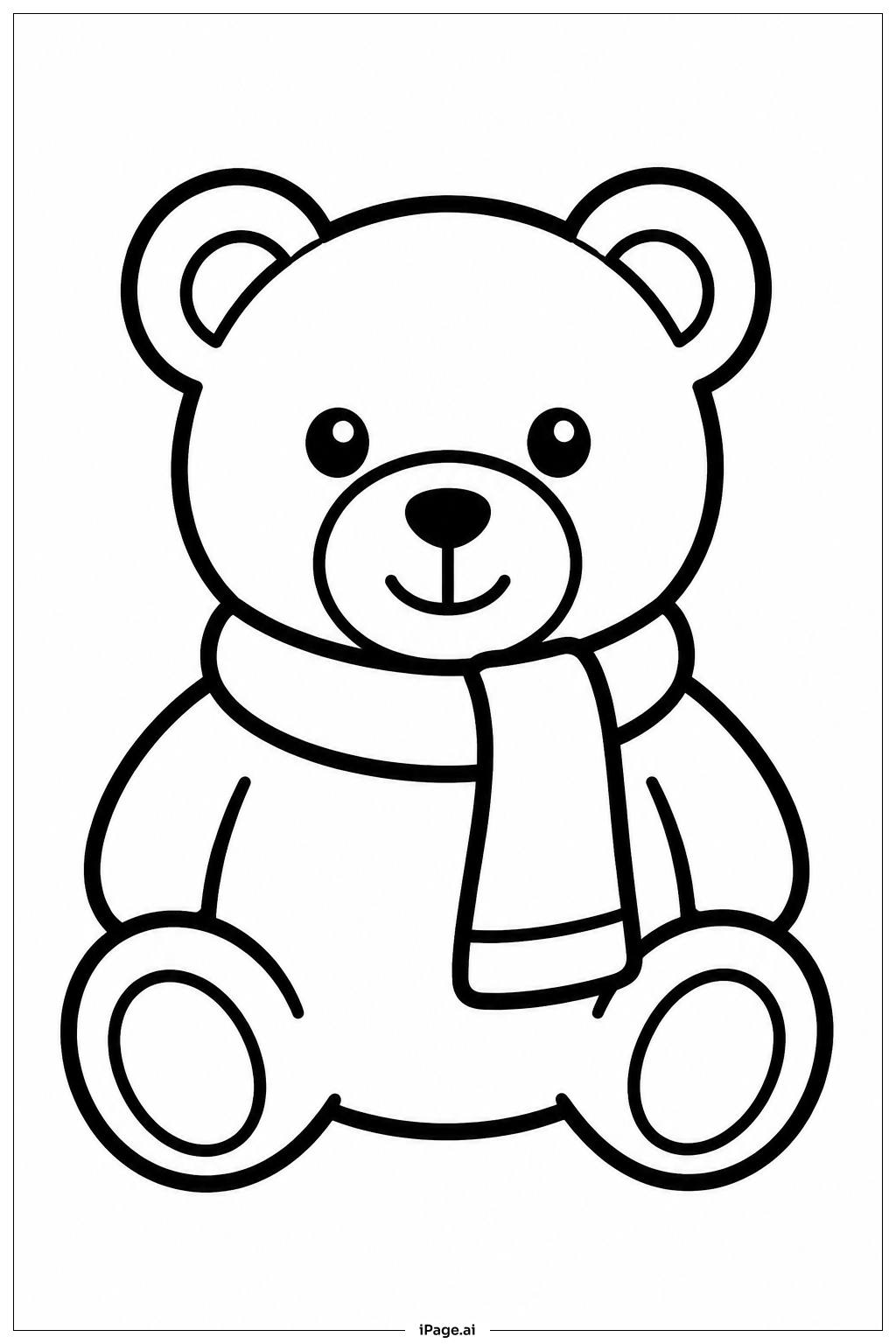
Coloring tips: How to color Bear With Scarf coloring page well?
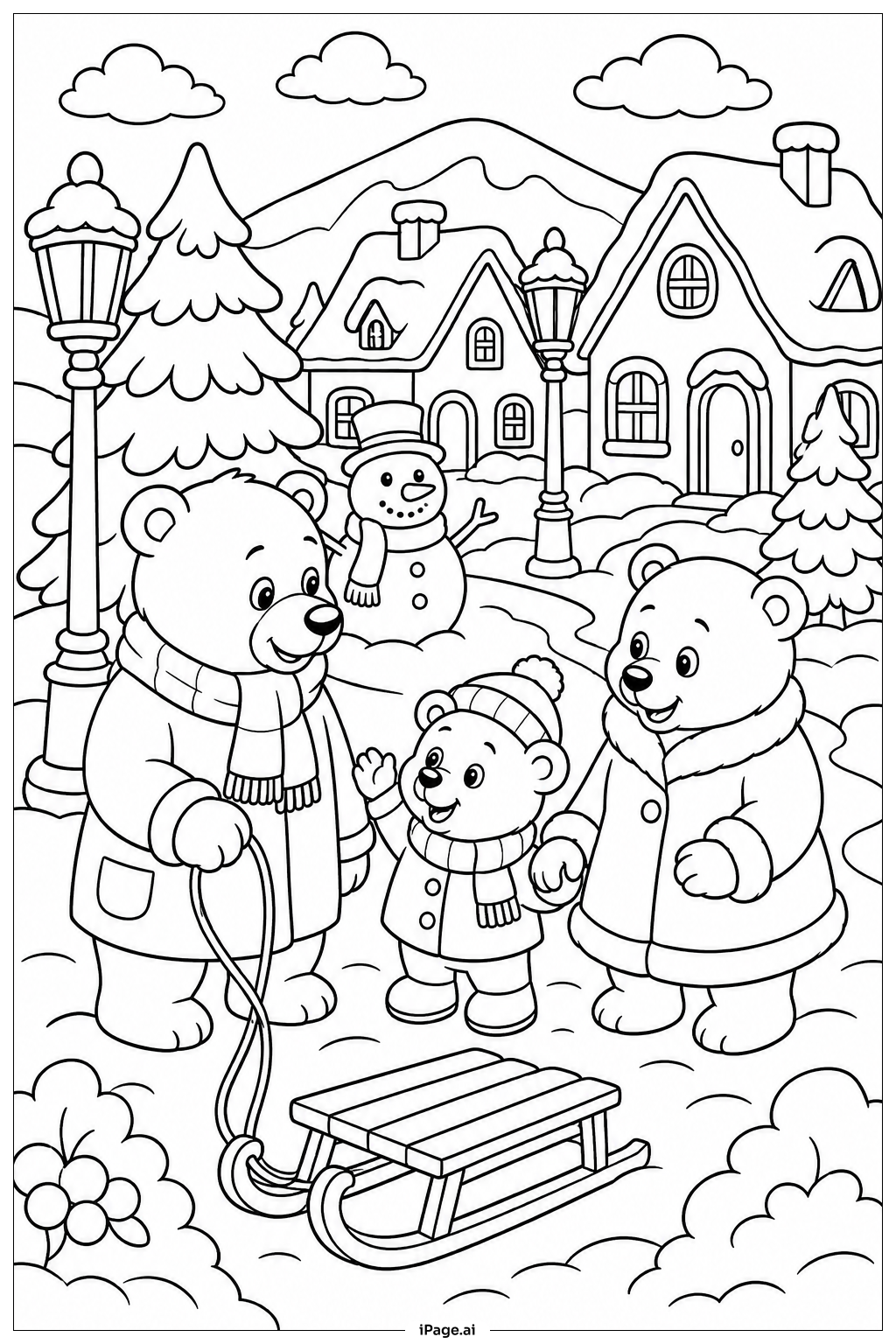
You can use warm brown shades to color the Bear’s fur, such as light tan or chestnut, to make it look soft and cuddly. For the scarf, try bright and cheerful colors like red, orange, or green to create a vivid contrast with the Bear’s fur. Adding stripes or patterns to the scarf, like polka dots or checks, can make the coloring more fun and creative. Don’t forget to color the Bear’s nose and eyes in darker tones, like black or dark brown, to make them stand out. You can also add a light blue or snowy background to suggest a cool winter day.
Coloring challenges: Which parts are difficult to color and need attention for Bear With Scarf coloring page?
• Scarf Details: The folds and overlaps in the scarf can be tricky to shade properly. Coloring these areas with attention to light and shadow will help show the scarf’s dimension and softness.
• Fur Texture: The Bear’s fur lines are fine and close together. Coloring carefully around these lines without filling in over them can be challenging, especially for younger artists.
• Facial Features: The Bear’s eyes and nose are relatively small but important for expression. Coloring these precisely requires patience and fine control.
• Color Contrast: Choosing suitable colors that make the Bear and scarf stand out but also look natural takes thoughtful planning.
• Small Areas: The Bear’s paws and individual fingers are small spaces that require careful coloring to avoid going outside the lines.
Benefits of coloring books: Advantages of drawing Bear With Scarf coloring page
Coloring this Bear With Scarf image helps children practice their fine motor skills by working on smaller details like the scarf folds and facial features. It encourages creativity as they experiment with different colors and patterns for the scarf. This activity also supports concentration and patience since the image has various textures to color carefully. Additionally, coloring animals dressed for winter can spark curiosity about nature and seasons, making the experience both fun and educational. Overall, this image is great for helping children develop hand-eye coordination and build confidence in their artistic abilities.