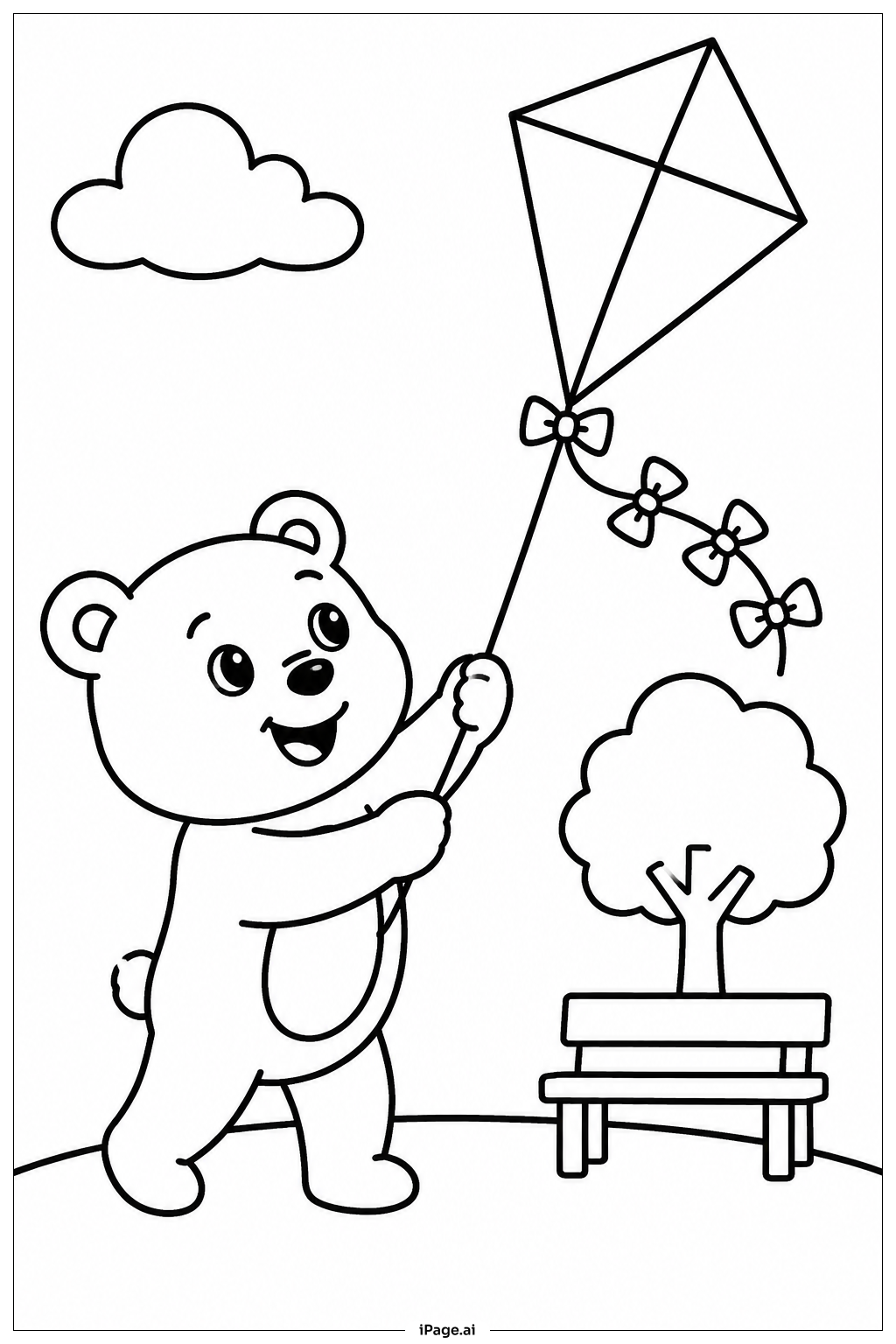
Coloring tips: How to color Bear With Kite coloring page well?
For this picture, try using warm brown shades for the Bear’s fur, with darker tones around the ears and paws for depth. You can choose soft green colors for the grass to make the scene fresh and lively. The kite offers a great opportunity to use bright, bold colors like red, blue, yellow, or orange to make it stand out in the sky. For the kite’s ribbons, consider alternating vivid colors to add a playful touch. Keep the background simple with light blue for the sky, allowing the Bear and kite to be the focus. Use gentle strokes to keep the Bear looking soft and cuddly.
Coloring challenges: Which parts are difficult to color and need attention for Bear With Kite coloring page?
• Fine Details of the Kite Tail: The kite’s small ribbon-like tails can be tricky to color neatly because of their tiny size and close spacing. It requires careful control to stay inside the lines.
• Fur Texture: Creating a natural look for the Bear’s fur demands gentle shading and layering color to avoid flatness, which can be challenging for young artists.
• Balancing Contrast: Choosing colors that make the Bear and kite pop without overwhelming the scene can be difficult, especially when working with bright kite colors against softer elements.
• Maintaining Clean Edges: The outline between the Bear’s rounded shapes and the straight kite edges requires attention to keep distinct boundaries clean and crisp.
• Sky and Background Simplicity: While simple, leaving background colors smooth without over-coloring or leaving blotches is sometimes underestimated and needs patience.
Benefits of coloring books: Advantages of drawing Bear With Kite coloring page
Coloring this Bear With Kite image helps develop hand-eye coordination and fine motor skills through staying inside the lines on curved and straight shapes. It encourages creativity by allowing a mix of natural and imaginative colors, especially for the Bear’s fur and the vibrant kite. The scene promotes a sense of calm and focus, as the child takes time to bring this joyful moment to life with color. It also introduces color planning skills—balancing bright and soft tones for a pleasing look. Overall, it’s a fun way to practice concentration while exploring outdoor themes and animal characters.