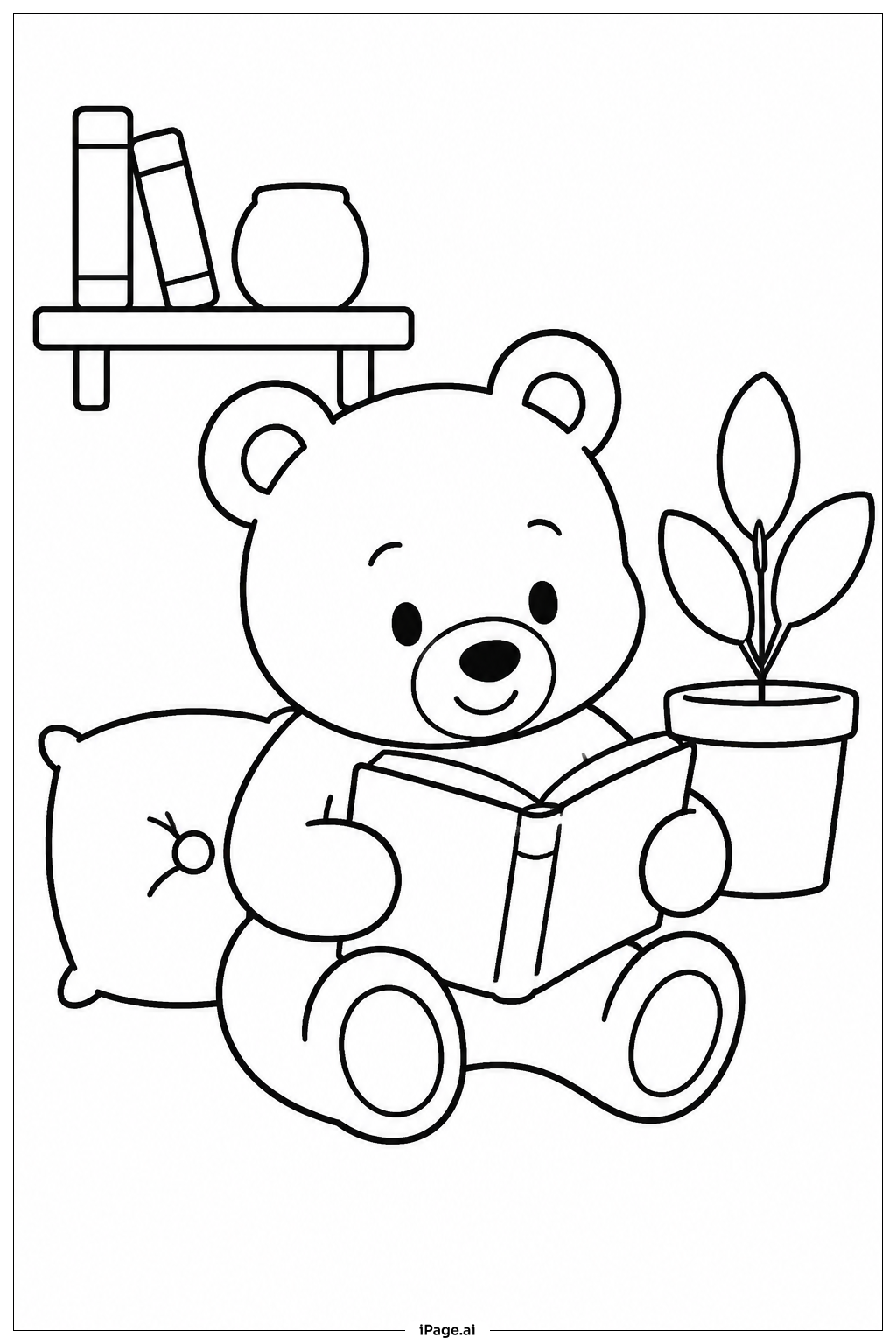
Coloring tips: How to color Bear Reading Book coloring page well?
Start with the bear's body using warm shades of brown, such as tan, caramel, or honey brown. Use a slightly darker brown for the edges of the fur to create depth and texture. For the bear's face, use a lighter shade on the muzzle area to make it stand out. Color the book with bright, cheerful tones — try a red or blue cover with white pages inside. If the bear is wearing clothes, pick fun colors like yellow, green, or orange to give it a playful look. Use a soft peach or light pink for the inner ears and paw pads. For the background, consider light pastels like sky blue or pale yellow to keep the mood warm and calm. Take your time adding small details to the fur and book pages to make the picture feel lively and personal. There are no wrong color choices — let your imagination guide you!
Coloring challenges: Which parts are difficult to color and need attention for Bear Reading Book coloring page?
• Fur Texture Rendering: The bear's fluffy body requires careful attention to fur direction and layering. Coloring in short, light strokes following the natural flow of the fur helps create a realistic or soft texture. Blending two shades of brown — a base tone and a darker shadow tone — along the edges adds dimension and prevents the figure from looking flat.
• Small Facial Features: The bear's eyes, nose, and mouth are small and closely placed, making them tricky to color neatly. Using fine-tipped colored pencils or markers is recommended for these details. The expression depends heavily on these features, so taking extra care here helps keep the bear looking friendly and expressive.
• Book Details: The open book held in the bear's paws contains small details like page lines or text markings. Coloring the pages white or very light cream while adding soft shadows along the spine gives the book a realistic, three-dimensional look. The book cover is a good opportunity to add a pop of bold color.
• Clothing or Accessories: If the bear is wearing a shirt, scarf, or hat, each piece needs a distinct color to avoid blending into the bear's fur. Choosing colors that contrast with the brown of the bear — like blue, red, or green — helps each element stand out clearly.
• Maintaining Clean Borders: The transition between the bear's fur and the background requires a steady hand. Coloring the background last and working carefully around the bear's outline helps keep the edges clean and the overall image looking polished.
Benefits of coloring books: Advantages of drawing Bear Reading Book coloring page
Coloring this Bear Reading Book image offers a wonderful mix of creative and developmental benefits for children and beginners alike. First, it encourages a love of reading by connecting art with literacy — children who color this page often feel more curious about books and stories. Second, the activity builds fine motor skills as kids carefully fill in the bear's fur, the tiny facial features, and the details of the open book. These small, controlled movements strengthen hand muscles and improve pencil grip. Third, choosing colors for the bear, the book, and the background promotes creative decision-making and self-expression. Children learn that there are many right answers, which builds confidence. Fourth, focusing on a detailed coloring page helps develop concentration and patience — valuable skills that support learning in school. Fifth, the calm, cozy nature of the scene makes this image especially soothing to color, offering a relaxing activity that helps reduce stress and anxiety. Whether used in a classroom or at home, this image provides a meaningful and enjoyable experience that combines imagination, skill-building, and a gentle reminder of the joy of reading.