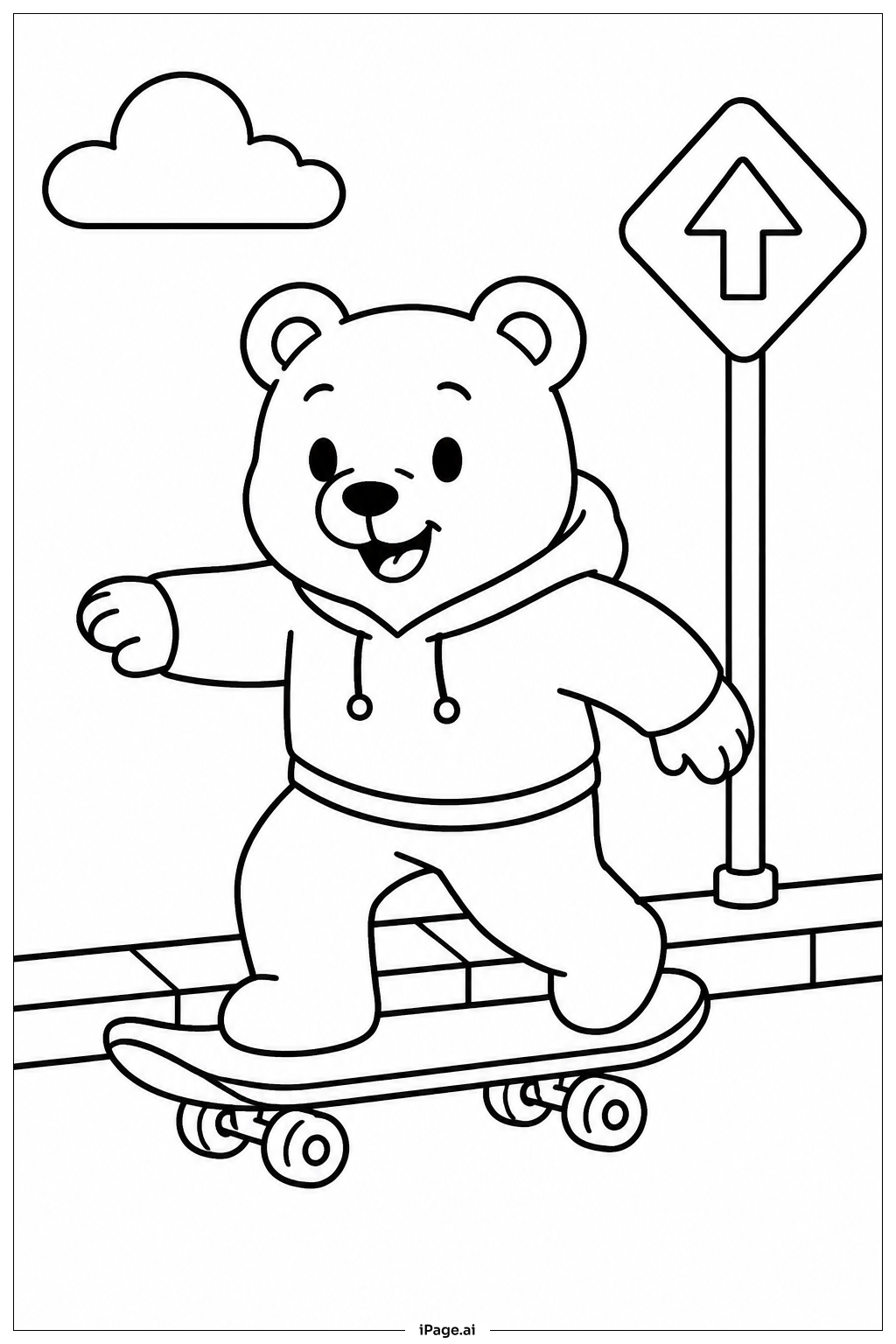
Coloring tips: How to color Bear On Skateboard coloring page well?
For this image, you can choose warm colors for the Bear’s fur like brown, tan, or golden yellow to make it look friendly and cute. The skateboard can be bright and bold with colors like red, blue, or green for the board and wheels to add contrast. Consider coloring the shoes in a different shade to highlight details. Don’t forget to color the Bear’s nose and eyes dark to bring out the facial features. You can use softer colors for shadows and highlights to give a three-dimensional effect. Feel free to add your own creative patterns or designs to the skateboard to make it unique.
Coloring challenges: Which parts are difficult to color and need attention for Bear On Skateboard coloring page?
• Small Details: The Bear’s facial features like eyes, nose, and mouth require careful coloring to keep them expressive without overflowing the lines. • Texture of Fur: Coloring the Bear’s fur evenly may be challenging; blending colors smoothly will help create a natural look. • Skateboard Wheels: The wheels are round and small, needing steady hand to color inside the lines neatly. • Balanced Composition: Ensuring the Bear looks balanced on the skateboard means coloring the feet and shoes clearly so the pose feels stable. • Limited Background Space: Since the focus is on the Bear and skateboard with little background, coloring can feel restricted; adding subtle shading around the edges can add depth without overpowering the subject.
Benefits of coloring books: Advantages of drawing Bear On Skateboard coloring page
Coloring this Bear On Skateboard image helps improve hand-eye coordination as children carefully color within lines and details. It encourages creativity by choosing different colors and designing the skateboard uniquely. The image promotes focus and patience since the details require careful attention. Coloring a fun and dynamic scene like this can boost a child’s enthusiasm and make the activity enjoyable. It also supports fine motor skill development through managing small areas and shapes. Overall, this picture combines playfulness with learning opportunities, making it excellent for engaging children aged 4 to 16.