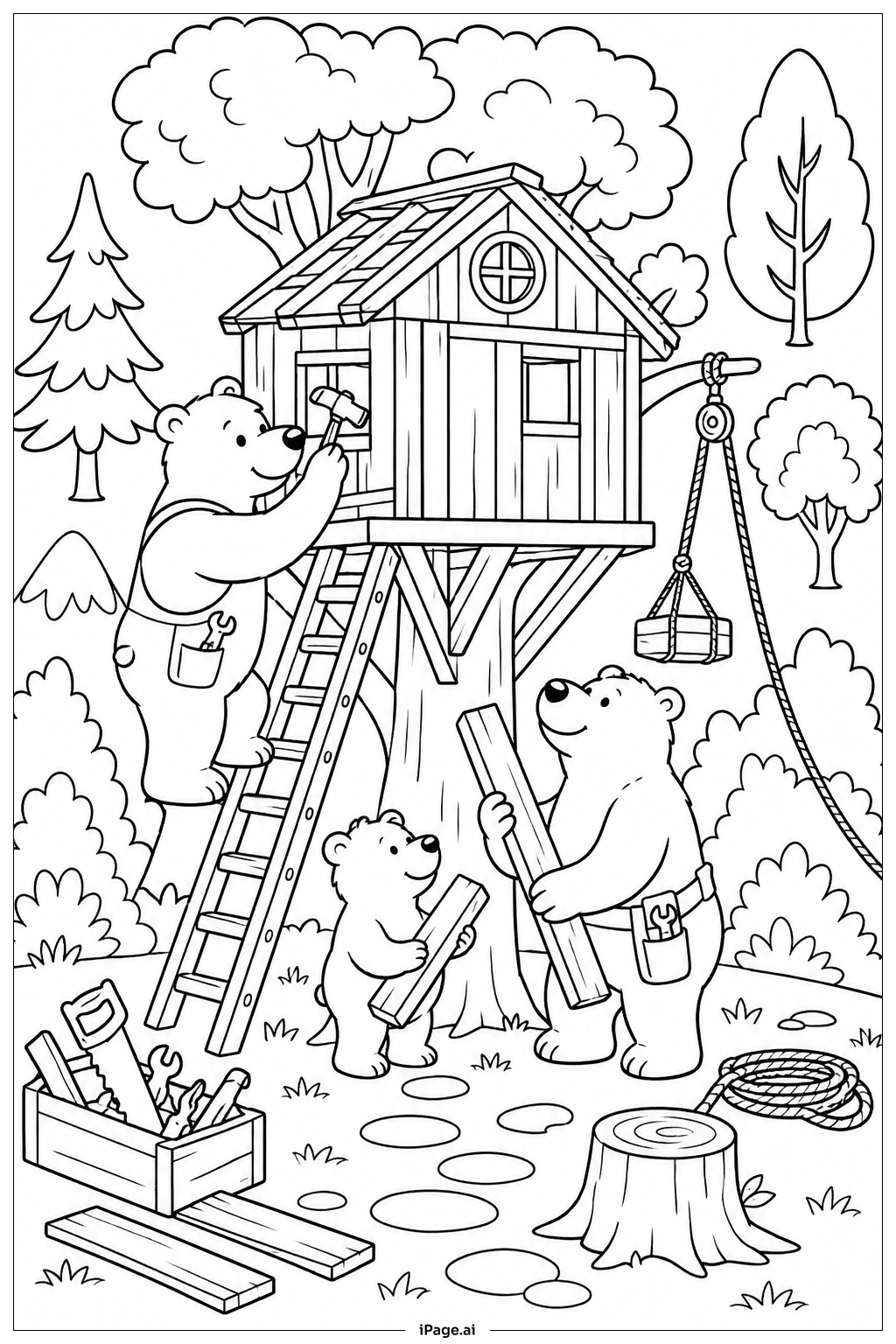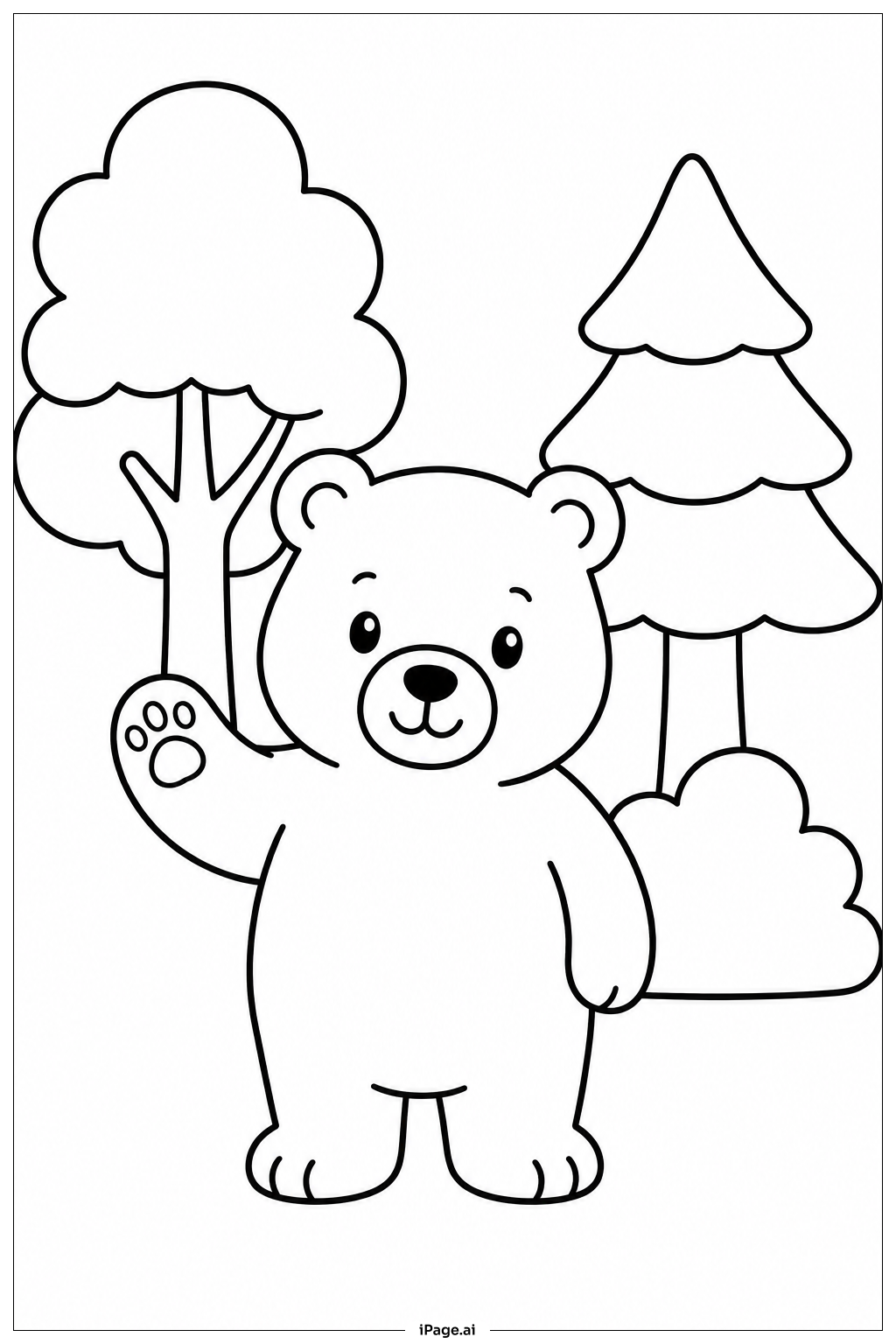
Coloring tips: How to color Bear In Forest coloring page well?
Start with the bear's fur. Use warm browns like chocolate brown or golden brown for the body. Add darker brown shading along the edges and under the belly to give the fur dimension. Use a lighter tan or cream color for the muzzle and inner ears. For the forest, use many shades of green — bright lime for new leaves, deep emerald for older foliage, and olive green for the ferns. Color the tree trunks in gray-brown or reddish-brown tones. The forest floor can be done in earthy tones like tan, rust, and dark brown. Paint the mushrooms in red, orange, or white caps with cream-colored stems. Use cool gray or mossy green for the rocks. A soft yellow or pale blue peeking through the treetops suggests sunlight or sky. Try blending colors to make the scene feel alive and natural.
Coloring challenges: Which parts are difficult to color and need attention for Bear In Forest coloring page?
• Bear Fur Texture: The bear's fur requires layering multiple shades of brown to look realistic. Kids may find it tricky to blend dark and light tones smoothly across the large body area without making it look flat. Patience and gentle strokes work best here.
• Forest Depth and Background: The background trees are smaller and less detailed than the foreground ones. Creating a sense of distance means using lighter or cooler greens further back. This concept of depth through color is a challenge for younger colorists who may use the same green throughout.
• Small Details on the Forest Floor: Mushrooms, ferns, pebbles, and fallen leaves are small and close together at the bottom of the image. Coloring inside these tiny shapes without going over the lines requires a sharp pencil or fine-tipped marker and steady hands.
• Varied Green Tones for Foliage: The trees and plants all need different shades of green to avoid looking repetitive or flat. Choosing the right greens and knowing when to shift tones is a skill that can be difficult for beginners who may not have a wide range of green shades available.
• Bear Face and Expressions: The bear's face has subtle features like eyes, a nose, and a muzzle that need careful attention. Coloring these small facial details neatly — especially the shiny highlight in the eyes — requires precision and a light hand to avoid smudging or overworking the area.
Benefits of coloring books: Advantages of drawing Bear In Forest coloring page
Coloring this Bear In Forest scene offers many great benefits for kids and beginners alike. Working on the bear's large body helps build confidence with shading and color mixing, turning a simple outline into a lifelike animal. Children learn how warm browns and cool greens interact, developing an early sense of color harmony. The many small details on the forest floor — mushrooms, ferns, and rocks — encourage fine motor skills and hand-eye coordination. Carefully coloring inside tiny shapes builds the pencil control that also helps with handwriting. The forest setting sparks imagination and curiosity about nature and wildlife. Kids may feel inspired to learn more about real bears and the ecosystems they live in. The calming, repetitive motion of coloring also helps reduce stress and promotes focus. Completing the full scene gives a real sense of pride and accomplishment. Whether a child rushes through with bold, bright colors or takes time to blend every detail, this image supports creative expression at every skill level.