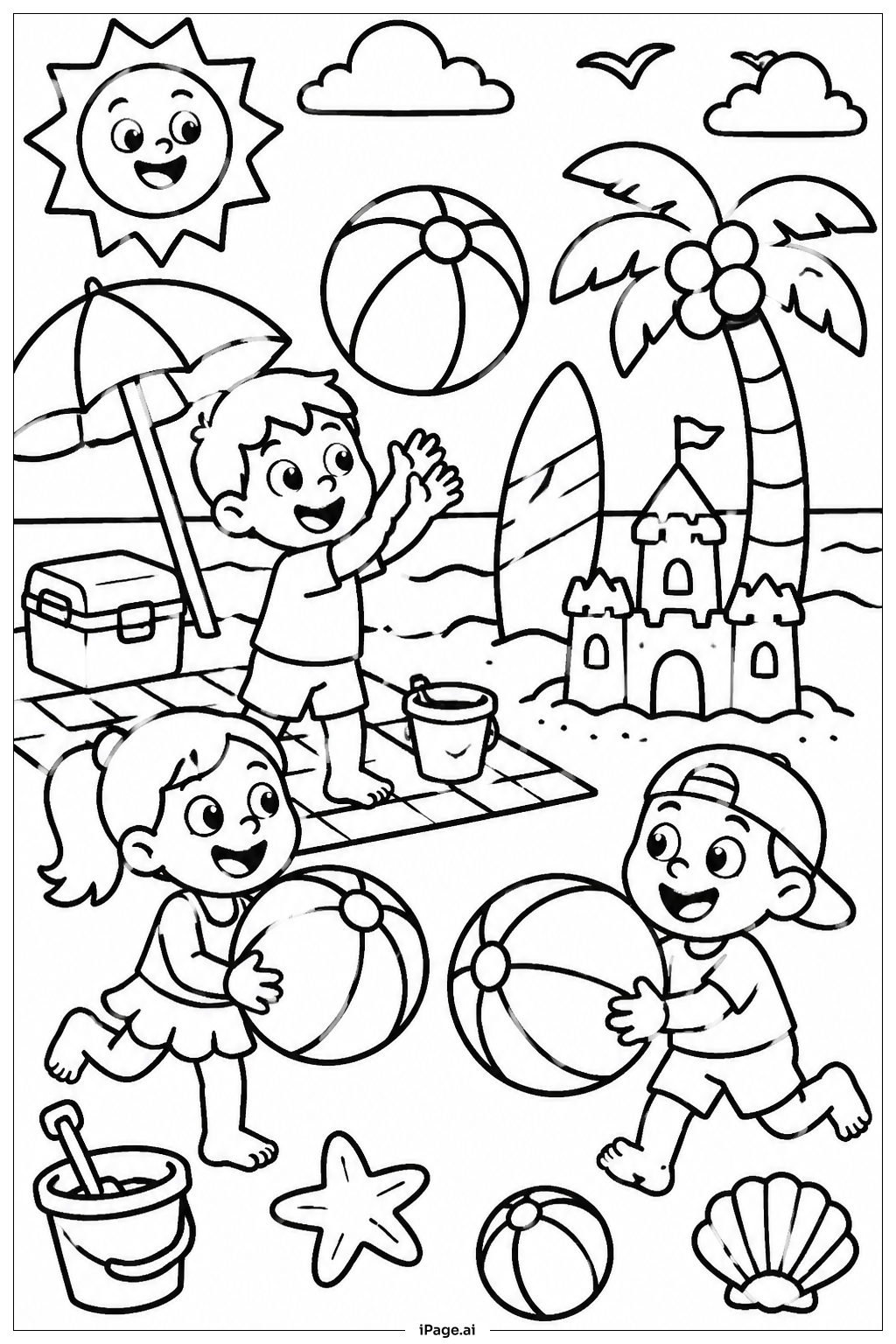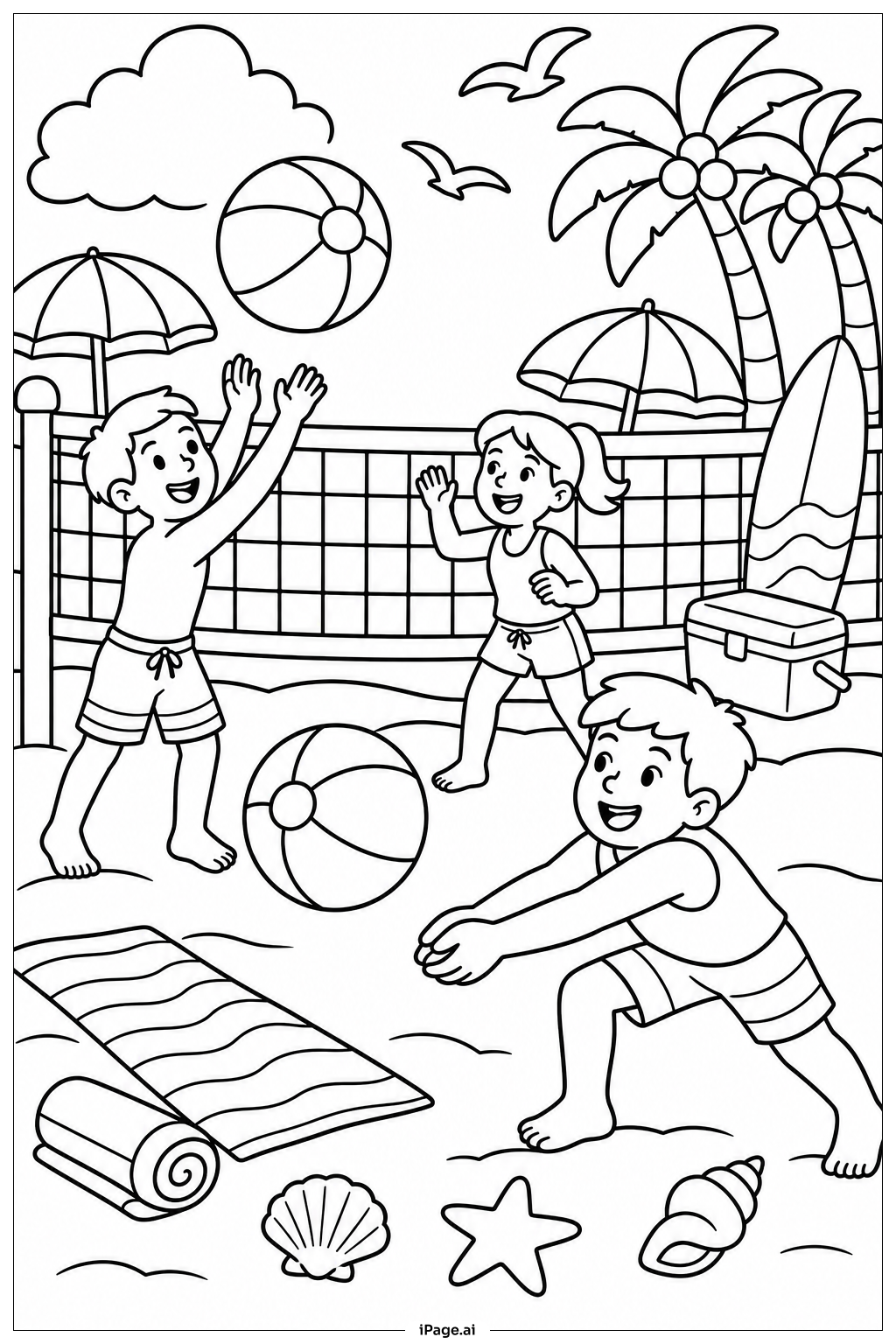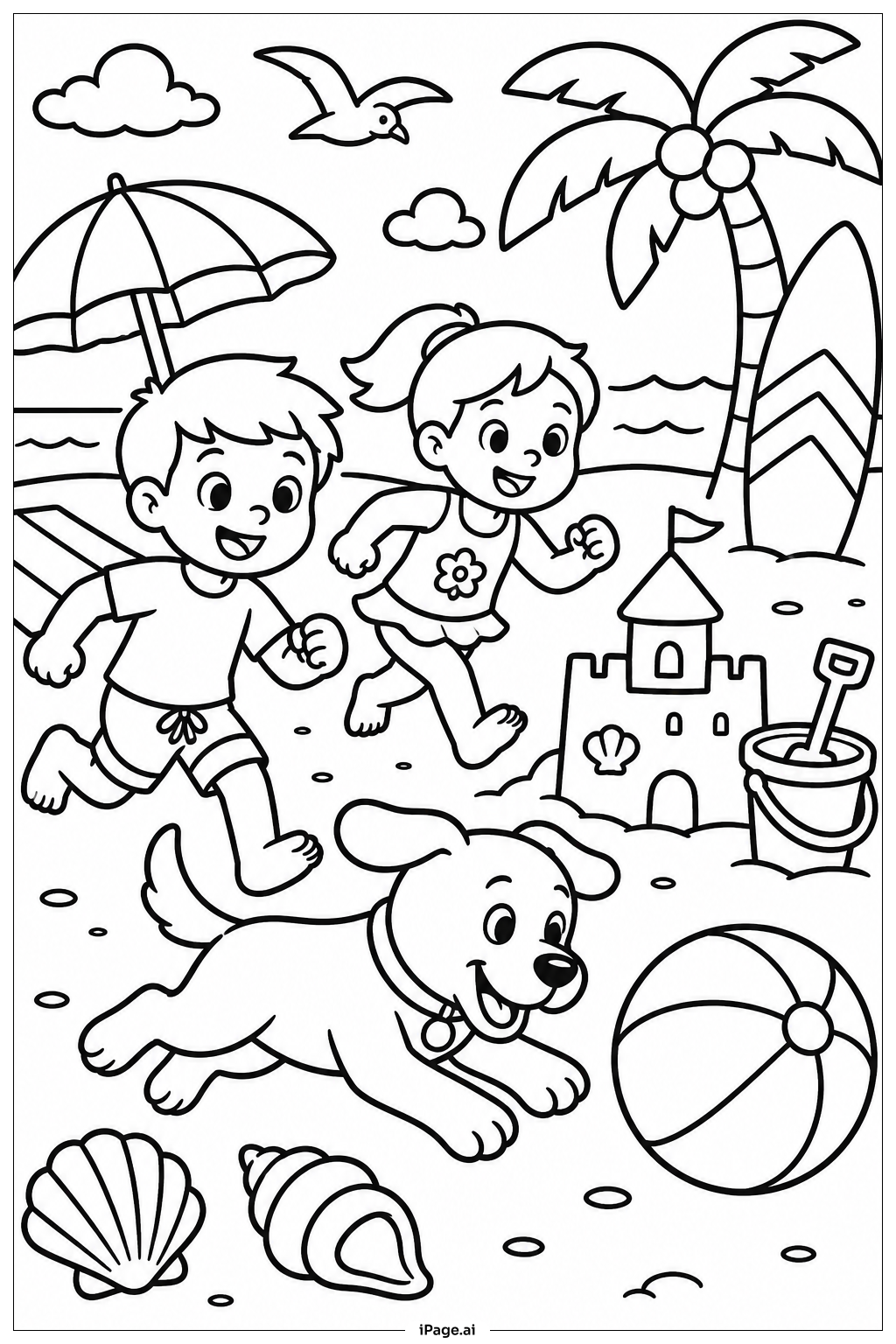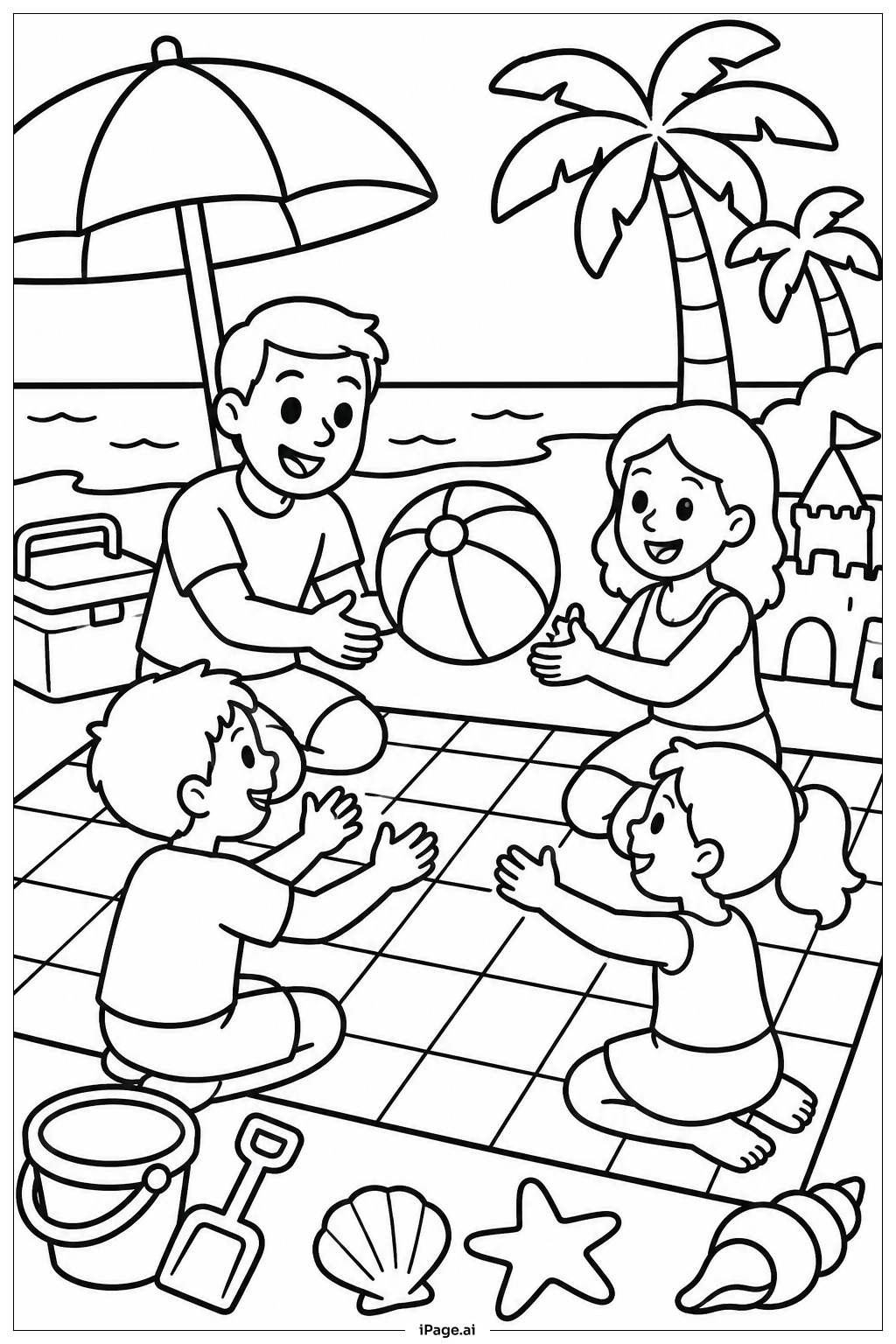
Coloring tips: How to color Beach Ball Rolling On Sand coloring page well?
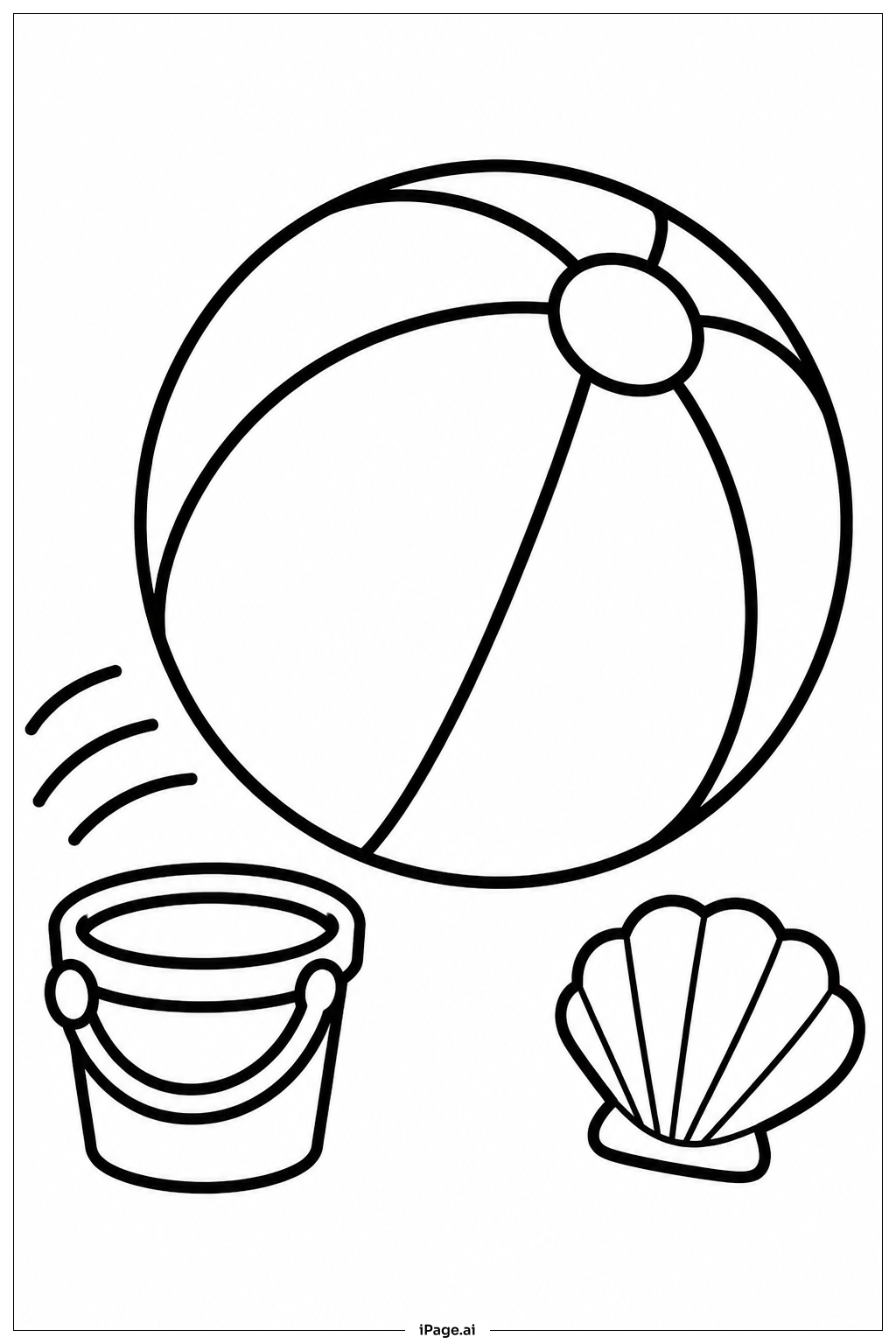
Start with the beach ball itself. Color each panel a different bright shade — try red, yellow, blue, and orange to give it that classic summer look. You can also use green or purple if you want something more unique. Leave a small white highlight spot on the top of the ball to make it look shiny and round. For the sand, use light tan, beige, or golden yellow. Add a little orange or brown in shadowed areas to show depth. The shadow under the ball can be a soft gray or light purple. The sky in the background can be a soft sky blue, and the water can be a deeper teal or turquoise. Try blending lighter and darker shades of the same color to make the waves feel alive. Keep your strokes smooth and follow the curves of the ball panels for a clean, polished finish.
Coloring challenges: Which parts are difficult to color and need attention for Beach Ball Rolling On Sand coloring page?
• Ball Panel Curves: The beach ball is made up of curved, rounded panels that follow the shape of a sphere. Coloring neatly within these curved sections without crossing the lines can be tricky, especially near the top and bottom where the panels pinch together. Take your time and use a sharp pencil or fine-tipped marker for the edges before filling in the center.
• Creating a 3D Round Effect: A flat-colored ball can look dull. To make it look truly round and three-dimensional, you need to add highlights and shadows within each panel. Place lighter color near the top of each section and gradually darken toward the edges. This shading technique takes practice but makes a big difference.
• Sand Texture: Sand looks simple but can be hard to color in a way that feels natural. Using a single flat color makes it look stiff. Instead, try layering light tan as your base, then adding short, soft strokes of beige or pale orange on top. Leave tiny gaps to suggest individual grains of sand.
• Shadow Under the Ball: The shadow the ball casts on the sand is an important detail that adds realism. It should be soft and slightly blurred at the edges, not a hard dark line. Using a light gray or cool lavender with gentle circular strokes works well here.
• Background Depth: Keeping the background — water, sky, and horizon — looking distinct from the foreground without making it too busy is a balancing act. Use cooler, lighter tones in the background so the bright beach ball stays the clear center of attention.
Benefits of coloring books: Advantages of drawing Beach Ball Rolling On Sand coloring page
Coloring this beach ball scene offers a wonderful mix of fun and learning for kids and beginners alike. Here are some of the great benefits it provides.
Color recognition and creativity are both practiced as you choose shades for each panel of the ball. Experimenting with different color combinations helps build confidence in making artistic choices.
Fine motor skills get a solid workout when you carefully color inside the curved lines of each ball section. Staying within the lines requires steady hand control, which improves handwriting and coordination over time.
Understanding light and shadow is introduced in a simple, approachable way. Trying to make the ball look round by adding highlights and shading teaches kids the basics of how light works in art.
Focus and patience grow naturally as you work through the different parts of the scene — the ball, the sand, the shadow, and the background. Each area has its own texture and challenge that keeps your mind engaged.
Finally, this image connects art to real-life experiences. A beach ball rolling on sand is something most kids recognize and love. Coloring a familiar, joyful scene makes the activity feel personal and rewarding, leaving a sense of accomplishment when the page is complete.