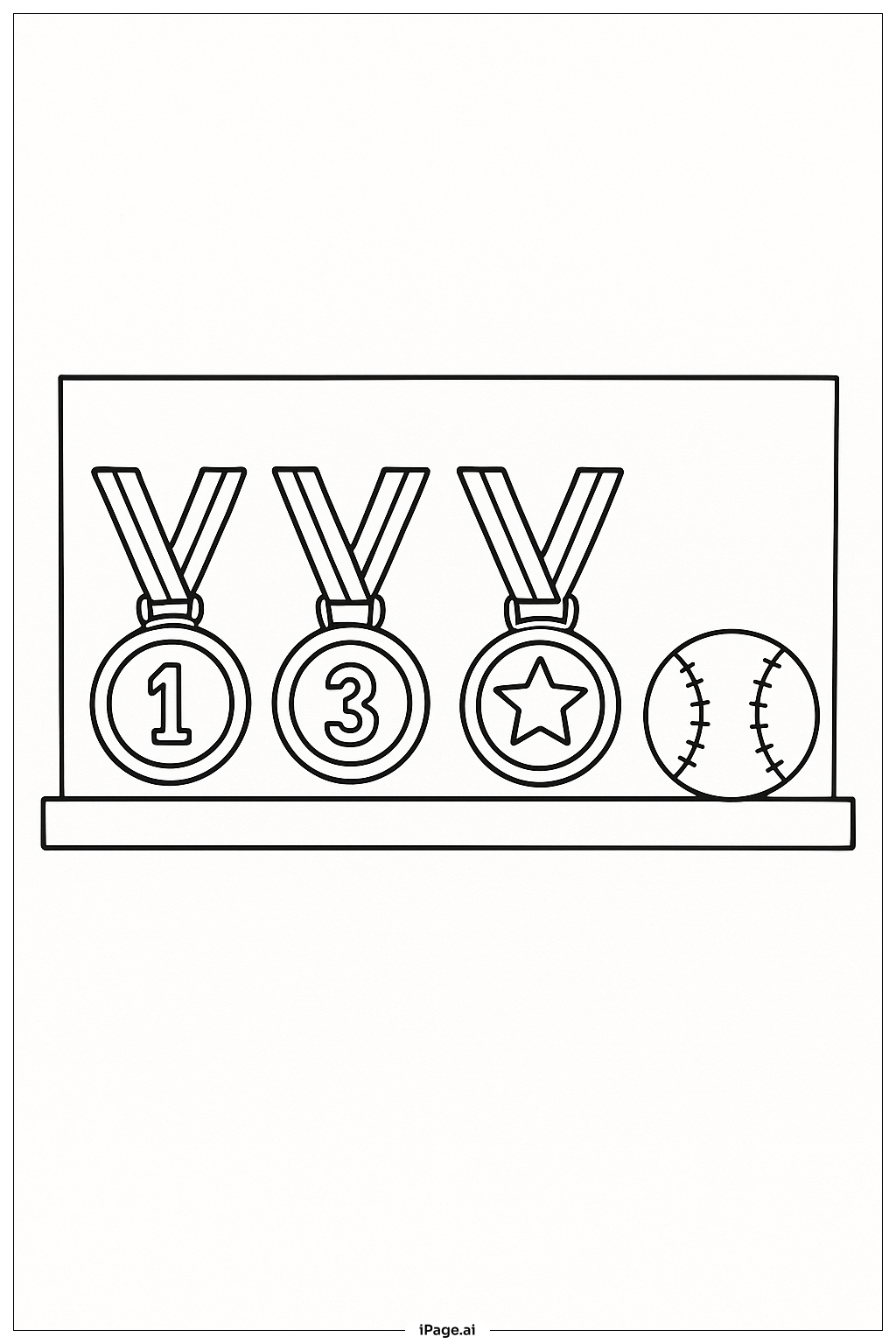
Coloring tips: How to color Baseball Medals Display coloring page well?
Start with the ribbons using traditional medal colors like red, blue, and white to create a patriotic sports theme. Consider using gold, silver, and bronze metallic tones for the medals themselves to represent different achievement levels. The baseball players can be colored with realistic skin tones and classic team colors. Add depth to the medals by using darker shades around the edges and lighter tones in the center to create a three-dimensional effect. The stars can be colored in bright yellow or gold to make them sparkle. For the background ribbons, try alternating patterns with stripes or solid colors. You might want to use brown for baseball bats and white with red stitching for the baseballs depicted on the medals. Don't forget to add subtle shading to the ribbon folds to make them look realistic and flowing.
Coloring challenges: Which parts are difficult to color and need attention for Baseball Medals Display coloring page?
• Medal Details and Textures: The medals contain intricate engravings showing baseball players in action poses, equipment, and text elements. Coloring these small, detailed areas requires careful attention and precision, especially when trying to create the metallic appearance of real medals. Young colorists may find it challenging to stay within the thin lines that define the raised and recessed areas of the medal surfaces.
• Ribbon Folds and Dimension: The ribbons display natural folds and curves that require shading techniques to appear three-dimensional. Understanding where to place highlights and shadows on the flowing fabric can be difficult. Children need to recognize which parts of the ribbon are facing forward and which are folding back, then apply lighter colors to raised areas and darker tones to recessed sections.
• Layering and Overlapping Elements: Multiple medals overlap each other in the composition, with ribbons crossing behind and in front of different medals. Determining which element is in front and maintaining consistent coloring across partially hidden sections requires spatial awareness and planning. This complexity demands that colorists work methodically to avoid confusion.
• Small Decorative Stars: The scattered stars throughout the design are small elements that need to stand out from the background while complementing the overall composition. Achieving the right balance of brightness without overwhelming the main medals requires careful color selection and possibly leaving strategic white spaces for highlights.
• Uniform Color Consistency: Maintaining consistent coloring across similar elements, such as keeping all gold medals the same shade or ensuring ribbon stripes remain uniform, tests a colorist's patience and color memory throughout the detailed image.
Benefits of coloring books: Advantages of drawing Baseball Medals Display coloring page
Coloring this Baseball Medals Display page helps children develop fine motor skills through the precise work needed for small medal details and ribbon textures. The sporting theme encourages kids to learn about achievement, perseverance, and the rewards of hard work in athletics. Young baseball fans can express their passion for the sport while practicing concentration and patience. The various medal sizes and overlapping elements teach spatial awareness and planning skills as children decide which areas to color first. Working with metallic color concepts like gold, silver, and bronze introduces basic understanding of shading and highlighting techniques. The symmetrical and organized layout of the medals promotes orderliness and attention to detail. This page also provides an opportunity for children to discuss their own achievements or sports experiences, building confidence and self-expression. Completing this detailed coloring page gives a strong sense of accomplishment, mirroring the achievement theme of the medals themselves.