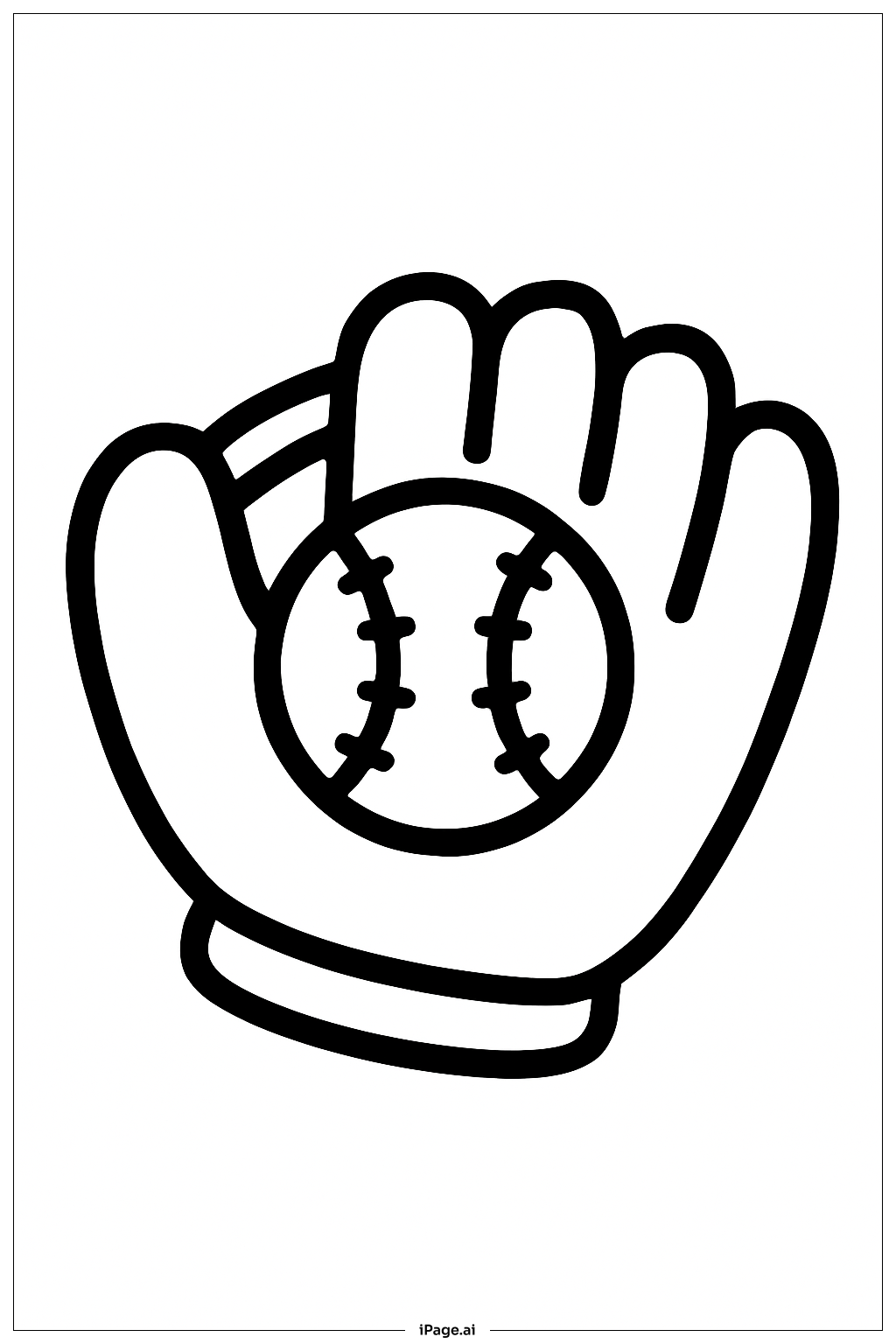
Coloring tips: How to color Baseball Glove With Ball coloring page well?
Start with the baseball glove using rich brown leather tones, or try tan, caramel, or even black for variety. The stitching along the edges can be colored in contrasting shades like white, cream, or golden yellow to make them stand out. For the baseball, use white or off-white as the base color, then add the iconic red stitching in curved lines across the surface. You can add shading to the glove's pocket to create depth, using darker browns in the creases and lighter tones on raised areas. The webbing between the thumb and fingers can be slightly darker to show texture. Consider adding a subtle shadow beneath the glove and ball to ground the image. Kids can experiment with non-traditional colors too, like blue or red gloves for their favorite team colors.
Coloring challenges: Which parts are difficult to color and need attention for Baseball Glove With Ball coloring page?
• Stitching Details: The glove features numerous stitching lines along the edges, fingers, and webbing that require careful coloring. These thin lines need a steady hand and fine-tipped coloring tools to stay within the boundaries. Young children may find it challenging to color these small details without crossing over into adjacent areas. Using contrasting colors for the stitches makes them stand out but requires precision and patience.
• Leather Texture and Shading: Creating a realistic leather appearance on the glove involves layering different shades of brown or tan. Children need to understand where light hits the glove and where shadows form, particularly in the pocket area and between the fingers. This requires blending techniques that may be difficult for beginners. The curved surfaces of the glove make it tricky to maintain consistent color intensity.
• Baseball Stitching Pattern: The curved red stitching on the baseball follows a specific pattern that needs accurate coloring. These curved lines are close together and require control to keep the red color only on the stitches without bleeding into the white ball surface. The stitching creates a distinctive shape that young colorists must follow carefully.
• Overlapping Elements: Where the baseball sits in the glove pocket, there are overlapping sections that create visual complexity. Children must identify which part is in front and adjust their coloring accordingly to maintain proper depth perception. This spatial awareness challenge helps develop visual discrimination skills but may frustrate younger artists initially.
Benefits of coloring books: Advantages of drawing Baseball Glove With Ball coloring page
Coloring this baseball glove image helps children develop fine motor skills through precise movements needed for small details like stitching. It encourages hand-eye coordination as they follow curved lines and stay within boundaries. Kids learn about sports equipment and American baseball culture while enjoying a creative activity. The image provides opportunities to practice shading and texture techniques, building artistic confidence. For young baseball players, this coloring page connects their sport to art, making both activities more meaningful. It teaches patience and attention to detail as children work through the various elements. The activity can be calming and focusing, helping children practice concentration. Completing this detailed image gives a sense of accomplishment and pride in their work.