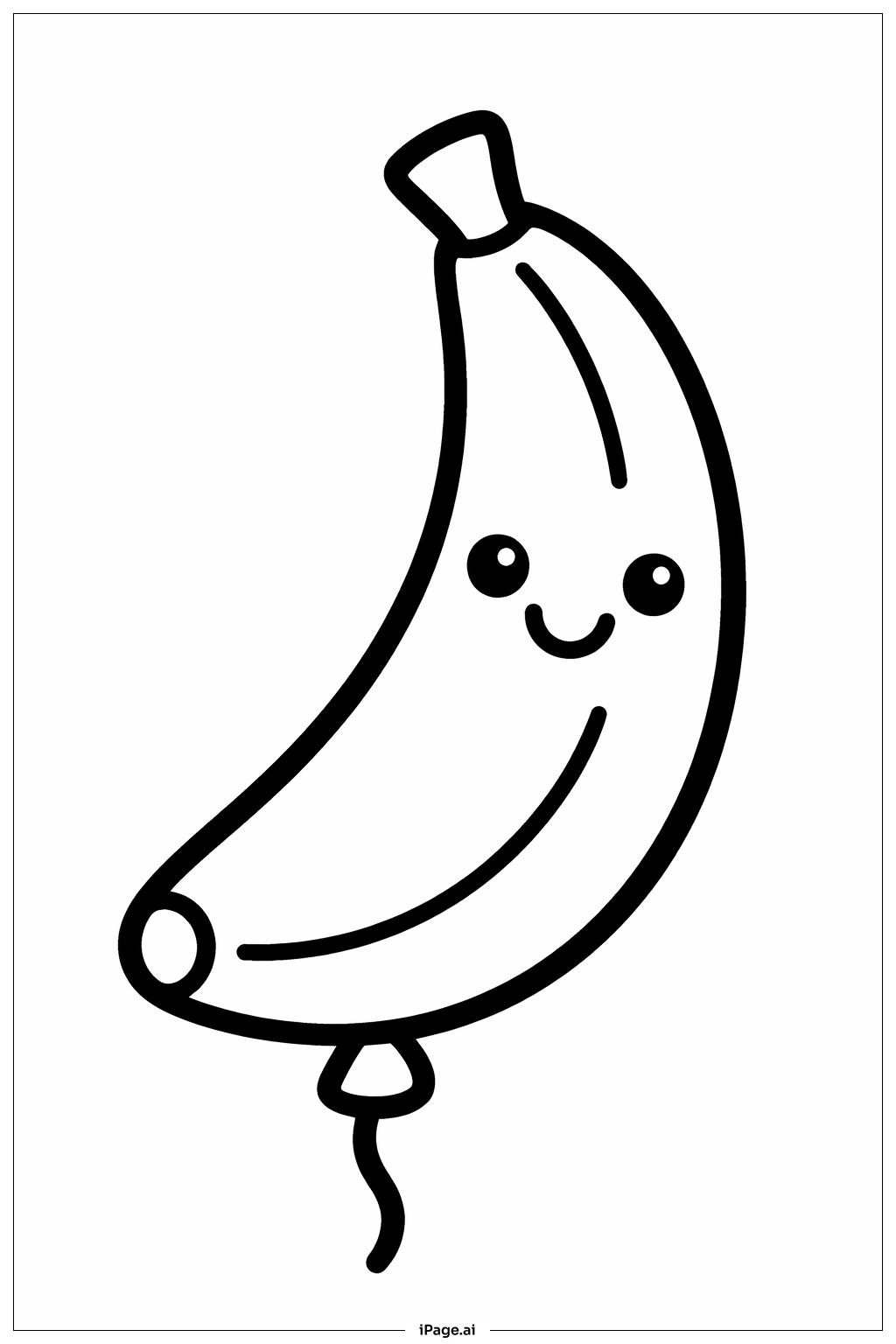
Coloring tips: How to color Happy Banana Balloon coloring page well?
Start with the banana's body using bright, sunny yellow as the base color. You can add depth by using lighter yellow or cream on one side to create a highlight effect, and a deeper golden yellow or light orange on the opposite side for shadows along the ridges. The face offers wonderful opportunities for creativity: color the smile with red or pink, and add rosy cheeks with light pink or peach. The eyes can remain simple with black outlines or add brown eyelashes for extra charm. Consider using a slightly darker yellow or light brown for the stem knot at the bottom to distinguish it from the body. For a magical balloon effect, you might add a subtle gradient within the yellow, transitioning from pale yellow at the top to richer yellow at the bottom. A light blue or white background with small clouds or stars would complete the floating balloon theme beautifully.
Coloring challenges: Which parts are difficult to color and need attention for Happy Banana Balloon coloring page?
• Smooth Color Blending: The curved surface of the banana requires smooth color transitions to create a three-dimensional rounded appearance. Young artists may find it challenging to blend yellows and golds evenly without creating harsh lines or patches. The natural curve demands understanding of light source and shadow placement, which requires careful layering of lighter and darker shades. Practicing gentle pressure with coloring tools and working in the same direction can help achieve the balloon-like roundness.
• Ridge and Segmentation Details: The banana features multiple vertical ridges running along its length that need to be colored distinctively to show dimension. Each segment should appear slightly different in tone to create depth, but keeping these differences subtle and consistent throughout can be tricky. Children might struggle with keeping these narrow sections neat without colors bleeding into adjacent areas. Using fine-tipped markers or sharp colored pencils helps maintain precision in these detailed zones.
• Facial Feature Precision: The small facial elements including the curved smile, closed eyes, and cheeks require steady hand control and attention to detail. Coloring within these tiny spaces without going outside the lines can be challenging for younger children. The eyes need careful outlining, and adding dimension to the smile with shading requires understanding of depth. Taking time and using appropriate tool sizes for these smaller areas will improve the final result.
• Maintaining Consistent Brightness: Since this is a happy, cheerful character, maintaining a bright and vibrant color palette throughout is important for the overall mood. However, adding shadows for dimension while keeping the image light and joyful requires balance. Too much dark shading can make the banana look bruised rather than three-dimensional, while too little makes it appear flat.
Benefits of coloring books: Advantages of drawing Happy Banana Balloon coloring page
Coloring this Happy Banana Balloon provides excellent fine motor skill development as children carefully navigate the curved lines and small facial features. The simple yet engaging design builds confidence, allowing young artists to complete a satisfying project without feeling overwhelmed. Working with the banana's natural curves teaches children about shapes, dimension, and how light creates shadows on rounded objects. The cheerful character promotes positive emotions and creative expression, as children can experiment with different shades of yellow and add their own imaginative touches. This coloring page encourages color recognition and mixing skills, especially when creating various yellow tones and adding complementary colors for the face. The repetitive motion of coloring the segmented sections provides a calming, meditative activity that helps children focus and relax. Additionally, the familiar subject of a banana combined with the whimsical balloon concept sparks imagination and storytelling, allowing children to create narratives around their finished artwork.