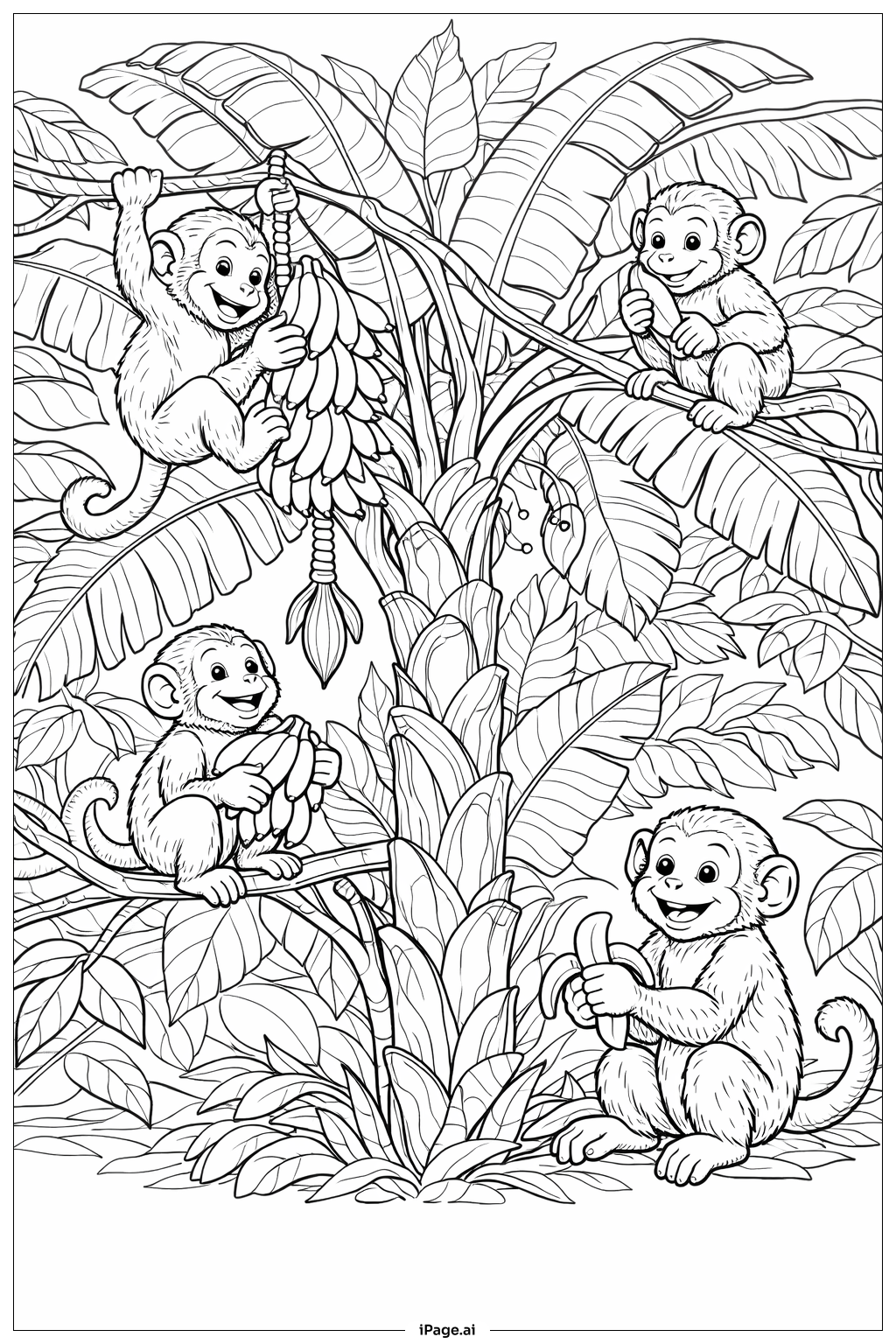
Coloring tips: How to color Banana Tree With Monkeys coloring page well?
Start with the banana tree trunk and use warm shades of brown and tan to give it a natural, textured look. For the large banana leaves, try different shades of green — bright lime green for younger leaves and deeper forest green for the older ones. This adds depth and variety to the tree.
Color the banana bunches in cheerful yellows and light greens. Some bananas can be fully yellow to show they are ripe, while others can stay greenish to look unripe. This small detail makes the image feel more realistic.
For the monkeys, warm shades of brown, tan, or golden yellow work great. You can give each monkey slightly different coloring to make them look unique and fun. Add a soft pink or peach tone to their faces, ears, and hands.
Feel free to add a bright blue sky or a sunny background to make the whole scene pop. This is your picture — have fun with it and use colors that make you happy!
Coloring challenges: Which parts are difficult to color and need attention for Banana Tree With Monkeys coloring page?
• Banana Leaf Details: The banana leaves are large and feature long, flowing lines running from the center vein outward. Staying within these narrow sections while applying color can be tricky, especially for younger colorists. Take your time and use a thin marker or colored pencil to carefully fill each section without going over the edges.
• Layered Depth of the Tree: The leaves and branches overlap in several places, creating a layered composition. Knowing which element sits in front and which is behind can be confusing. Try coloring the background layers first, then work your way forward. Using slightly darker shades for background elements helps create a natural sense of depth.
• Banana Bunch Shading: Each bunch of bananas contains many individual fruits packed closely together. Coloring them so they look round and dimensional — rather than flat — requires careful shading. Try adding a slightly darker yellow or a touch of orange along one side of each banana to create a curved, three-dimensional effect.
• Monkey Fur Texture: The monkeys have rounded, furry bodies that can be challenging to color smoothly. Using short, light pencil strokes in the direction of the fur can make the monkeys look more lifelike. Blending two shades of brown adds richness to the fur.
• Small Facial Features: The monkeys' faces include small eyes, noses, and mouths. These tiny details require a fine-tipped tool and a steady hand. Work slowly and use lighter colors first, then add darker details on top once the base color is dry.
Benefits of coloring books: Advantages of drawing Banana Tree With Monkeys coloring page
Coloring this Banana Tree With Monkeys scene offers a wonderful range of benefits for children and young artists of all skill levels.
First, it builds fine motor skills. Carefully coloring the many leaves, banana bunches, and monkey figures requires control and precision, which helps strengthen the small muscles in the hands and fingers — skills that support writing and other everyday tasks.
Second, it sparks creativity. Choosing colors for the leaves, monkeys, and background encourages children to think imaginatively and make their own artistic decisions. There are no wrong choices, which builds confidence and self-expression.
Third, it introduces nature and science in a playful way. Children learn about tropical plants, fruit growth, and animal behavior as they color. It opens up conversations about where bananas come from and what monkeys eat in the wild.
Fourth, it promotes focus and patience. Completing a detailed scene like this takes time and concentration, helping children practice staying on task and working through a project from start to finish.
Finally, it is simply fun and calming. The cheerful, playful energy of the monkeys and the bright tropical setting make this a joyful coloring experience that reduces stress and brings a sense of accomplishment when the page is complete.