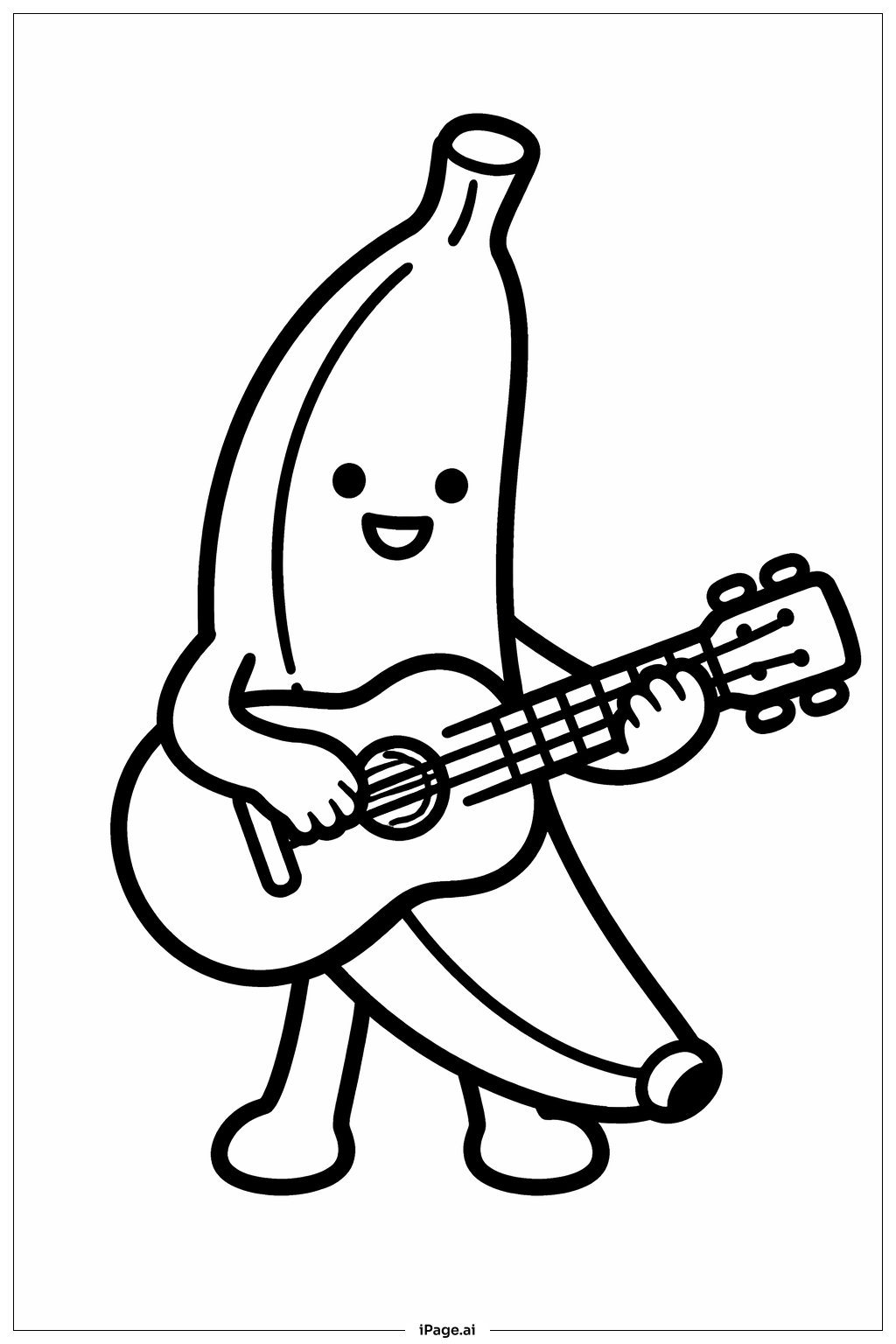
Coloring tips: How to color Banana Playing Guitar coloring page well?
Start with the banana itself using bright yellows, adding gentle brown spots for ripeness and character. Consider using darker yellow or light orange for shading along the peel curves to create dimension. The guitar offers wonderful variety: choose a natural wood tone like light brown, honey, or tan for the body, or go bold with vibrant colors like red, blue, or purple. The guitar's sound hole can be dark brown or black to show depth. Color the strings silver, gray, or gold to make them stand out. The musical notes floating around can be colored in cheerful shades like pink, blue, green, or kept classic in black. Add rosy cheeks to the banana's face for extra cuteness, and use black or dark brown for the eyes and smile. The background can remain white or add soft pastel colors to create atmosphere.
Coloring challenges: Which parts are difficult to color and need attention for Banana Playing Guitar coloring page?
• Fine Guitar Details: The guitar strings, frets, and tuning pegs contain thin, closely spaced lines that require careful coloring with sharp pencils or fine-tipped markers. Young children may find it challenging to stay within these narrow spaces without the colors bleeding together. Using lighter pressure and taking time with each string will help maintain clarity and prevent the details from becoming muddy.
• Dimensional Shading on Curved Surfaces: The banana's curved peel and the rounded body of the guitar both require thoughtful shading to appear three-dimensional rather than flat. Children need to understand where light would naturally hit these surfaces and where shadows would form. Blending multiple shades of the same color family, such as light yellow to deeper golden yellow on the banana, creates realistic depth but requires practice and patience.
• Small Facial Features: The banana's eyes, mouth, and any additional facial expressions are relatively small compared to the overall image. Coloring these tiny areas neatly without going outside the lines can be tricky, especially for younger colorists with developing fine motor skills. Using the tip of a colored pencil and working slowly helps achieve clean, precise results.
• Musical Notes Placement: The floating musical notes scattered around the scene are small and may overlap with other elements or sit in tight spaces. Deciding on colors that make them stand out without clashing with the surrounding areas requires color planning and artistic judgment that develops with experience.
Benefits of coloring books: Advantages of drawing Banana Playing Guitar coloring page
Coloring this playful banana guitarist helps children develop fine motor skills and hand-eye coordination through the precise work required for guitar strings and small details. The whimsical concept encourages creative thinking and imagination, showing that everyday objects like fruit can be transformed into fun characters. This image introduces basic musical instrument anatomy, helping children recognize guitar parts like the sound hole, neck, and strings while making learning enjoyable. The variety of shapes and sizes, from large curved areas to tiny musical notes, provides practice in controlling coloring tools with different levels of pressure and precision. The cheerful, musical theme can spark conversations about music, rhythm, and creativity, potentially inspiring interest in musical exploration. Completing this detailed image builds patience, concentration, and a sense of accomplishment, especially when children successfully color the challenging elements. The combination of organic banana curves and structured guitar geometry offers excellent practice in handling diverse shapes and textures within a single composition.