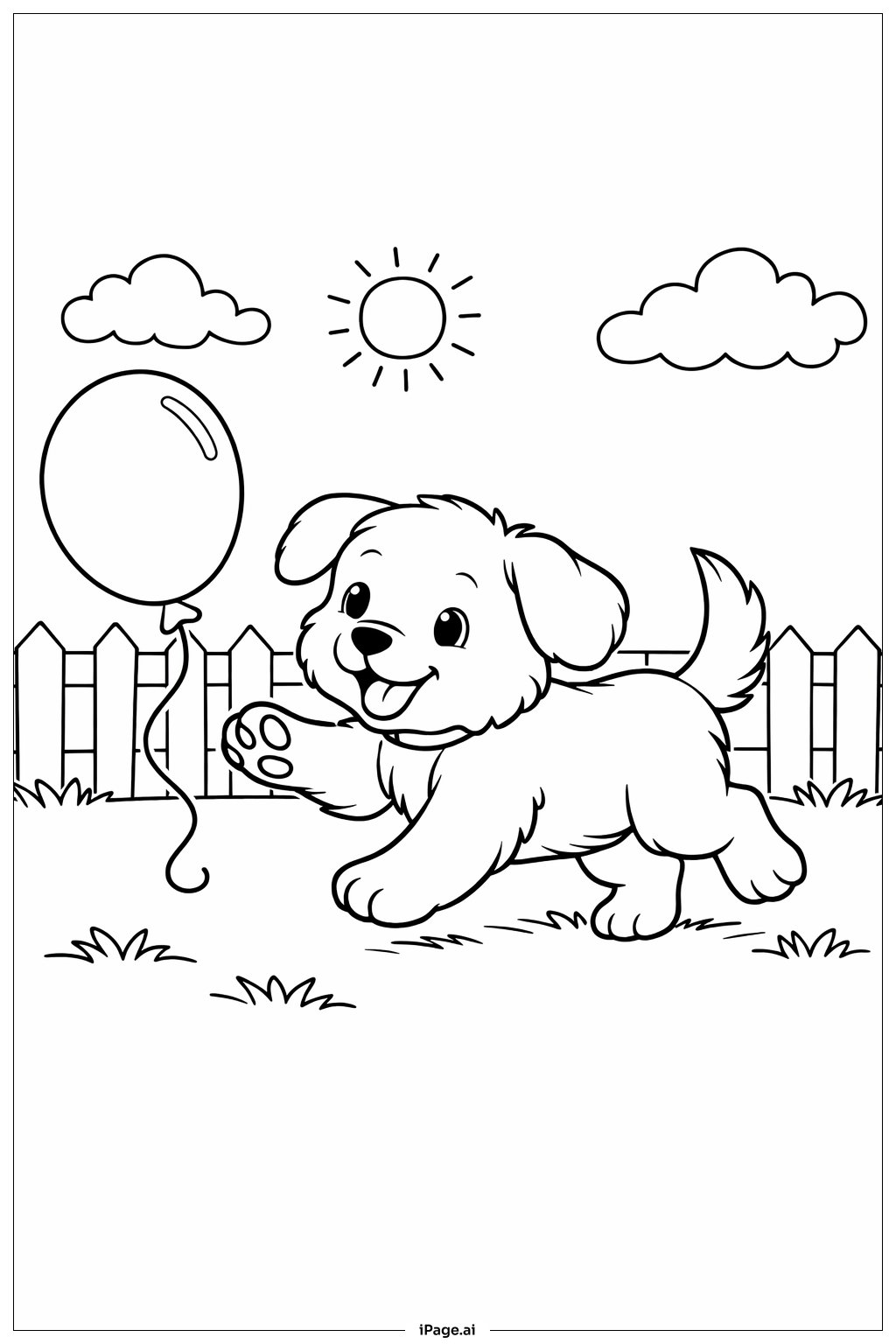
Coloring tips: How to color Balloon Puppy coloring page well?
For this charming Balloon Puppy, consider using bright, vibrant colors that reflect the cheerful nature of balloon animals. Traditional balloon colors like red, blue, yellow, pink, or orange work wonderfully for the body segments. You might choose to color each balloon section in a different hue to create a rainbow effect, or use varying shades of a single color family for a more cohesive look. The eyes can be colored with deep blues or browns, adding white highlights to make them sparkle with life. For a shiny balloon effect, leave small circular spots uncolored or use a lighter shade to represent reflections of light. The nose can be a soft pink or black. Consider using markers or crayons with smooth application to mimic the glossy surface of real balloons. Encourage experimentation with metallic or pearlescent colors for an extra festive touch.
Coloring challenges: Which parts are difficult to color and need attention for Balloon Puppy coloring page?
• Smooth Shading Techniques: Achieving the characteristic glossy, reflective appearance of balloons requires careful shading and highlight placement. Children may find it challenging to create the illusion of a shiny, three-dimensional surface by leaving strategic areas lighter while darkening others. Understanding where light naturally hits a curved surface and how to blend colors smoothly takes practice and patience.
• Maintaining Consistent Color Intensity: Because the puppy is composed of multiple balloon segments, keeping color intensity uniform across all sections can be difficult. Young colorists might press too hard in some areas and too lightly in others, resulting in uneven coverage. Learning to apply consistent pressure throughout the coloring process is an important skill that develops with practice.
• Distinguishing Between Segments: The balloon puppy features multiple interconnected sections that form the body, legs, head, and tail. Carefully staying within the lines of each individual balloon segment while transitioning between different colors requires fine motor control and concentration. Children must pay close attention to where one balloon ends and another begins to avoid color bleeding between sections.
• Creating Realistic Highlights: To make the balloons look truly dimensional and shiny, colorists should leave small circular or oval spots uncolored or use white to represent light reflections. Deciding where to place these highlights and having the restraint to leave certain areas untouched can be counterintuitive for young artists who want to fill every space with color.
Benefits of coloring books: Advantages of drawing Balloon Puppy coloring page
Coloring this Balloon Puppy offers wonderful developmental benefits for children. It enhances fine motor skills and hand-eye coordination as they carefully navigate the curved lines and distinct balloon segments. The image encourages color recognition and experimentation, allowing children to explore how different color combinations create various moods and effects. Working on the shading and highlights develops spatial awareness and understanding of light and dimension. The cheerful subject matter promotes positive emotions and creativity, making the coloring experience joyful and stress-relieving. Completing this detailed image builds patience, focus, and concentration skills. Children also develop decision-making abilities as they choose colors and plan their approach to different sections. The playful nature of a balloon animal puppy sparks imagination and storytelling, while the accomplishment of finishing the page boosts confidence and self-esteem.