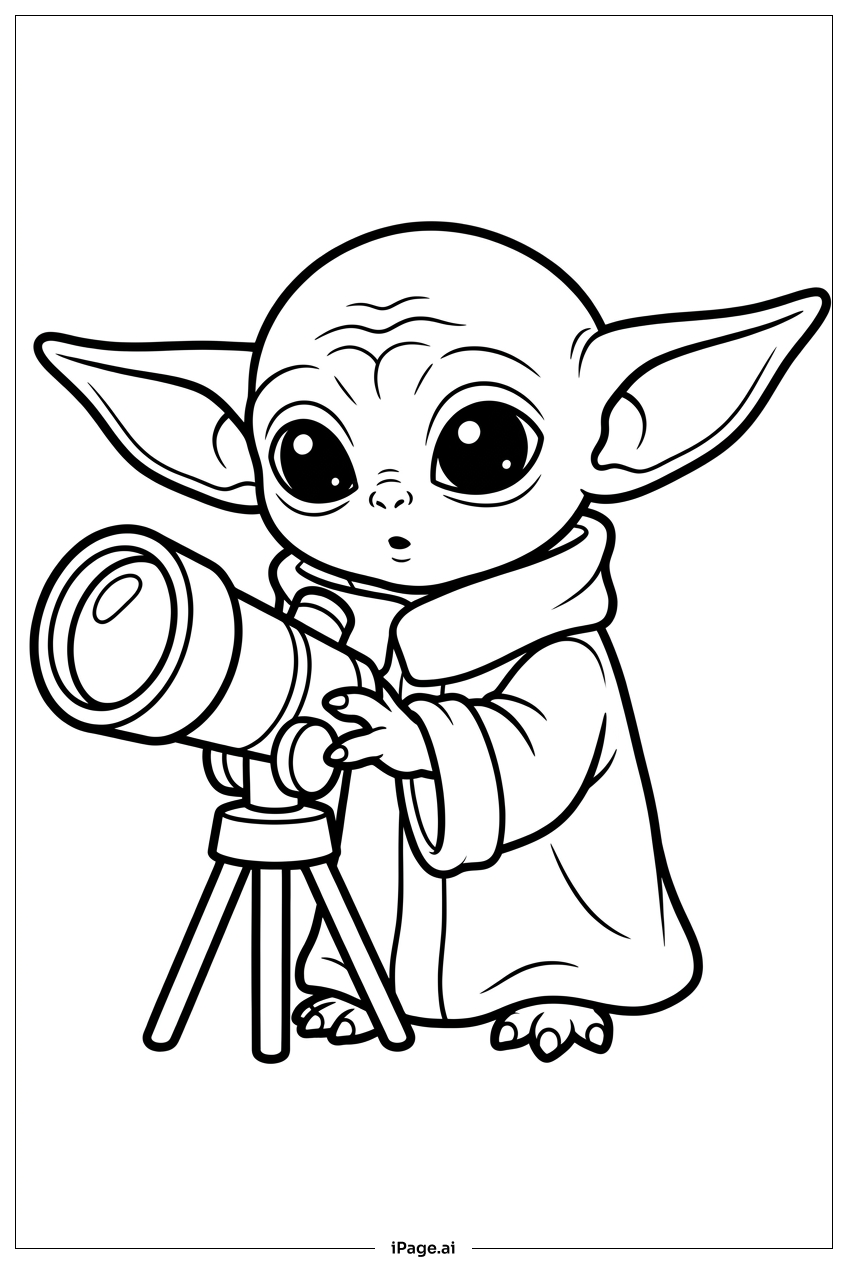
Coloring tips: How to color Baby Yoda Stargazing Through A Curious Telescope coloring page well?
Start with Baby Yoda's skin using a soft sage green or light olive tone. His large eyes can be filled with warm dark brown, with a tiny white highlight dot to make them sparkle. Use a muted tan or warm gray for his robe, adding light shading along the folds. Color the telescope in metallic shades like silver, gold, or bronze to give it a classic, adventurous look. For the night sky background, blend deep navy blue and purple, then add bright yellow or white dots for the stars. Planets can be colored in vibrant oranges, reds, and teals to make them pop. Use a light blue or soft white glow around the telescope lens to suggest starlight. Feel free to add your own constellation patterns or shooting stars to make the scene truly your own!
Coloring challenges: Which parts are difficult to color and need attention for Baby Yoda Stargazing Through A Curious Telescope coloring page?
• **Baby Yoda's Facial Details:** Baby Yoda's face is small but packed with expressive features — his large eyes, tiny nose, and gentle mouth require careful, precise coloring. Using fine-tipped colored pencils or markers is recommended to stay within the lines and capture his sweet expression without muddying the details. Blending skin tones smoothly around his rounded cheeks adds realism but can be tricky for younger colorists.
• **The Telescope's Mechanical Details:** The telescope features multiple small parts — knobs, rings, lens edges, and a long barrel. Each section benefits from a slightly different shade to show depth and dimension. Keeping metallic tones consistent while differentiating each component takes patience and a steady hand, making this a challenge for beginners.
• **The Cosmic Background:** Filling in a night sky with rich, layered color without overworking the paper is one of the hardest parts of this image. Blending dark blues, purples, and blacks smoothly while leaving stars bright and crisp requires good control of your coloring tools. Watercolor pencils or soft pastels can help achieve a gradient effect, but they demand practice.
• **Baby Yoda's Robe Folds:** The fabric of Baby Yoda's robe has natural folds and creases that create shadows and highlights. Capturing this texture with light and dark shading gives the robe a three-dimensional look, but knowing where to place shadows can be confusing without some basic shading knowledge.
• **Balancing Foreground and Background:** Making Baby Yoda and the telescope stand out against a busy starry background requires thoughtful color contrast. If the background is too dark or too bright, the main subject can get lost. Choosing the right color values for each layer is a key challenge in this scene.
Benefits of coloring books: Advantages of drawing Baby Yoda Stargazing Through A Curious Telescope coloring page
Coloring this Baby Yoda stargazing page offers a wonderful mix of fun and learning for kids and fans of all ages. As children carefully fill in Baby Yoda's tiny features and the telescope's details, they naturally improve their fine motor skills and hand-eye coordination. Choosing colors for the night sky encourages creative thinking and sparks curiosity about space, stars, and the universe.
The calming, focused nature of coloring helps reduce stress and anxiety, making it a great quiet-time activity after a busy day. Working through the different sections of the image — from Baby Yoda's robe to the glowing cosmos — builds patience and concentration, skills that are valuable both in and out of the classroom.
For younger children, this page introduces basic color concepts like contrast and blending in a playful, pressure-free way. For older kids and teens, the detailed telescope and layered background offer a satisfying challenge that builds artistic confidence. Sharing the finished page with family or friends also encourages a sense of pride and accomplishment. Most of all, it's simply a joyful way to spend time with a beloved character while letting your imagination travel to the stars!