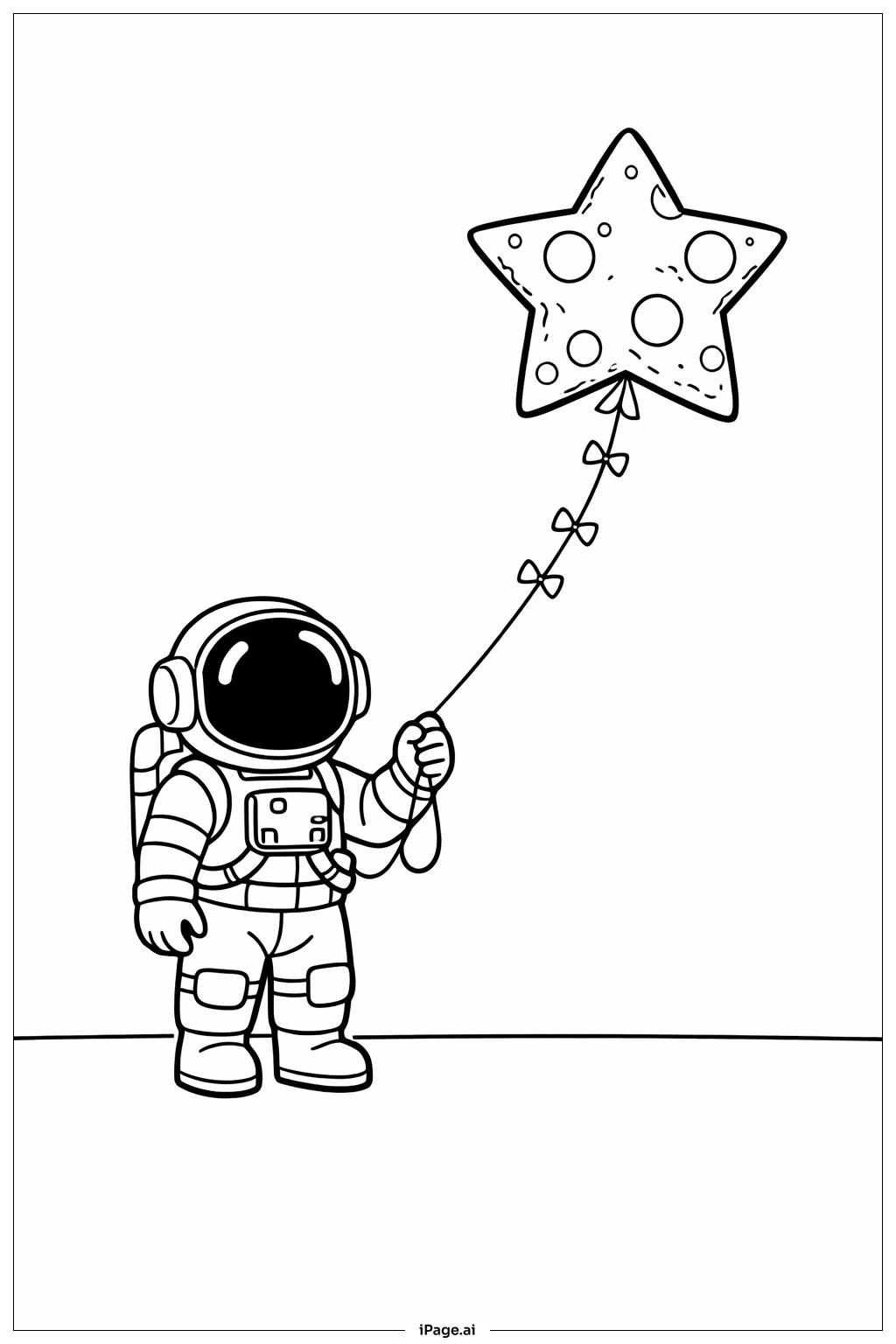
Coloring tips: How to color Astronaut With Moon Kite coloring page well?
For the astronaut's suit, try using white or silver with gray shading to create depth in the folds and panels. Add metallic accents with gold or copper for buttons and equipment details. The helmet visor can be colored with light blue or purple to suggest reflection. For the lunar surface, use various shades of gray and beige to show texture and dimension in the craters. The moon-kite offers a wonderful opportunity for creativity—consider soft yellow or pale gold for a glowing effect, with rosy cheeks for the smiling face. Color the background sky in deep navy blue or black, and make the stars bright yellow, white, or even rainbow colors for extra magic. Don't forget to add shadows beneath the astronaut and rocks using darker tones to ground the scene.
Coloring challenges: Which parts are difficult to color and need attention for Astronaut With Moon Kite coloring page?
• Spacesuit Details: The astronaut's suit contains many technical elements including tubes, buttons, panels, and seams that require careful attention. Young colorists may find it challenging to distinguish between different components and decide which parts should be different colors versus uniform. Staying within the lines of these small mechanical details demands patience and precision with coloring tools.
• Shading and Dimension: Creating a three-dimensional look on the suit's fabric folds and the lunar surface craters requires understanding of light and shadow. Children may struggle with blending different shades of the same color family to show depth. The curved surfaces of the helmet and the rounded body of the astronaut need gradual color transitions rather than flat coloring to look realistic.
• Background Stars and Space: The numerous small stars scattered across the sky require steady hands to color without going outside their tiny boundaries. Deciding whether to color the dark space background first or the stars first presents a strategic challenge. If using markers or crayons, it can be difficult to keep star points sharp and bright against the dark sky without colors bleeding together.
• Moon Kite Expression: The small facial features on the moon-kite, including eyes and smile, need delicate coloring to maintain their cheerful expression. These tiny details can be easily overwhelmed by too much color or pressure, and young artists must use a light touch and perhaps thinner coloring tools like colored pencils for best results.
Benefits of coloring books: Advantages of drawing Astronaut With Moon Kite coloring page
Coloring this astronaut scene helps children develop fine motor skills through the precise movements needed for small details like stars and suit components. It encourages imagination by combining real space exploration with the fantastical idea of flying a kite on the moon, prompting creative color choices and storytelling. The image introduces STEM concepts in a fun way, familiarizing kids with space suits, lunar landscapes, and astronomy while they play. Working with different textures—smooth helmet, fabric suit, rocky moon surface, and twinkling stars—teaches visual discrimination and attention to detail. The cheerful, whimsical nature of the scene promotes positive associations with science and exploration. Completing this moderately complex image builds confidence and perseverance as children work through challenges, while the playful subject matter keeps the activity joyful rather than frustrating.