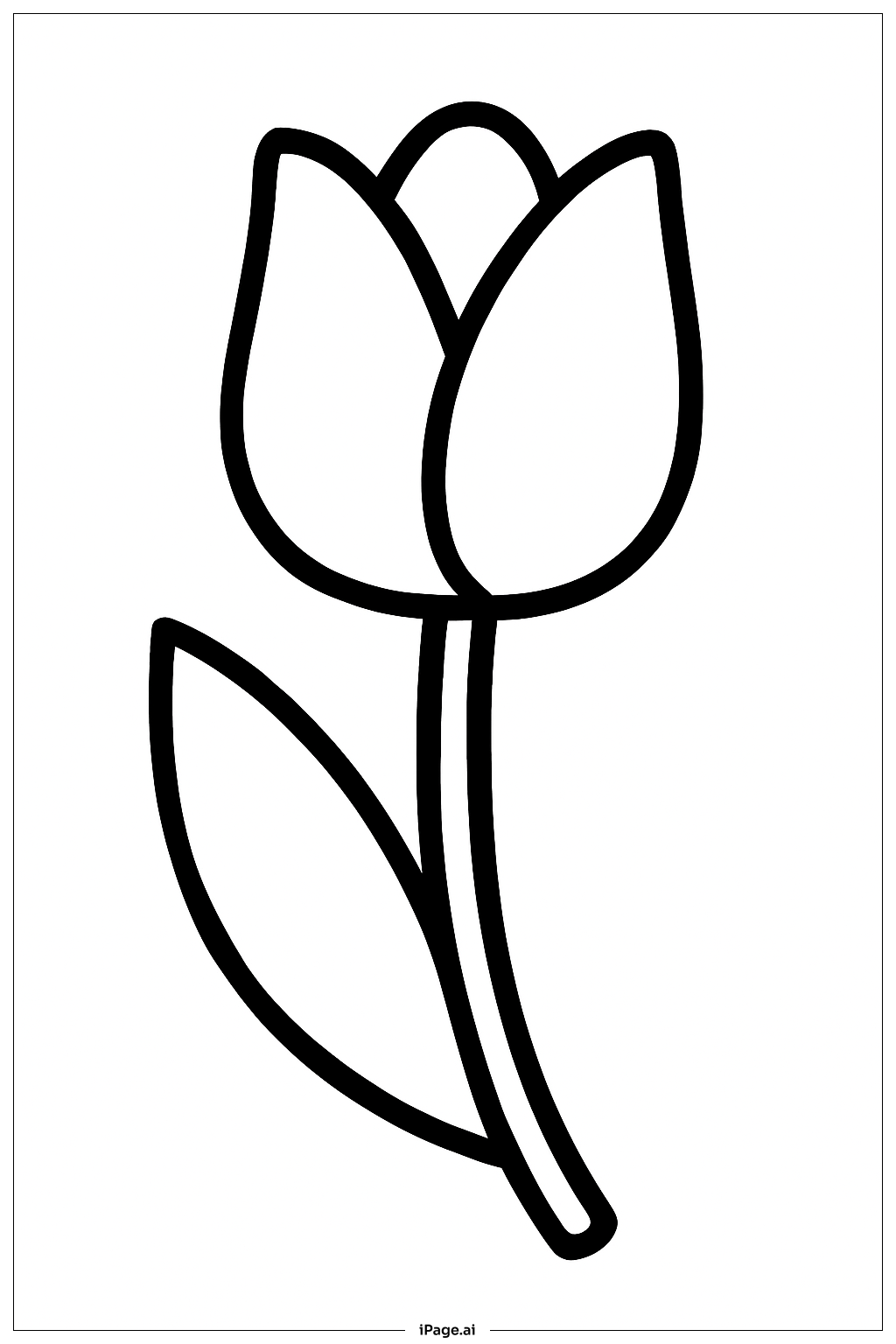
Coloring tips: How to color April Tulip Single Bloom coloring page well?
When coloring this tulip, try using bright and warm colors like red, yellow, pink, or orange for the petals to make the flower look lively. You can use different shades of green for the leaf and stem to add depth. Start by coloring the petals lightly, then add darker tones near the edges or base for a shaded effect. For the leaf and stem, use a medium green first, then add darker green in some areas to create a natural look. You can also experiment with blending colors gently to make the tulip look more realistic.
Coloring challenges: Which parts are difficult to color and need attention for April Tulip Single Bloom coloring page?
1. Coloring inside the smooth, curved edges of the petals can be tricky for younger children who are still developing fine motor skills.
2. Shading the petals to show depth and variation may be difficult without some coloring experience.
3. Staying within the narrow stem lines requires careful control.
4. Choosing harmonious colors that blend well together can be confusing for beginners.
5. For advanced kids, trying to create a realistic flower with highlights and shadows requires attention to detail and practice.
Benefits of coloring books: Advantages of drawing April Tulip Single Bloom coloring page
Coloring this tulip helps improve focus and hand-eye coordination, especially for children learning to control crayons or pencils. It encourages creativity by allowing kids to choose their own colors and experiment with shading. The simplicity of the image makes it accessible for young children, while offering enough detail for older kids to develop their skills. Coloring flowers also helps children learn about nature and the beauty of spring, fostering a connection with the environment.