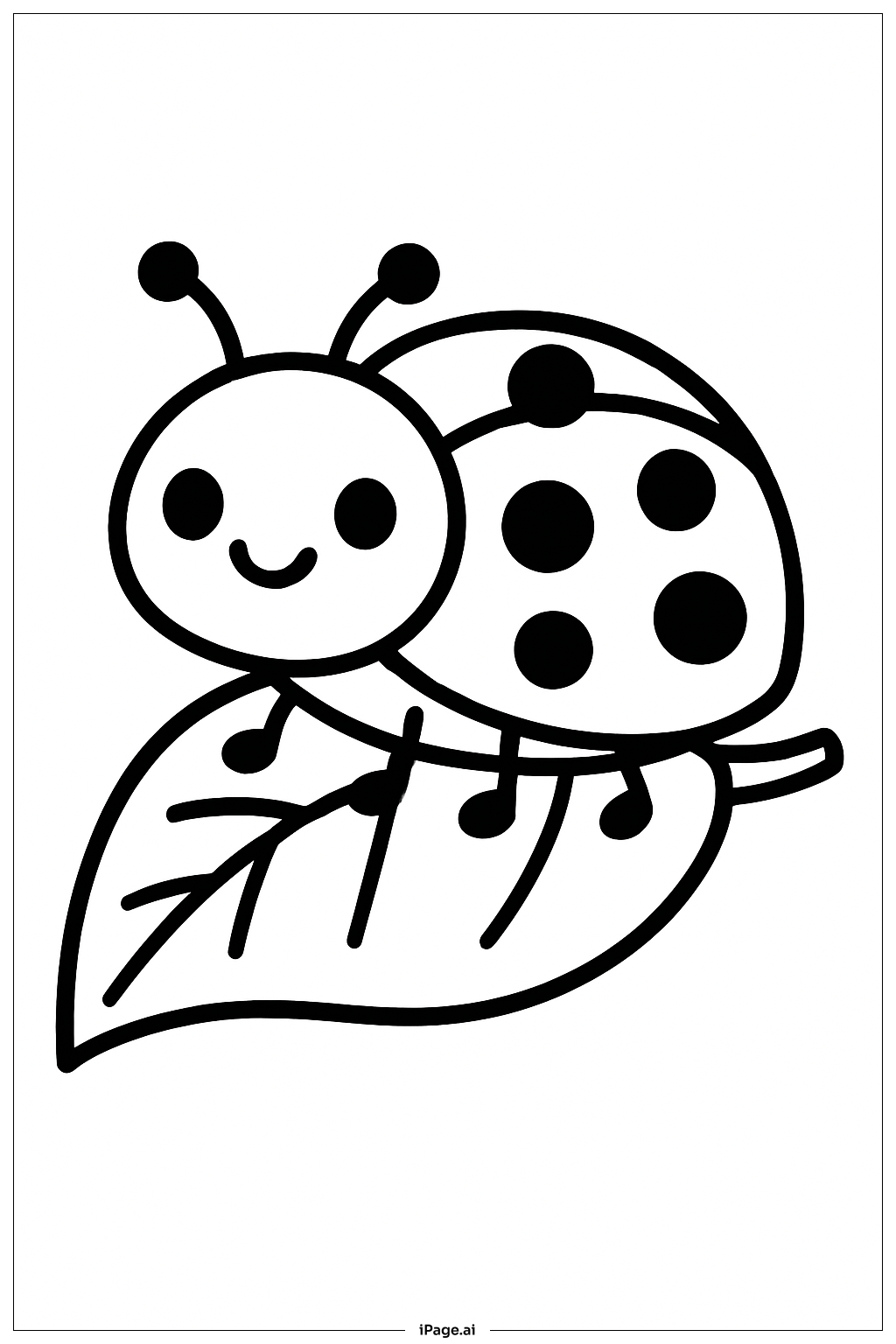
Coloring tips: How to color April Ladybug On Leaf coloring page well?
Start with the ladybug's body by filling in a bright, bold red for the wing covers. Leave the spots white or color them solid black to make them stand out. Use black for the head, legs, and the dividing line down the back. For the leaf, try a fresh, vivid green — you can use a lighter green near the edges and a deeper green along the veins to give it depth. The veins themselves can stay slightly lighter or be outlined in a darker shade. If you want to make the scene feel like a sunny April day, add a soft yellow or warm orange glow to the background. Don't worry about coloring perfectly inside every line — just enjoy the process and make it your own!
Coloring challenges: Which parts are difficult to color and need attention for April Ladybug On Leaf coloring page?
• Ladybug Spots: The small circular spots on the ladybug's back can be tricky to color neatly. They are close together and surrounded by the red body, so keeping the edges clean without smudging takes a steady hand. Using a fine-tipped marker or a sharpened colored pencil works best here.
• Curved Body Surface: The ladybug's dome shape means color needs to be blended carefully to suggest roundness. Applying lighter shading in the center and darker tones along the edges helps create a three-dimensional look, but this kind of shading can be challenging for younger colorists.
• Leaf Veins: The leaf is filled with a network of thin veins spreading across the surface. Coloring around each vein without accidentally covering them requires patience and control. You may choose to color the veins a slightly different shade or leave them uncolored to let them show through naturally.
• Leaf Edge Details: The outer edges of the leaf have gentle curves and slight ridges. Staying close to these outlines while switching between light and dark greens to show depth can be difficult, especially in the smaller curved sections near the tips.
• Color Transition Between Ladybug and Leaf: Where the ladybug's legs and body meet the leaf surface, the red and green colors sit very close together. Keeping these two areas separate and clean without one color bleeding into the other is one of the trickiest parts of the whole page.
Benefits of coloring books: Advantages of drawing April Ladybug On Leaf coloring page
Coloring this April ladybug scene is a wonderful activity for kids and nature lovers alike. It helps build fine motor skills as young colorists work carefully around the ladybug's small spots and the leaf's delicate veins. Focusing on a detailed image like this also trains hand-eye coordination and encourages patience. Choosing colors for the ladybug and leaf sparks creativity and helps children learn about the natural world — like why ladybugs are red and what leaves look like up close. The calming, repetitive motion of coloring is also a great way to relax and reduce stress after a busy day. For older kids, experimenting with shading and blending on the rounded ladybug body introduces basic artistic techniques in a fun, low-pressure way. This page also opens up conversations about springtime, insects, and the beauty of April nature, making it both an artistic and a small learning experience all in one.