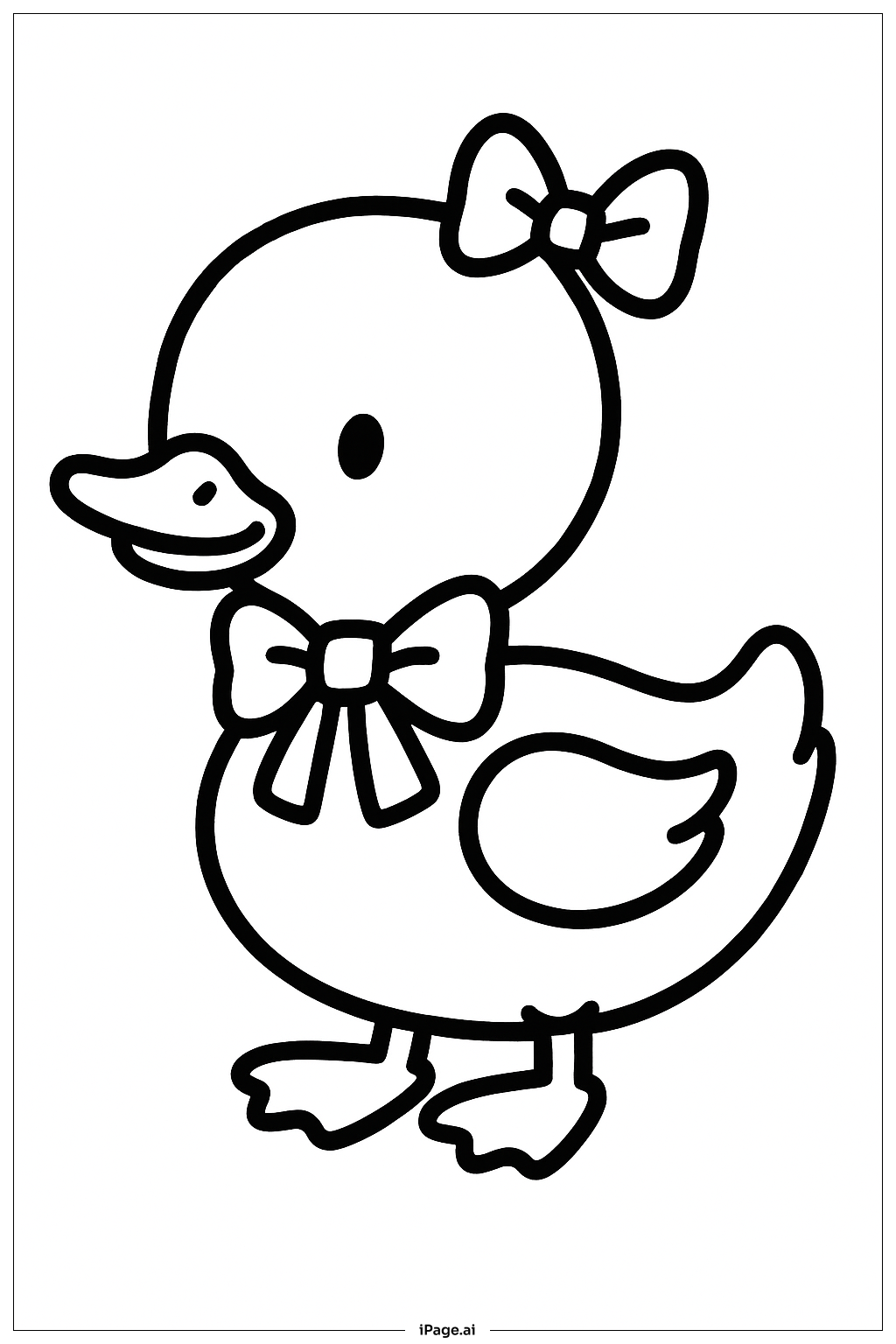
Coloring tips: How to color April Duck With Bow coloring page well?
For this cheerful April duck, start with the body using soft yellow or golden tones to create a classic duckling appearance. You can also experiment with white or cream colors for a different look. The bill and feet work beautifully in bright orange or warm coral shades. For the bow, consider spring colors like pastel pink, lavender, baby blue, or mint green to capture April's fresh feeling. You could also use brighter colors like red, purple, or hot pink for a bolder statement. Add light gray or pale blue shadows under the duck and around the feathers to create depth. Consider giving the bow a pattern with stripes, polka dots, or flowers. Use colored pencils for smooth blending on the body, and markers for vibrant, solid colors on the bow and bill.
Coloring challenges: Which parts are difficult to color and need attention for April Duck With Bow coloring page?
• Bow Texture and Ribbons: The bow on the duck's head features flowing ribbons and fabric folds that require careful attention to create a three-dimensional appearance. Children need to decide on color placement to show where the ribbon loops and where it flows downward. Adding highlights on the curved surfaces and shadows in the creases will make the bow look realistic and dimensional rather than flat.
• Feather Details and Body Contours: The duck's body may include subtle feather texture lines and contour details that define its rounded shape. Coloring these areas requires light, consistent pressure to build up soft layers without creating harsh lines. Young artists must pay attention to the direction of feather growth and use appropriate stroke techniques to suggest the soft, fluffy texture of duck feathers.
• Creating Smooth Gradients: Achieving smooth color transitions on the duck's body, especially around curved areas like the belly, back, and head, can be challenging. Children need to practice blending techniques to avoid visible color lines or patchy areas. This is particularly important when trying to show the roundness of the duck's form through shading.
• Bill and Feet Detailing: The duck's bill and webbed feet contain small details and specific shapes that require precision coloring. Staying within the lines of the webbing between toes and carefully coloring the bill's curves demands good hand-eye coordination and fine motor control, especially for younger children.
Benefits of coloring books: Advantages of drawing April Duck With Bow coloring page
Coloring this April duck helps children develop important fine motor skills through controlling crayons and staying within detailed lines. The bow's intricate ribbons and the duck's curved body provide excellent practice for hand-eye coordination. This image encourages creativity as kids choose spring colors and decide how to decorate the bow with patterns. It introduces seasonal awareness, connecting the cheerful duck with April's springtime themes. The friendly duck character helps develop emotional connections to art and builds confidence when children complete the picture. Working on feather textures teaches children about different coloring techniques like layering and blending. The combination of simple large areas and detailed small sections makes this suitable for various skill levels, allowing children to challenge themselves appropriately while experiencing the calming, focusing benefits of coloring.