Coloring tips: How to color April Showers Bring May Flowers Simple Raindrop coloring page well?
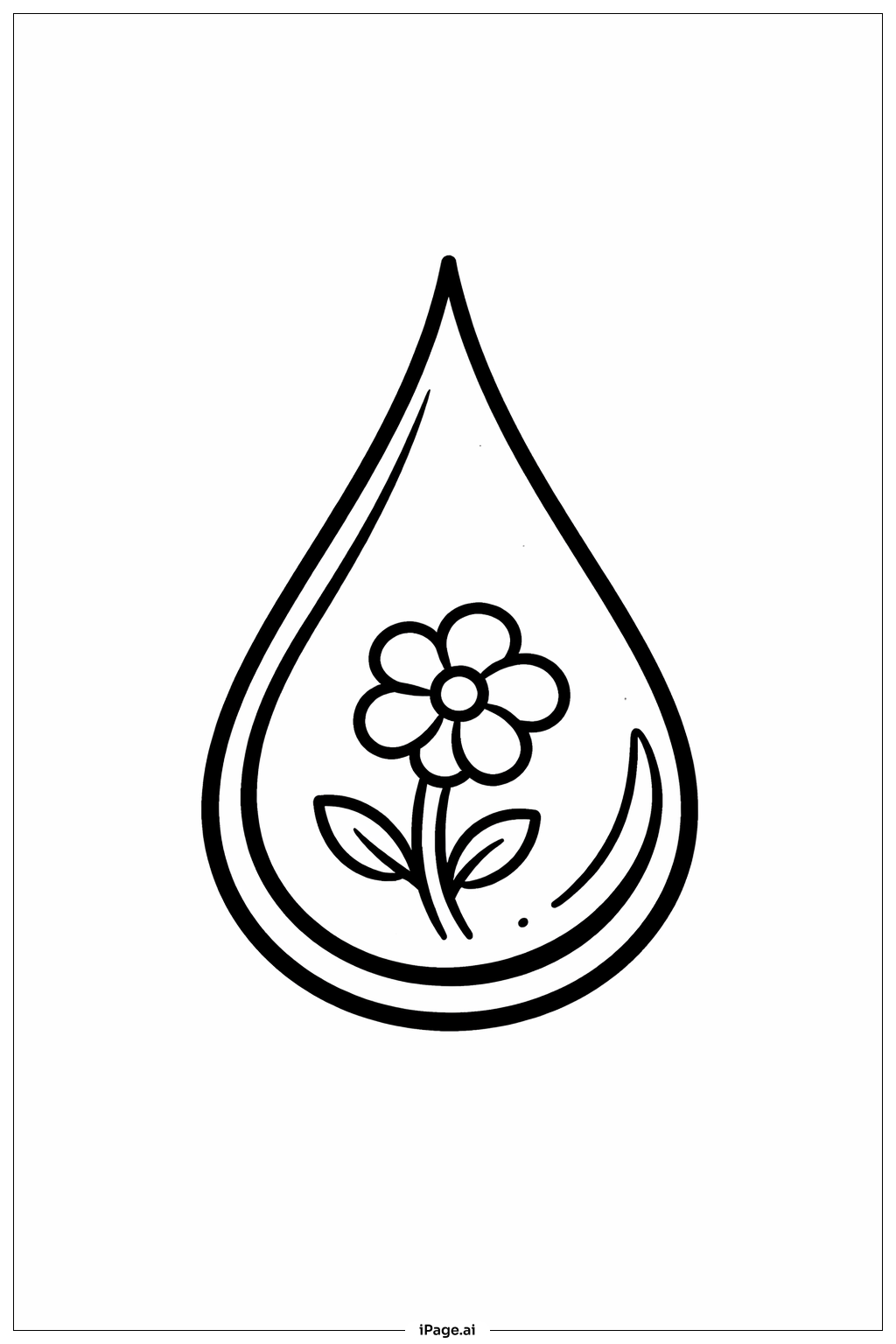
Start with the main raindrop using shades of light blue or sky blue to keep it feeling fresh and watery. You can add a slightly darker blue along one edge to create a gentle shadow effect and give the drop a rounded, 3D look. Use a pale yellow or soft peach for the smiling face details to keep things warm and friendly. For the smaller raindrops around it, try mixing different shades of blue and teal to add variety without making the page feel too busy. The flowers and leaves around the edges look great in bright spring colors — think sunny yellow, soft pink, lavender, and fresh green. If you want the page to really pop, use a light sky blue or pale purple as a background wash. Keep the colors light and cheerful to capture that happy spring feeling.
Coloring challenges: Which parts are difficult to color and need attention for April Showers Bring May Flowers Simple Raindrop coloring page?
• Staying Inside the Curved Lines: The main raindrop has a large, smooth curved outline that looks simple but can be tricky to color neatly all the way to the edge. Young colorists may find it hard to follow the gentle curves without going outside the lines, especially near the pointed tip at the top of the drop. Take your time and use slow, careful strokes near the edges.
• Coloring the Facial Features: The smiling face on the raindrop includes small details like eyes and a curved mouth. These tiny shapes are close together and require a fine-tipped marker or a sharpened colored pencil to fill in neatly. Using a tool that is too thick can cause colors to bleed into each other or cover the outlines entirely.
• Blending Blue Tones Smoothly: To make the raindrop look realistic and shiny, colorists may want to blend two or three shades of blue together. Achieving a smooth gradient without harsh lines takes practice, particularly with crayons or markers that do not blend as easily as colored pencils or watercolors.
• Keeping the Small Raindrops Consistent: The scattered smaller raindrops around the main figure are tiny, which makes them challenging to color without smudging or accidentally filling in the wrong area. A steady hand and a well-sharpened tool are helpful here.
• Balancing the Flower Details: The floral elements around the edges have thin petals and small leaves that sit close together. Choosing colors that stand out from the blue raindrops while still looking harmonious takes a bit of planning before you start coloring.
Benefits of coloring books: Advantages of drawing April Showers Bring May Flowers Simple Raindrop coloring page
Coloring this cheerful raindrop page brings a bunch of great benefits for kids of all ages. First, working carefully inside the smooth curved lines of the raindrop helps build fine motor skills and hand-eye coordination — skills that carry over into writing and everyday tasks. The simple, open design makes it a low-stress activity that is perfect for beginners or anyone who just wants to relax and have fun. Choosing colors for the raindrop, the tiny drops, and the flowers encourages creative thinking and gives kids a chance to express their own sense of style. There is no single right answer, so every finished page feels personal and unique. The spring theme — rain bringing flowers — also sparks gentle conversations about nature, seasons, and how the world grows and changes. This makes the coloring experience both creative and lightly educational. For younger children, the friendly smiling face on the raindrop adds an element of storytelling, inspiring imaginative play beyond the page. Overall, this image turns a quiet coloring session into a meaningful, joyful, and confidence-building activity.