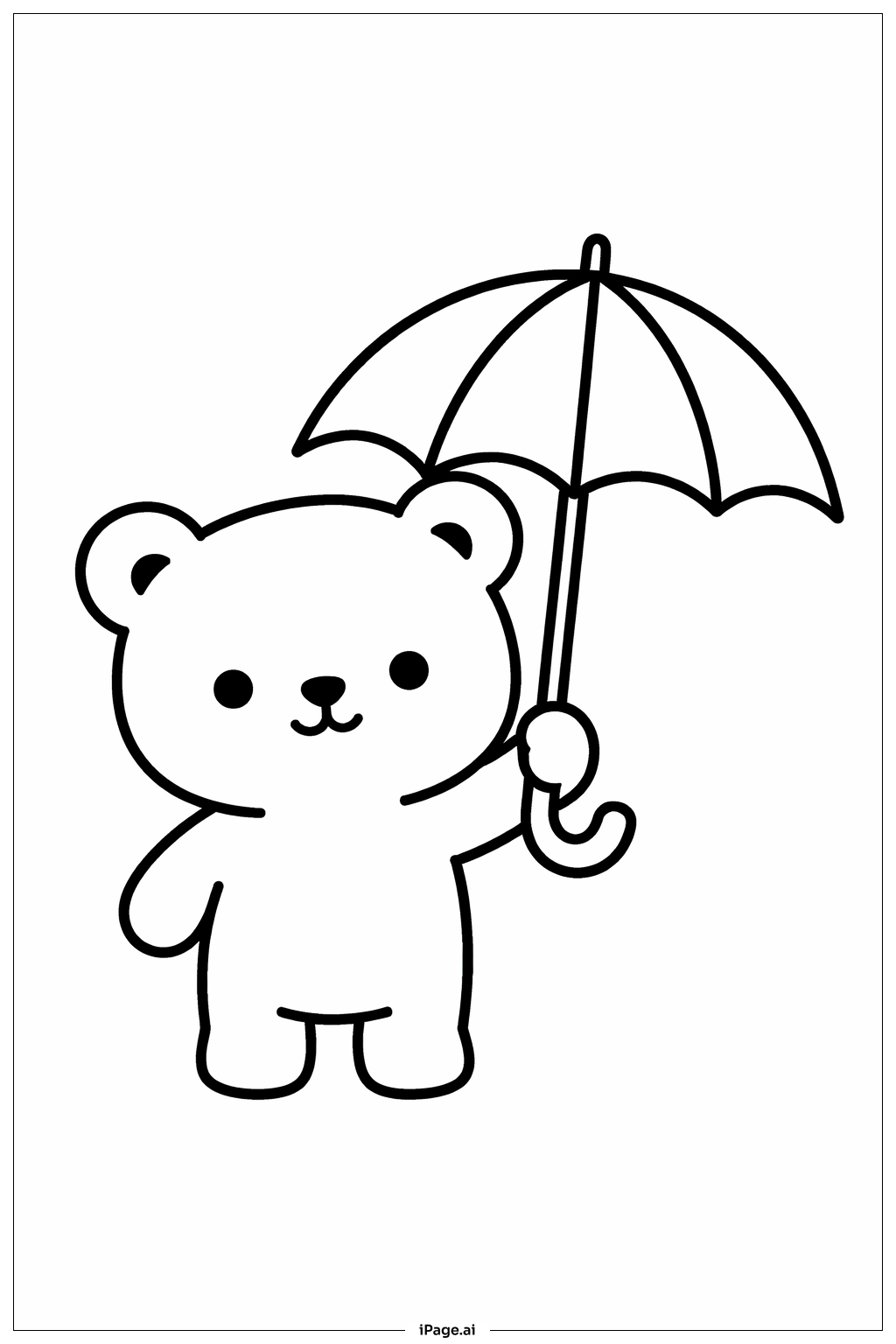
Coloring tips: How to color Animal With Umbrella coloring page well?
Start with the umbrella canopy since it is the largest area. You can use two or three alternating colors for each panel — try red and yellow, or blue and green, to make it pop. Use a lighter shade for the inside of the umbrella to show depth. For the animal's body, pick a natural base color like brown, tan, or gray, then add a slightly lighter shade on the belly and face for a soft, rounded look. Use warm peach or pink tones for the inner ears and nose. Color the umbrella handle in a bright color like orange or purple to make it stand out. For the background, soft blues and grays work great for a rainy-day mood. Add light blue raindrops for extra fun. Don't be afraid to mix colors and get creative — this is your picture to bring to life!
Coloring challenges: Which parts are difficult to color and need attention for Animal With Umbrella coloring page?
• Umbrella Panel Sections: The umbrella canopy is divided into multiple curved panels that all meet at a central point. Keeping each panel neatly colored without bleeding into the next one can be tricky, especially near the top where the sections narrow. Use a fine-tipped tool to outline each section first before filling it in.
• Small Facial Features: The animal's face includes tiny details like eyes, a nose, and a mouth. These small features require careful, precise coloring. Using sharp colored pencils or thin markers will help you stay within the lines and add expression without smudging nearby areas.
• Body Shading and Fur Texture: To make the animal look fluffy and three-dimensional, you need to apply light and dark shades of the same color. This blending technique can be challenging for beginners. Try using circular strokes and layering colors gently to build up depth gradually.
• Raindrop and Background Details: The background elements like raindrops, puddles, or clouds are scattered and small, making them easy to overlook. Coloring these consistently while also keeping them distinct from the main character requires patience and attention to the overall composition.
• Handle and Grip Area: The umbrella handle, especially where the animal's paws grip it, is a narrow and often detailed area. Coloring around the fingers or paws without going outside the lines takes steady hands and a fine coloring tool to achieve a clean, polished result.
Benefits of coloring books: Advantages of drawing Animal With Umbrella coloring page
Coloring this fun animal with umbrella image offers a wide range of wonderful benefits for kids and beginners alike. First, it helps improve fine motor skills. Staying within the lines and filling small spaces strengthens the small muscles in the hands and fingers, which supports writing and drawing development. Second, it encourages creativity. Choosing colors for the umbrella panels, the animal's fur, and the rainy background sparks imagination and lets each child make the picture uniquely their own. Third, it builds focus and patience. Working through the detailed sections of the umbrella and the animal's features trains kids to slow down, concentrate, and pay attention to detail. Fourth, it promotes emotional well-being. Coloring is a calming, screen-free activity that reduces stress and brings a sense of accomplishment when the page is complete. Fifth, it introduces color theory in a playful way. Experimenting with complementary colors on the umbrella panels teaches kids how colors work together. Overall, this coloring page turns a simple rainy-day scene into a rich, engaging learning experience that is both educational and genuinely enjoyable.