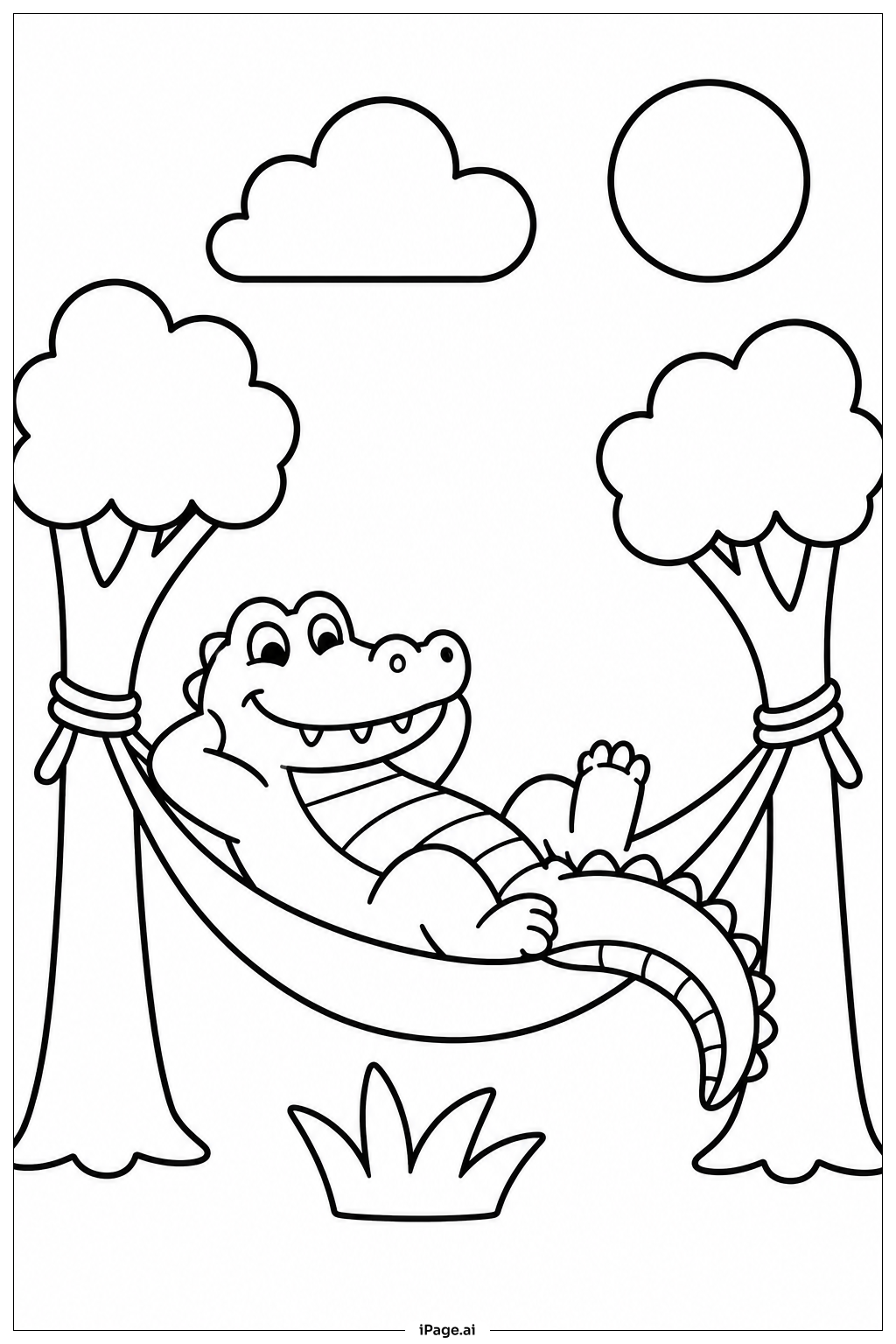
Coloring tips: How to color Alligator On Hammock coloring page well?
For coloring this image, consider using various shades of green and brown to make the alligator look realistic. You can color the alligator’s skin different greens, like dark green for the body and lighter green for the underside. For the hammock, use bright and cheerful colors such as yellows, blues, or reds to make it stand out against the natural background. The palm trees can be colored with rich browns for the trunks and vibrant green for the leaves. You may also add soft blue or light beige for the sky or ground to complete the tropical feeling. Feel free to add small colorful details like flowers or fruits around the hammock to make the scene lively and fun.
Coloring challenges: Which parts are difficult to color and need attention for Alligator On Hammock coloring page?
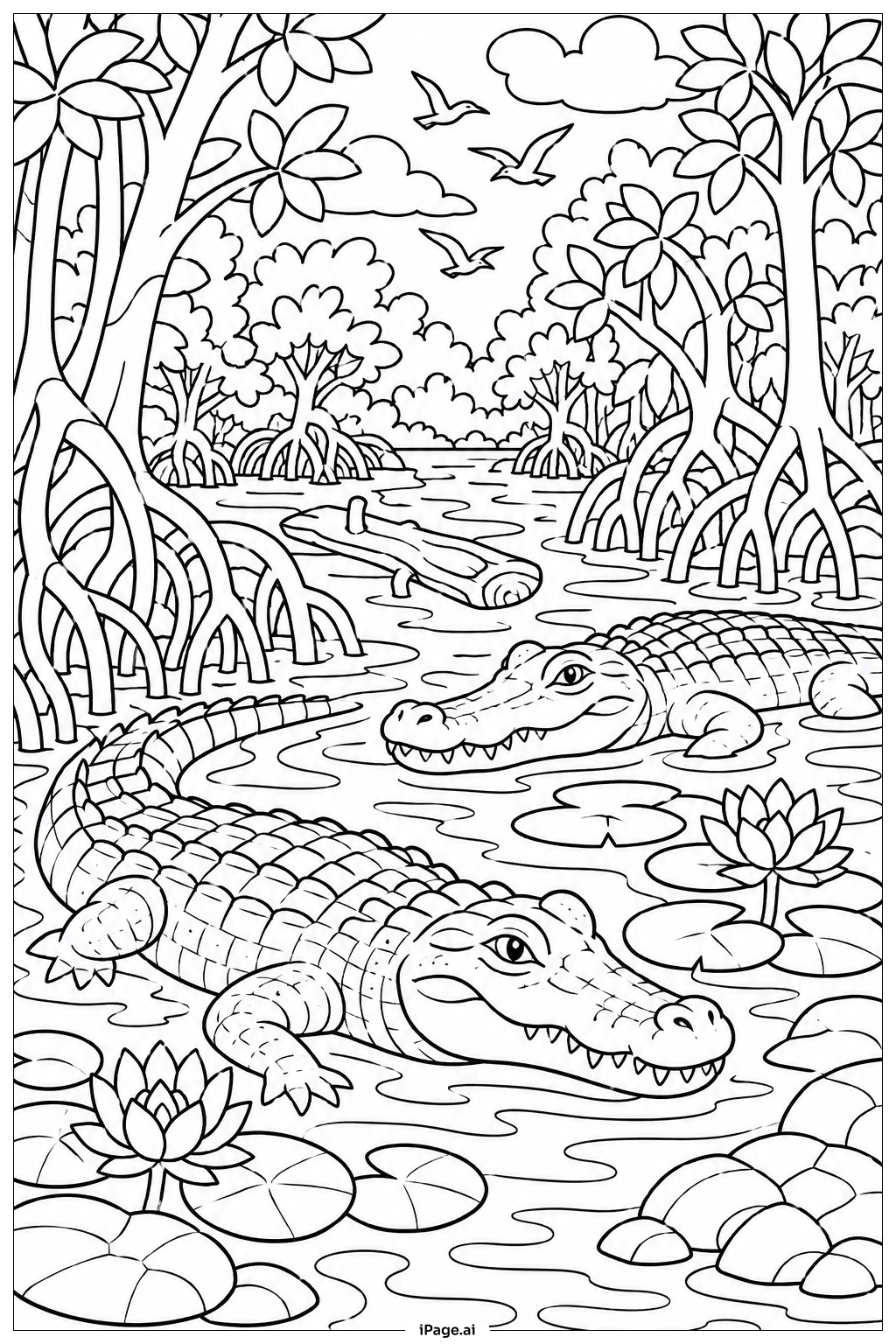
• Detailed Textures: The alligator’s skin has many small bumps and scales that need careful coloring to show texture without making it look messy. • Hammock Weave: The hammock’s woven pattern requires attention to detail to color the overlapping threads with proper shading and color variation. • Palm Tree Fronds: The palm leaves have long, thin segments that need steady coloring to avoid going outside the lines. • Contrast Balancing: Choosing colors for the alligator and hammock so they both stand out clearly without blending into the background can be tricky. • Small Background Elements: Leaves and plants around the alligator add complexity, requiring delicate coloring to keep the focus on the main subject without overwhelming the picture.
Benefits of coloring books: Advantages of drawing Alligator On Hammock coloring page
Coloring this image helps develop fine motor skills by encouraging precise and controlled coloring, especially in detailed areas like the alligator’s scales and the hammock’s weave. It also supports creativity by allowing kids to experiment with different color combinations for a lively tropical scene. Concentrating on balancing colors improves focus and attention to detail. Additionally, coloring animals in natural settings teaches children about wildlife and environments, fostering curiosity about nature. The peaceful theme of an alligator resting on a hammock can promote relaxation and mindfulness while coloring, making it a calming and enjoyable activity.