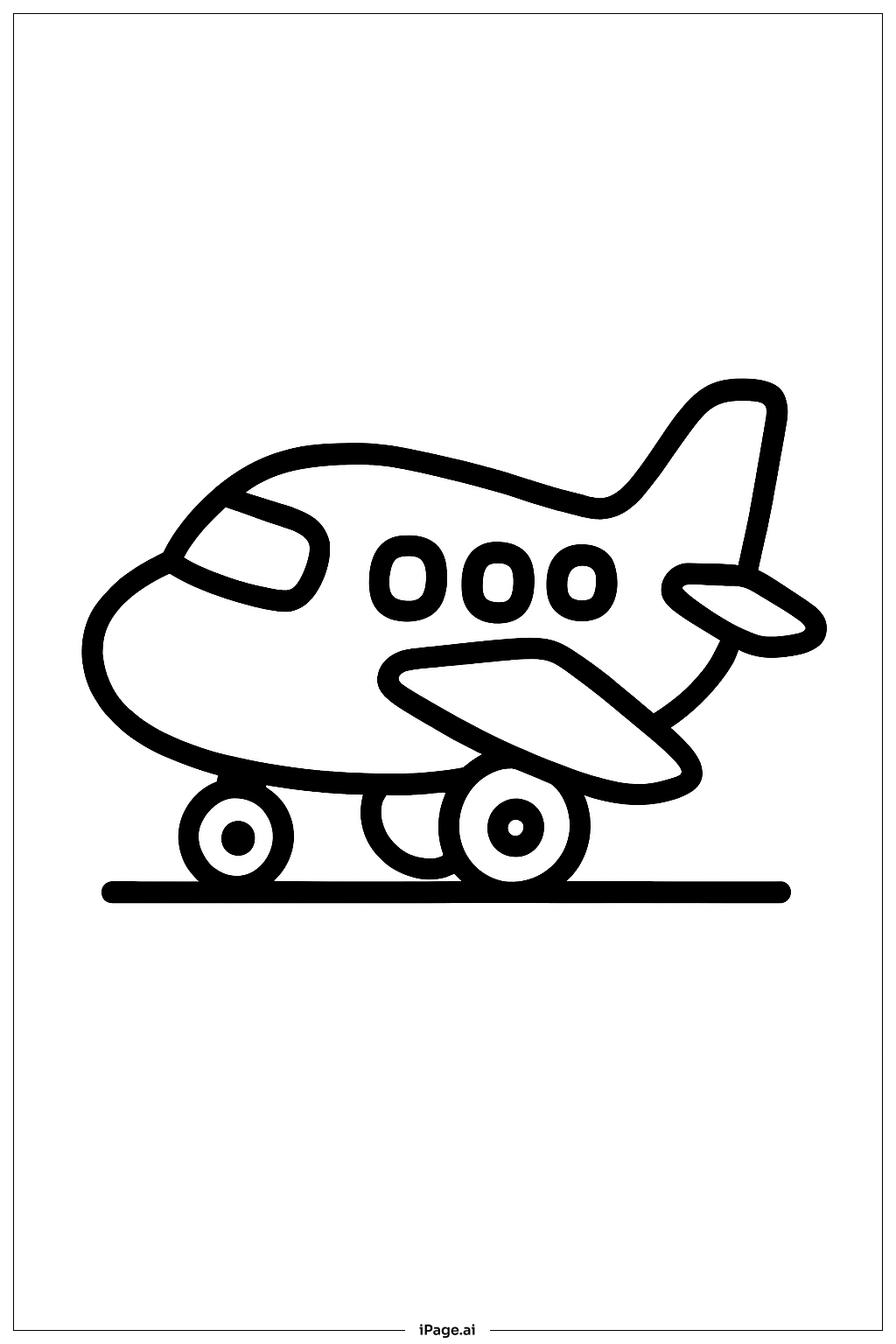
Coloring tips: How to color Airplane On Wheels coloring page well?
Start with the airplane body using bright primary colors like red, blue, or yellow to create an eye-catching vehicle. Color the propeller in contrasting shades, perhaps silver or gray with darker tips to show motion. The wheels offer a great opportunity to use black or dark gray for the tires, with silver or metallic colors for the wheel hubs. Add personality to the friendly face by using warm colors for the smile and bright colors for the eyes. Consider the sky background with light blue and fluffy white clouds. The wings can match the body or feature racing stripes in complementary colors. Don't forget to add shading beneath the wheels to create a shadow effect, giving your airplane a grounded appearance.
Coloring challenges: Which parts are difficult to color and need attention for Airplane On Wheels coloring page?
• Propeller Blade Precision: The propeller blades require careful attention to maintain consistent coloring within the narrow, radiating segments. Children may find it challenging to stay within the lines where the blades overlap or meet at the center hub. Creating a sense of depth by varying shades from the center outward can be tricky for younger colorists.
• Facial Feature Details: The expressive face on the airplane nose includes eyes, pupils, and a curved smile that demand precision with smaller coloring tools. Getting smooth, even coverage in these small areas without going outside the lines requires good motor control and patience, especially for children under age 7.
• Wheel Tread Patterns: The tire treads contain repetitive geometric patterns that need consistent coloring to look realistic. Maintaining the same color intensity across all the small segments while creating contrast between the tire rubber and the tread grooves presents a moderate challenge that helps develop attention to detail.
• Wing and Body Panels: The panel lines and windows on the airplane body create multiple small sections that benefit from subtle shading to show dimension. Deciding where to place highlights and shadows to create a three-dimensional effect requires planning and an understanding of light sources, making this suitable for older children and adults.
• Color Coordination: Balancing multiple elements including the body, wings, tail, wheels, propeller, and facial features into a harmonious color scheme requires artistic decision-making. Children must think about which colors complement each other while maintaining enough contrast to make each part stand out clearly.
Benefits of coloring books: Advantages of drawing Airplane On Wheels coloring page
Coloring this Airplane On Wheels image provides wonderful developmental benefits for children. It enhances fine motor skills and hand-eye coordination through the precise movements needed for detailed areas like the propeller and facial features. The combination of large sections and intricate details accommodates various skill levels, building confidence as children progress from simpler areas to more challenging parts. This image sparks imagination about travel, adventure, and how vehicles work, encouraging creative storytelling. The geometric shapes help children recognize patterns and develop spatial awareness. Choosing colors for different airplane parts promotes decision-making skills and artistic expression. The friendly face adds an emotional connection, making the activity more engaging and enjoyable. Completing this detailed coloring page gives children a sense of accomplishment and pride in their finished artwork.