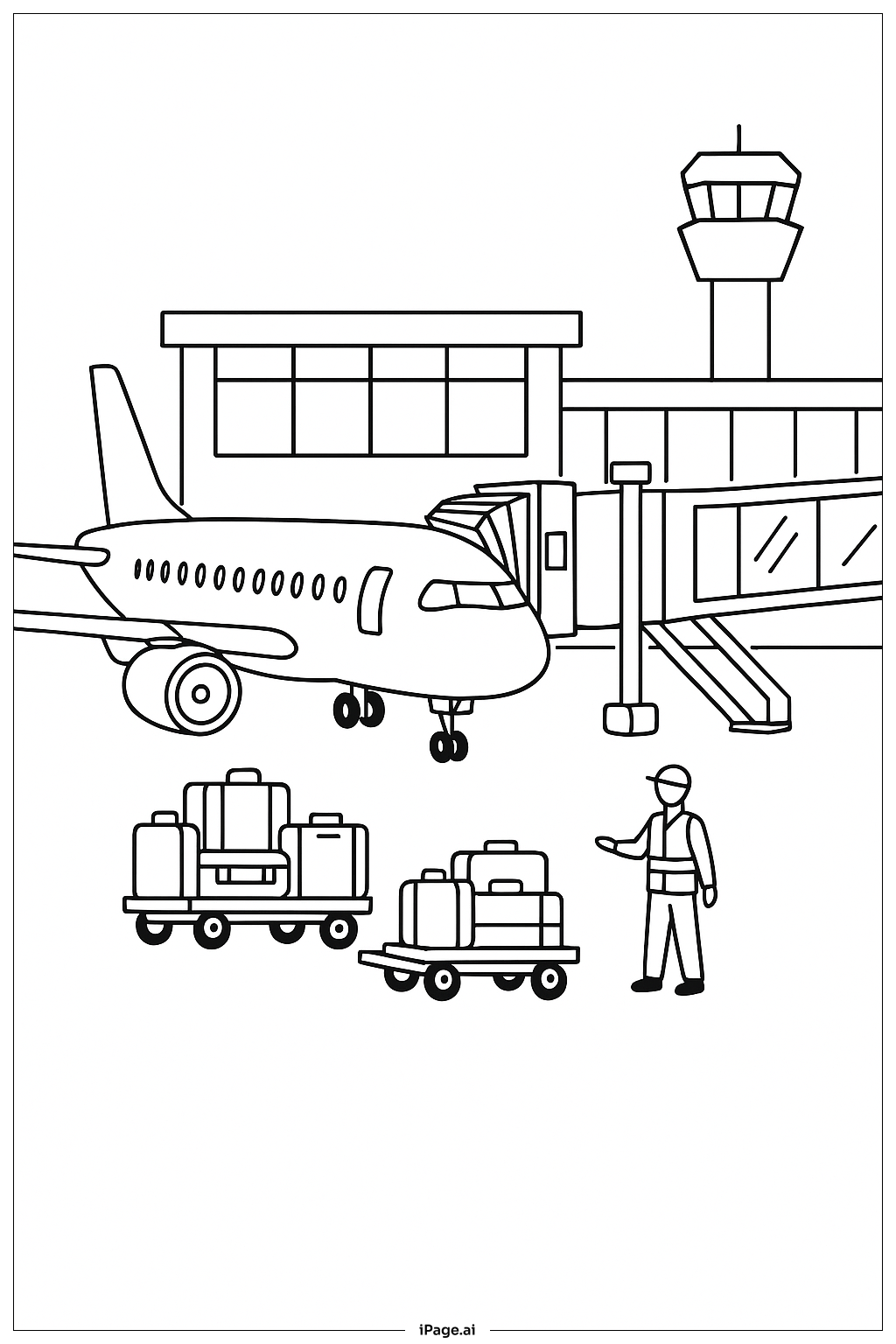
Coloring tips: How to color Airplane Near Airport Terminal coloring page well?
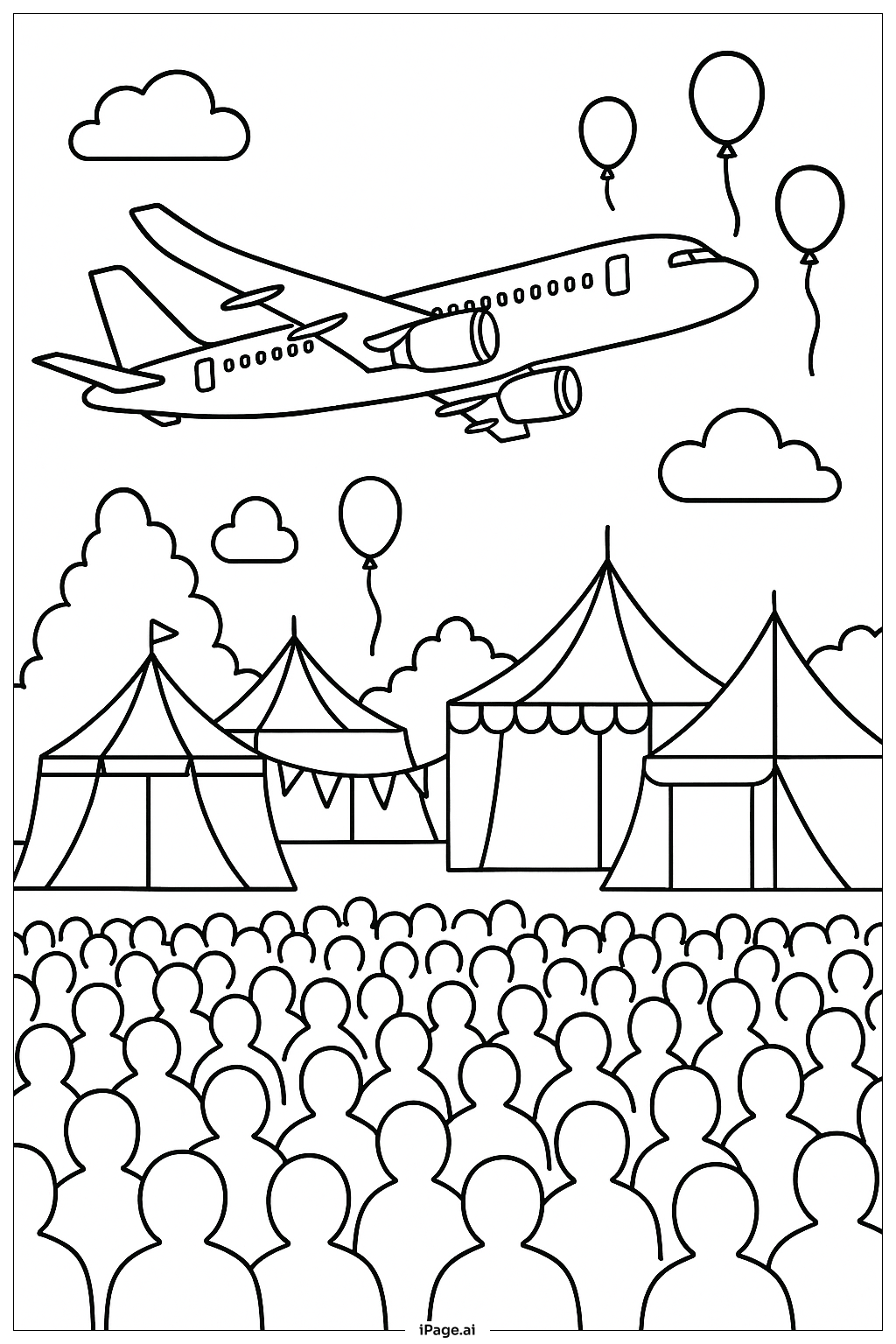
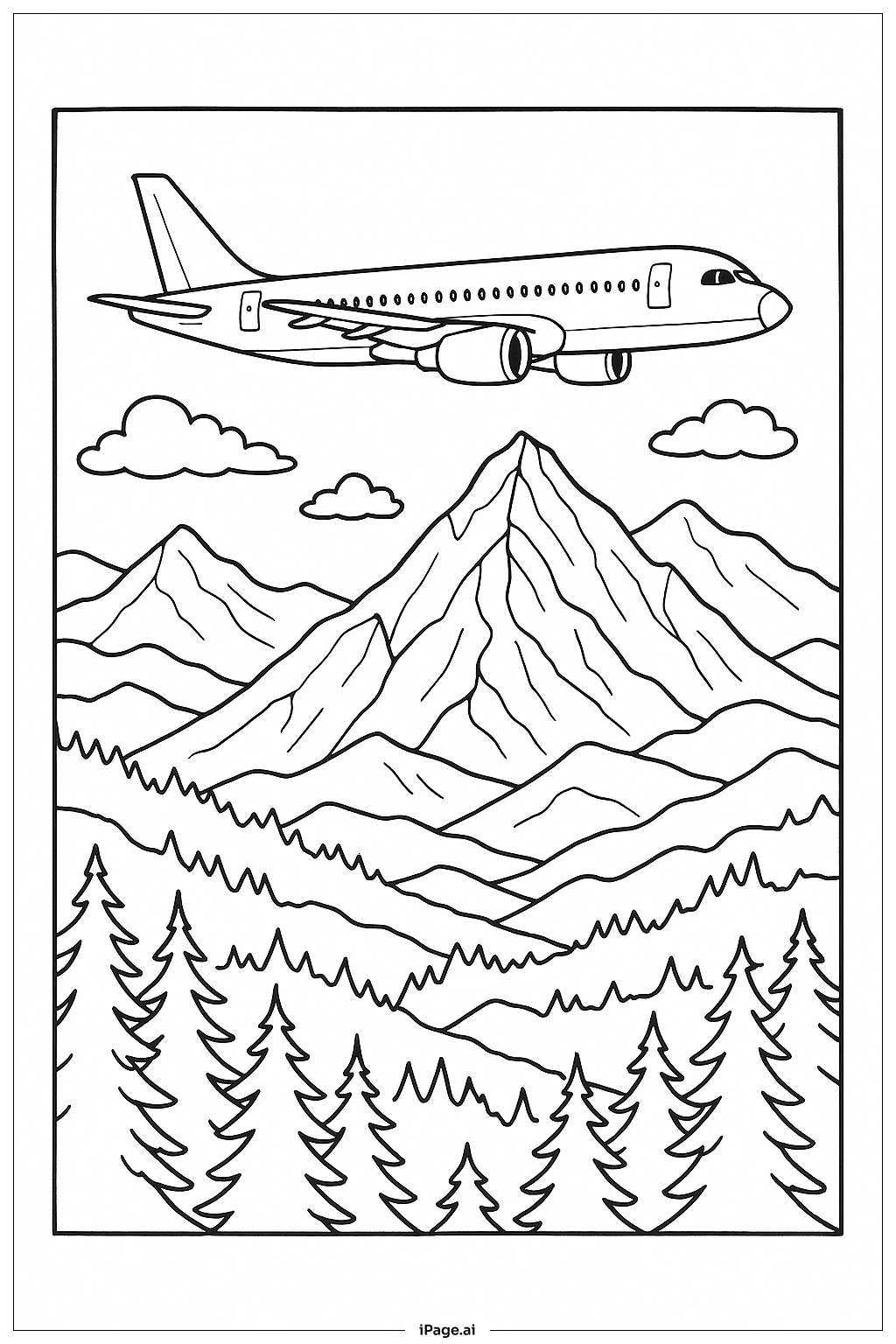
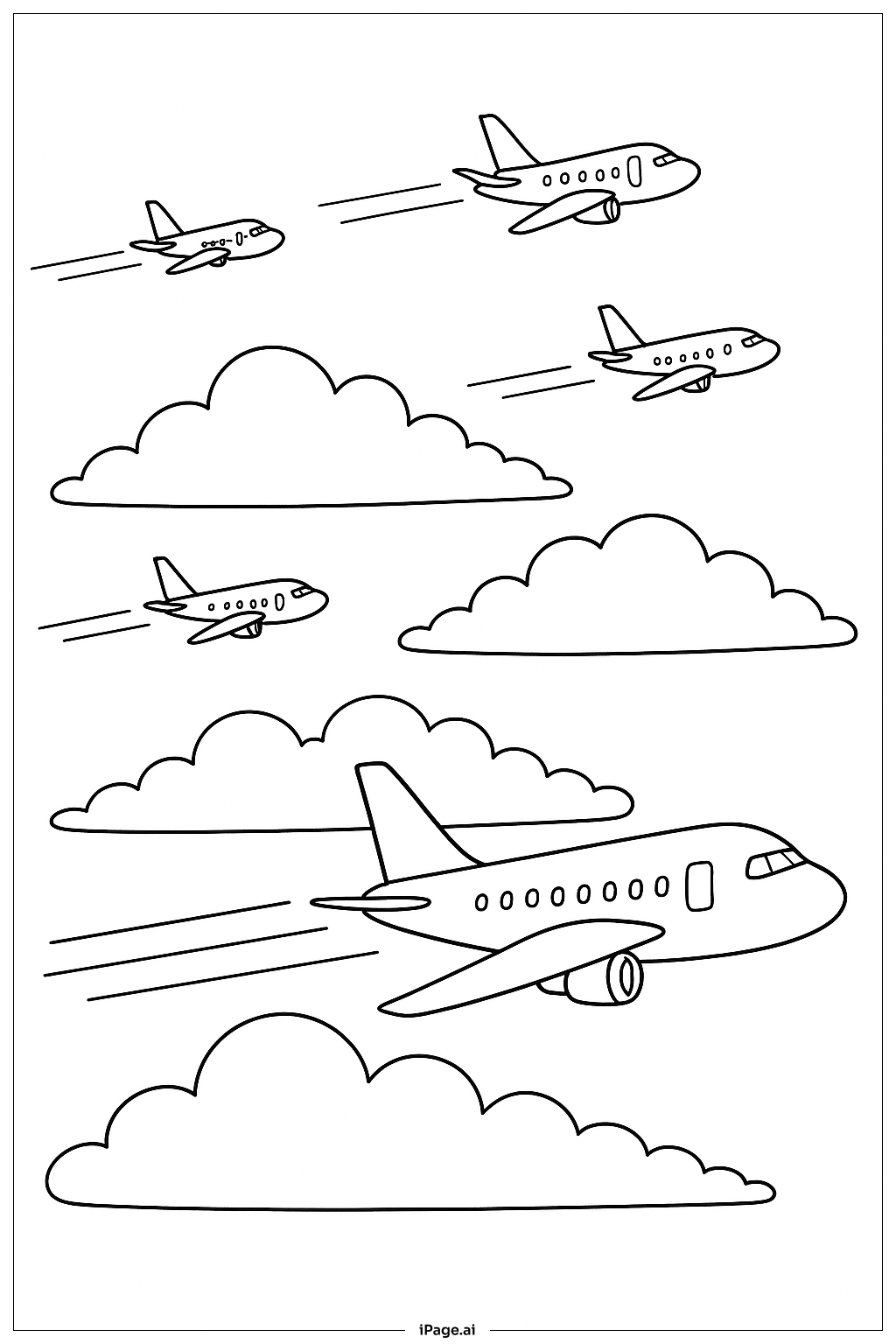
For the airplane, consider using classic airline colors like white or light gray for the body, with blue, red, or orange accent stripes along the sides. The windows can be colored in light blue or gray to suggest glass. Paint the engines in metallic silver or gray tones. For the airport terminal, use neutral colors like beige, gray, or white for the building structure, and light blue for the windows to create a glass effect. The tarmac can be colored in dark gray or black, with white or yellow for the runway markings. Add a bright blue sky in the background, perhaps with white clouds. You might include a yellow or orange sun to suggest different times of day. Use darker shades for shadows under the airplane to add dimension.
Coloring challenges: Which parts are difficult to color and need attention for Airplane Near Airport Terminal coloring page?
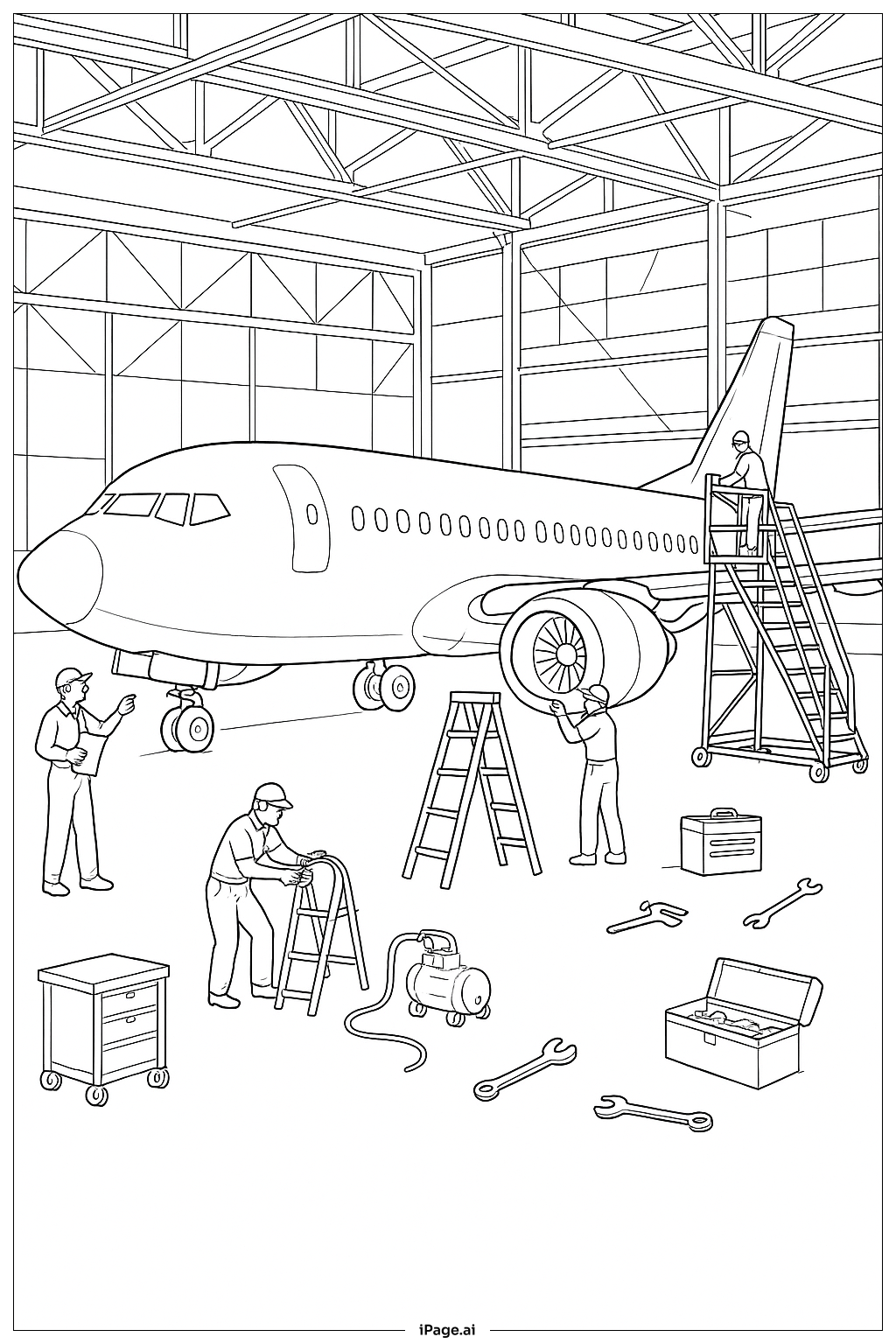
• Airplane Fuselage Details: The long cylindrical body of the airplane contains many small windows arranged in rows, requiring patience and steady hand control to color each window consistently without crossing lines. The curved surface of the fuselage needs gradual shading to show its three-dimensional rounded shape, which can be challenging for younger children.
• Wing and Engine Structures: The wings extend outward with complex shapes including flaps, ailerons, and engines mounted underneath. These overlapping mechanical elements require careful attention to distinguish between different parts and maintain proper color boundaries. The engines have circular intakes and detailed turbine sections that need precision coloring.
• Terminal Building Architecture: The airport terminal features multiple architectural elements including large window panels, support columns, roof structures, and entrance areas. Coloring the many windows uniformly while keeping straight lines can be tedious. Creating the illusion of glass and reflective surfaces requires layering lighter colors and leaving some areas partially colored.
• Perspective and Depth: This scene includes both foreground and background elements that should be colored differently to create depth. Understanding which parts are closer and should be darker or more vibrant, versus distant elements that should be lighter, requires spatial awareness and color theory knowledge that may challenge beginners.
Benefits of coloring books: Advantages of drawing Airplane Near Airport Terminal coloring page
Coloring this airplane and airport scene helps children develop fine motor skills through precise coloring of small details like windows and mechanical parts. It encourages patience and focus as they work through the complex composition with multiple elements. This image introduces children to real-world transportation and architecture, sparking curiosity about how airplanes work and what happens at airports. It provides opportunities to learn about perspective, depth, and spatial relationships as they distinguish foreground from background. Children can practice color selection and combination, experimenting with realistic colors or creative interpretations. The technical nature of the subject builds attention to detail and observational skills. Completing this detailed scene gives a strong sense of accomplishment and boosts confidence in tackling complex coloring projects.